Kids-
We'll be studying
the
Monarch as
part of our insect unit in science this year. Bring some of the Monarch
caterpillars in to school if you can find them. Be very careful not to
harm them.
Mrs.
Clarke
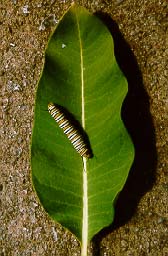
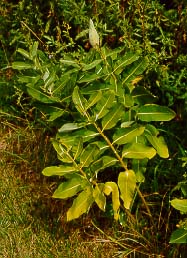
The Monarch larva is usually found on
milkweed
plants.
Look in the woods and along road sides.
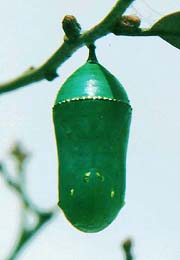
The Monarch chrysalis is a beautiful creation.
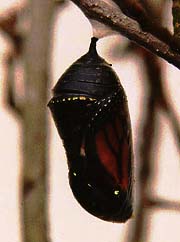
About 24 hours before the emergence of the adult butterfly, the
chrysalis
becomes completely transparent, revealing the new butterfly inside.
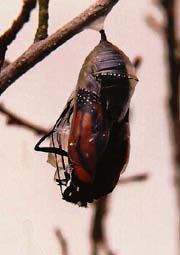
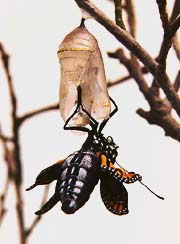
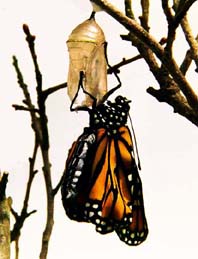
Breaking free of the chrysalis, a Monarch greets the world.
After struggling free of the chrysalis, the Monarch immediately begins
to inflate its wings with a reservoir of fluid contained in its swollen
abdomen.
As the wings inflate, the body of the butterfly attains its normal
proportions.
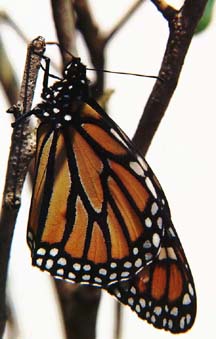
When the wings are fully inflated, the insect expels any excess fluid
and rests.
In a few hours, with its wings dried and hardened,
the Monarch will take wing on its first flight.
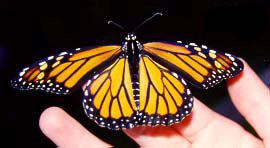
The Female Monarch
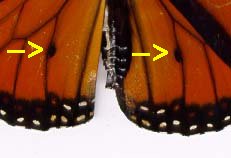
The male Monarch has perfume pockets to attract a mate.
As the weather gets colder,
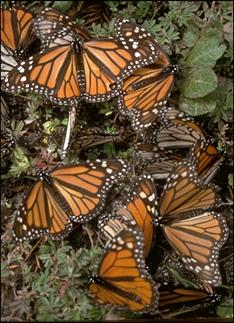
monarchs begin their annual migration.
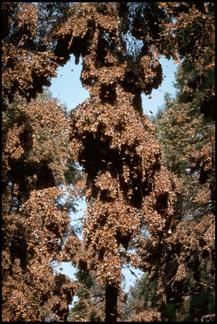
Tens of
millions of these butterflies spend
the winter in a mountain forest in
Central Mexico. Monarchs sometimes cover
whole trees of eucalyptus and
pine groves.
In the spring they will make the long journy back north, and
lay eggs along the way.
When these eggs hatch into caterpillars, the whole
cycle starts over again.