 |
| Memories Many years have passed, if only they could speak, The stories they could tell, of the mighty and the meek. Many seasons have changed, and years have gone by, The small treasures of the past shall remain held high. |
 |
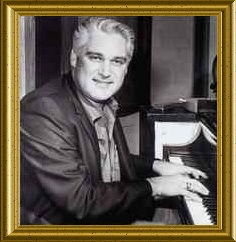
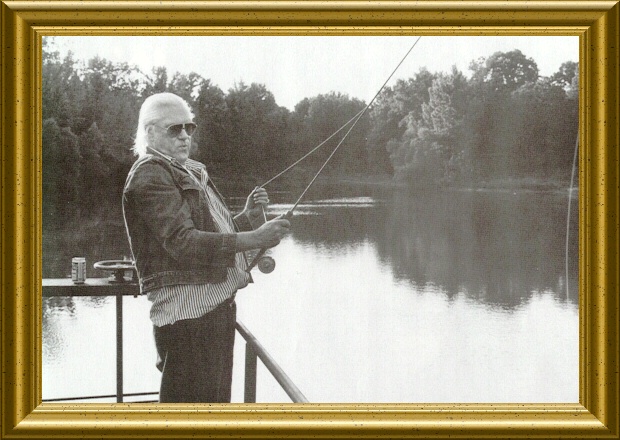
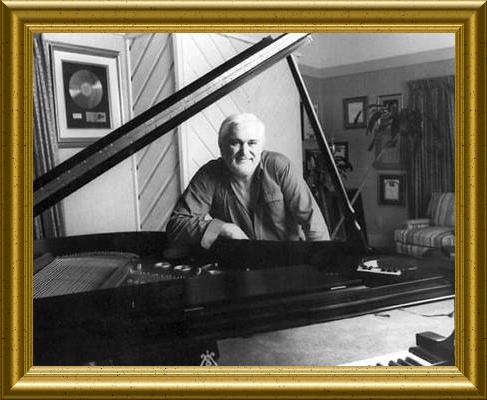
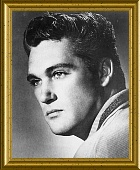
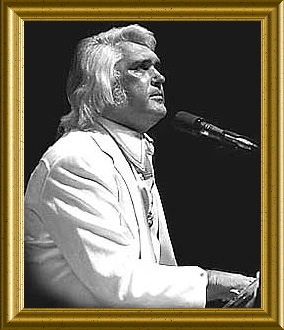
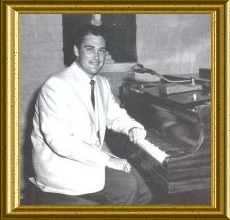
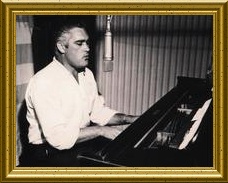
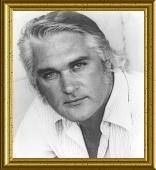
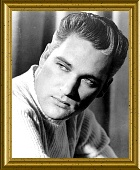
| Charles Alan Rich began his life on December 14, 1932, in Colt, Arkansas, a very small farming community nestled within the Mississippi Delta region of Central Arkansas. During the Depression years, Charlie's father made a good living as a planter, who rented and farmed close to five thousand acres of land. His parents were very religious and raised him in the Missionary Baptist tradition. Being members of a gospel quartet, his mother played piano and his father sang. It was his parents who no doubt planted the seeds of what would eventually grow into being one of the most important aspects of his life.....his music. Charlie's mother spent many hours giving him piano lessons which reflected their gospel traditions. This music would have a deep emotional effect on him throughout his lifetime. Charlie's parents weren't the only influences who helped to give life to his musical aspirations. A black sharecropper, by the name of C.J. Allen, who farmed part of the Rich plantation, introduced Charlie to another form of music. C.J. played the Memphis blues, which were first created in the 20's and 30's by black musicians in the Delta region. Charlie would sit and watch C.J. play his piano, and learned from him. In an interview with National Public Radio in late 1992, Charlie stated: "The music was just something that was contagious. You could hear it on a Sunday riding your horse down a path, you could hear the music coming from the black churches, you could hear the singing in the cotton fields. My dad played guitar and C.J played piano. There was really no racist thing, even though the times were that way." Blues would have an equal, if not greater influence over Charlie's future as a musician. Charlie also spoke about going along with his parents to sing in their gospel quartet as a youngster. "They took me one time to a little station in Jonesboro, Arkansas when I was five or six, and I was supposed to sing a thing myself. They put a chair under me so I could reach up to the mike, but I never did sing; I couldn't get any sound to come out. I was shell-shocked or something...mike shocked. And I still sometimes have a problem with that. It's anxiety panic disorder, I think is what they call it now. Bad business to be in huh?" It was while he was attending Consolidated High School in Forrest City, that Charlie became even more interested in music from listening to some of the big bands of the time, especially jazz legend, Stan Kenton. He played saxophone in the school band, and his friends soon began referring to him as "Charlie Kenton." This nickname was also written next to his photo in the senior yearbook. Charlie was fast getting into R&B, which caused his parents to worry that being involved with this type of music would have a negative influence over his future, as opposed to the gospel music they had taught him. Charlie's future was beginning to take shape early on, and would soon include what proved to be the greatest and most positive influence in his life, fellow student, Margaret Ann Greene. He and Margaret Ann first met in the seventh grade. She shared Charlie's enthusiasm for jazz, and once stated that they both loved to read "Down Beat", a magazine for jazz fans. She said she carried it everywhere, hoping everyone would think she was "cool." It seemed like the two of them were destined to be together from the very beginning. Charlie was a year and a day older than Margaret Ann, whose birthday was December 15, 1933. During an interview years later, she related the story of how she and her father had gone onto the Rich land one day, looking for a tree to cut down for Christmas, when Mr Rich rode up on horseback, followed by Charlie, guitar strapped to his back. Margaret Ann looked up at Charlie and couldn't help but think that he was her "knight in shining armor". (A fitting description for Charlie, who was 6'2", with hazel eyes, a gorgeous mane of thick brown hair and ruggedly handsome to boot.) Margaret Ann said that after they started dating, they would often sit on a bench in the park across the street from her house and harmonize together. The relationship that Charlie and Margaret Ann began when they were both very young, would grow into a love that saw them through forty-three years of devotion, support, and sometimes even heartache. As early as 1946, Charlie was playing in a local band in Arkansas, and by 1949 he was already singing in supper clubs in Texas. After graduating from high school, Charlie enrolled at Arkansas State College on a football scholarship, but when an injury ended his football days, he transferred to the University of Arkansas in Fayetteville, in September, 1951, as a music major. However, Charlie's grades were low and he had no car, which meant he also had no way of going to see Margaret Ann, who was attending a different college. Charlie made the decision to end his college education, and joined the Air Force in December. After going through basic training, he was sent to Enid, Oklahoma. Once settled in Enid, when Charlie wasn't on duty he was playing in a jazz group he had formed, called the Velvetones, with fiance' Margaret Ann singing the lead vocals. On May 25, 1952, Charlie and Margaret Ann said their vows, and spent their honeymoon in Memphis. Back in Enid, the newlyweds fared well as Charlie completed his stint in the Air Force. He received his discharge in '55 and was able to complete his military duty without having to see combat in Korea. Also, during this time, Charlie and Margaret Ann had two children, Renee and Alan. Upon his discharge, Charlie and Margaret Ann, who was then expecting their third child, moved back to Forrest City. With the help of his uncle, they bought a five-hundred acre farm where Charlie tried his best to make a living as a farmer, but it wasn't easy. The first year was good, the second so-so, and by the third year it rained so hard the crops weren't able to be planted, so he spent most of his time playing at the Sharecropper Club in Memphis. By 1958, Charlie began working and recording his music at home. (During an interview, Margaret Ann recounted how her husband first came to record professionally): "He was farming in West Memphis, and he was trying to play the clubs, and I just knew this guy was never going to be happy doing this....and I wasn't too crazy about farming either. So I said, Well, I don't know what to do, but I'm just going to take his tapes and go to Memphis to Sun Records. I don't know who I thought I was, but I did it. I took the tapes because I know he didn't think any record company would ever be interested." Producer Bill Justis listened to Charlie's tapes, then gave Margaret Ann a Jerry Lee Lewis record and said to her, "Go tell Charlie when he can play that bad to come see me." Charlie said later that if it hadn't been for his wife, the tape may never have gotten to Bill Justis and he didn't know where he would have been. "I might be driving a tractor". Charlie went to Sun and met with Bill Justis, who hired him as a session musician and songwriter. Soon he was writing songs for Johnny Cash "The Ways of a Woman in Love"; Ray Smith "Right Behind You Baby", and Jerry Lee Lewis "I'll Make It All Up to You". He eventually cut some demo discs as an artist in his own right, with his first single being "Whirlwind" composed by David Kelley. In 1958, Charlie wrote "Philadephia Baby", and a second single, "Rebound", written by both Charlie and Bill Justis, released in the early part of '59. "Rebound" and "Whirlwind" didn't become hits, but later on in the fall of that year, he recorded "Lonely Weekends" which rose to #22 on the Pop Charts in 1960, and chalked up sales surpassing the ONE MILLION mark. This established Charlie as a "potential recording artist". Charlie stayed at Sun Records for five years, during which time he wrote and recorded, "Sittin' and Thinkin'", "Who Will the Next Fool Be?", "Goodbye Mary Ann", "Break Up", "Finally Found Out", and "Gonna be Waiting" (which wasn't as popular with radio programmers because they thought it was too much like "Lonely Weekends"). During 1960, he also wrote and recorded "Stay", which was the flip side of "On My Knees", but they didn't do too well. The next song that Charlie recorded for Sun turned out to be one of his best, "Who Will the Next Fool Be?", released in 1961. (This song was re-issued by Sun in the spring of 1970 and became a minor hit on country charts.) Also in '61, Charlie recorded "Just a Little Bit Sweet", "Midnight Blues", and it's back-up, "Easy Money". Charlie wrote and released "Sittin and Thinkin" in 1963, which actually reflected upon his own personal battle with alcohol. During that same year, he would write his last single for Sun Records, " There's Another Place That I Can't Go". By the mid to late 60's, rock was changing, beginning to gravitate toward a more youthful audience and some felt that Charlie, who was now in his mid-thirties, with ever graying hair, wasn't what would sell records. It seemed as though, despite his virsatility and vast musical talent, his opportunities were getting slimmer. After leaving Sun, Charlie recorded at Groove, in Nashville, where he cut three singles, and an album, simply titled, "Charlie Rich", in 1964. "Big Boss Man" was released while he was recording for RCA, unfortunately, it didn't fare as well as expected. In 1965, Charlie signed on with Smash, a subsidiary of Mercury Records. His stay with Smash was brief, but it produced "Mohair Sam", which became a hit that summer and gave him his second million seller. The follow-up to this was "A Field of Yellow Daisies", which was written by Margaret Ann, whose songwriting genius paired perfectly with Charlie's smooth, almost sultry voice. Charlie would record two albums and one hit before leaving Smash eighteen months later. In the latter part of '67, Charlie signed on with Billy Sherrill at Epic. His broad range of music really interested Sherrill, who practically dedicated the next five years solely to promoting him. During that time, Charlie saw his work going up and down in the charts, but never really reaching the status he deserved. It was in 1972, that Charlie's luck would change for the better thanks to Bill Williams, promotions director at Epic. Williams pursuaded Bill Sherrill to produce songs for Charlie that had what he called "identification". He wanted one certain style that would prove to be a success on the country radio stations, and then he would work on getting Charlie's music aired. He also worked at convincing Charlie to get out to see disc-jockeys and play his music in the key markets, which wasn't an easy task due to Charlie's shyness and reserve with the public. The sound of country music was gradually edging closer to pop. Being an artist who was able to go so smoothly from Gospel, R&B, Rock, and Country, Charlie would finally find himself in the spotlight. He never considered himself "country", even though he had recorded several songs within the country genre, including several Hank Williams' hits in the past, and made them sound even better just by being himself. If you've listened to "I'm so Lonesome I Could Cry", you know exactly what I mean. All of Charlie's efforts paid off in April of '73, when "Behind Closed Doors" hit the number one spot on the country music charts. At the Country Music Awards that year, Charlie was given the "Album of the Year for "Behind Closed Doors"; the Male Vocalist of the Year Award, and the Single Record of the Year Award. He also won a Grammy Award for Best Country Male Vocal Performance, and was inducted into the Grammy Hall of Fame. (Right before the Grammy's, Charlie quit drinking and it was evident to everyone close to him that he had become a totally different man.) In 1974, CMA awarded him for Entertainer of the Year, and his album, "A Very Special Love Song" won for Album of the Year. When it became clear that his success would be around for awhile, his manager, and close friend, Sy Rosenberg made the decision to pull out all the stops and create an elaborate stage review, centered around Charlie. He even had a choreographer teach him how to move on-stage, as Charlie was always fairly stiff in front of an audience and didn't feel comfortable until he got behind a piano. It's hard to believe that a man who appeared to be so confident while he was performing, would suffer from panic attacks and anxiety, but it's surprisingly common among many performers. But was Charlie really happy with the way his career was going? Bill Sherrill had decided that he would be better off away from his piano while recording, because some of the minor seventh chords he included in so many of his songs might not be what the country programmers wanted. Many people didn't realize that it wasn't Charlie's piano skills they heard when listening to "Behind Closed Doors" and "The Most Beautiful Girl", it was actually Hargus "Pig" Robbins. From that time on, Charlie hardly ever played his own piano accompaniment when recording in the studio. Charlie and Margaret Ann now had four children; Renee, Alan, Laurie and Jack. The most important part of Charlie's life was his family, and he often spoke during interviews, of how his success, even with all the money it brought, took away from the time he could spend with Margaret Ann and the children. There is no doubt that they came first. In 1975, Charlie was the recipient of a Golden Globe for the title song, "I Feel Love", in the film "Benji". He also won three American Music Awards; four Golden Boot Awards, which are given by RCA; two awards from the American Society of Composers, Authors, and Publishers; two awards from the Radio Programmers of America; one award from the American Guild of Variety Artists; one from the National Association of Recording Merchandisers, and The University of Memphis Amphion Award for Outstanding Achievement in Music in 1974. Charlie found himself in constant demand. He received offers from hotels in Las Vegas and other parts of the globe. Booking agents were falling all over themselves to get him to appear, and then there were the radio interviews....all demands that are made on a big star. Everything was happening so fast, after waiting so long. But was this what he really wanted? Charlie had gone through hell with his alcohol problem, on and off for years. Whether it was due to the stress of his career or the fact that he just might have wanted to play the kind of music that made him happy, with or without the fame, only he and Margaret Ann knew. It makes one question whether success is all it's cracked up to be. It was at the Country Music Awards Ceremony in '1975, that Charlie shocked millions of viewers, as well as the Nashville community when he got up on stage and announced John Denver as that year's winner, then took out his lighter and set fire to the envelope. Even after all these years it's the first thing that comes to mind when many people hear the name Charlie Rich. And as each year passes, people still want to know exactly what took place that night. On internet message boards they still argue over whether Charlie's actions were that of a rebel making a statement against the Country Music Association, or was he just too drunk that night to know what he was doing? It's been twenty-six years and many people still continue to hold some kind of personal grudge against him for that one mistake. As I'm sure you're well aware by now, I am a very big fan of Charlie's, so if you've come to this website thinking it was going to be filled with good old juicy gossip, this is definitely not the place for you. On the other hand, if you've come here to learn a little more about Charlie's life, written truthfully, but respectfully for his memory and his family, then read on and you will learn what happened that night in 1975, from a man who was known to be straight out honest, even if it hurt. In an excerpt from a 1992 interview with Terry Gross on NPR, when she asked Charlie about this incident, he replied: "Ah, it's kind of strange. There were a lot of people asking me if it was a form of rebellion, or if I didn't like John Denver.....but there was no intent to make a statement. Things at those award shows can get pretty hectic in the back before you even go on stage, and it seems like there are millions of people running around back there, and I guess my anxiety panic disorder kicked in. It was just a mistake. I've made a few before." (As far as the reason he did it,) "It's hard to say exactly. It may have been that I had been overworked in '73, '74. and '75, and maybe I was rebelling....but not against John Denver, and not against country music. Like I say, it was a mistake. But I think that everything works to the good, so maybe I was saying, "Well, maybe I want to try something else besides country the rest of my life. I want to do some different things, and that was kind of the result." ******************* Ok, now my own opinion. (It's my website, I can do this.) Charlie should have known he was just one screw-up away from being crucified by the public and the media. I mean, let's face it, for the most part he was a hard-working, honest and decent man, a good husband, and a good father to his children, and never really got himself into any trouble. But just because his chosen profession was being a celebrated musician, the media and certain individuals in Nashville thought they had the right to hang him out to dry. The media does this crap with all celebrities, and I for one am sick of it. I am sure as hell glad I've never been hung out to dry for some of the asinine things I've said and done in my life. The difference between me and Charlie Rich though, is that he was a celebrity and I'm not, and somehow the media and certain other individuals believe that celebrities have to be held to higher standards. I say bull! Where did that mode of thinking come from? Charlie was just a man, a man whose job required him to sing for money. He got rich because so many of us enjoyed his music. But he owed us NO accountability. He wasn't an elected official. He was in no position of authority over the American people. The only people he needed to account to was himself and his family. But instead of letting him live his life and face up to his mistakes, which were drinking (and smoking too much for his own good), the media outlets were running stories ranging from whether or not his wife was leaving him, to Nashville deciding whether or not anyone would ever hire him again. It was Charlie's life and his problem. Alcoholism is a disease and it requires treatment, and it seemed like that last error in judgment might have made him realize he was hitting rock bottom. His treatment was his business, his relationship with his family was his business, and whether he ever recorded in Nashville or anywhere else again was his business. It wasn't my business or your business, certainly not the business of the media or some music bigwigs in Nashville. I'm not defending Charlie's behavior, the man needed some serious help. But I am more outraged at the media circus (not just for Charlie, but for all celebrities), and he should have known that the first time he stepped out of bounds the media and some others would be all over him, and he would have been right. They were waiting for a weak moment and they got it. Charlie Rich was only human and humans are prone to weakness, and making mistakes at times. He screwed up big time, but so have I, so have you. Most of us have said and done some pretty bad things in our lives at one time or another. But it was our business and we handled it as we saw fit. Charlie should have been able to do that too, without the media or anyone else hounding him. If he had a problem with alcohol, he needed to work it out. From all the research I have done over the years about Charlie, I found that he never showed any prejudice or hate toward anyone in his profession. On the contrary, he went out of his way to be accommodating, and usually did whatever was asked of him within the scope of his job. No one who worked with him had ever claimed he had been any other way. Obviously, Charlie was angry and troubled about something, and given his behavior that night, something could very well have been eating away at him. Who knows? The bottom line is that if Charlie really wanted to get through that and be a better person, he would have, and I hope for his sake he did. Perhaps he finally understood what was really troubling him and was able to get past it. He didn't owe any of us an apology. Why would he owe any of us anything? I don't even think as a fan of his music, he owed me an apology. We were nobody to him. Yes, we were his fans, but the people who mattered most to him were his family, which is the way it should be. If he got their forgiveness and became a better person, then he was most likely able to overcome his addiction. And if he had never recorded another song, that would have been fine too, NOBODY needs fame and fortune to be a good person and to be able to attain true happiness. And that's it. ******************* Shortly before his untimely passing, Charlie was interviewed by columnist, Jim Newcombe, during which he talked about his career over the previous fifteen years . "It's great that you're booking the jobs, and making the money and pleasing the folks, but it's awful hard if you entered the thing creatively in the first place. It's awful hard to create songs and get new ideas...if you have to play, in a sense, the same show that's popular, and you have to play primarily the songs people know." The gospel music that Charlie knew as a child remained with him throughout his life, and in 1976 he recorded an album filled with many beautiful and heartfelt selections, which was titled "Silver Linings". This collection of pure southern gospel must have meant a great deal to him, and when you listen to it, you can't help but think that he might have created it as a tribute to his parents and the music they taught him. Charlie continued to record, but his critics felt that many of his newer songs were beginning to sound too similar, due to the addition of "over-dubbed" strings and not enough of the jazz and blues that he had performed during much of his career. His true fans continued to support him and enjoyed everything he recorded, because in all honesty, Charlie put his best into everything he recorded, whether it sold or not. The talent was always there....always perfect. In 1977, he gave us "Rollin With the Flow", which hit the top ten in the charts. Also during that year he left Epic and went to UA Records. As for his voice, it was still at it's best, contrary to what had been written by a few of his critics. He switched studios again in 1978, by going with Elektra, and that fall, released "A Man Don't Know What a Woman Goes Through". This brought him to the number twelve slot. Charlie made an appearance in Clint Eastwood's "Any Which Way But Loose", in 1979, where he performed "I'll Wake You Up When I Get Home.", a great song with killer lyrics, and one that unfortunately, would be impossible to find years later, except on the movie's soundtrack. In 1981, came "Are We Dreamin' the Same Dream", written by Gary Stewart. This recording would reach theTop 40, but despite his talent, the hits were now few and far between. Charlie had a small part (along with Margaret Ann) in the 1981 film, "Take This Job and Shove It." If you are a true Charlie Rich fan then you will appreciate him in this comedy. I bought it solely because he was listed in the credits. He looked great, even though he had put on a few pounds by then, and his voice was somewhat raspy, but he seemed to enjoy what he was doing. In one scene that has him touring the inside of a brewery, he is blasted with two huge water hoses. Obviously in the script he was supposed to be taken by surprise, as the water begins to gush with force directly at him, soaking him from head to toe, but if you look closely, you can see him breaking up, which I'm sure wasn't in the script. But who cares, it was really great to see him enjoying himself at that moment. I would have given anything to see the outtakes. As for Margaret Ann, I am still trying to find her in this film, and I'm sure that even by 1981, she was still a strikingly beautiful woman. Charlie must have thought long and hard before he made the decision to go into semi-retirement. Most likely, he'd had enough of the music business and all the politics that went along with it. Now he could be home to spend precious time with his family. He still held jam sessions and continued to work on his music, though now it was at home in his studio. In 1987, he made a cameo appearance in 'Weeds", where he performed "Behind Closed Doors" to a prison audience. Only a die-hard Rich fan (like me) would spend the money at Amazon for the tape, already knowing that he was on camera for all of probably 15 seconds. I often wonder if Charlie knew he only had a few years remaining when he made the decision to create what would be his final album, "Pictures and Paintings", in 1992. This was without a doubt Charlie at his best, creating the music he loved most. You can hear it in every note he played, every phrase.... every sigh in his voice. "Feel Like Going Home", "Don't Put No Headstone on My Grave", "Go Ahead and Cry", which was, in itself, a work of art, written by Margaret Ann,..... every song on this album is great. Charlie first made a demo of "Feel Like Going Home", in 1973. There was no choir, no other instruments, just his voice and piano. And there's no other way to describe it except to say that he was as close to weeping as I have ever heard. The words came straight from his heart. It's beautiful. This demo was cut seventeen years before the final release, almost as it he wanted to wait until the time was right. And it became the final song on the last album he would ever record. We will never know what Charlie went through during his last few years. In a 1971 interview with Peter Guralnick, Charlie stated that he had emphysema, (from a lifetime of smoking). Knowing this, makes one realize how difficult it may have been for him to perform at times, though he never let it show. He was the consummate performer right to the end. No doubt, much of Charlie's strength came through Margaret Ann, who was by his side through it all. She was more than his wife...she was his partner, his companion, and his soul mate, and if it hadn't been for her ongoing support, understanding, love, and a great deal of patience throughout their years together, I doubt any of us would have been given the gift of his music. She is an inspiration to any woman who has devoted her life to loving one man. But, no matter what mistakes Charlie made during his lifetime, he was a genius when it came to music. He was a natural. He could play any type of music from classical to r&b to jazz, country and gospel. Some musicians have to study for years in order to earn their place. With Charlie Rich, it was a natural talent, a light that glowed all the way from the deepest part of his soul, and gave off a brilliance that filled his music and everyone he touched. We were so fortunate to witness that brilliance. Naomi Hersh Clackum August, 2006 Help Induct Charlie Rich into the Country Music Hall of Fame Charlie Rich's career in music spanned over fifty years, from singing with local bands in the mid-forties to the birth of his professional career at Sun Records in the mid 50's through more than forty more years of exceptional musical talent, both as a piano player and vocalist, from R&B, through ?Southern Gospel, Jazz and Country, his many recordings speak for themselves. He was a truly gifted performer who spent his life giving his audiences his very best. Charlie is gone, but his memory lives on in each of his brilliant recordings. There is no doubt that his contributions to Country Music should have been acknowledged long before now. Please help to give him the recognition he earned. If you feel as I do, PLEASE WRITE TO: CMA Headquarters Hall of Fame Nominating Committee One Music Circle South Nashville TN 37203 CALL: 615-224-2840 FAX: 615-726-0314 OR EMAIL: [email protected] LINKS: The Official Charlie Rich Website Charlie Rich, Jr Website |
| A PERSONAL TRIBUTE TO CHARLIE RICH |
 |
| DECEMBER 14, 1932 - JULY 25, 1995 |
   |
 |
 |
 |
 |
 |
 |
 |
 |
 |
 |
 |
 |
 |
|