 |
| Civil War Report |
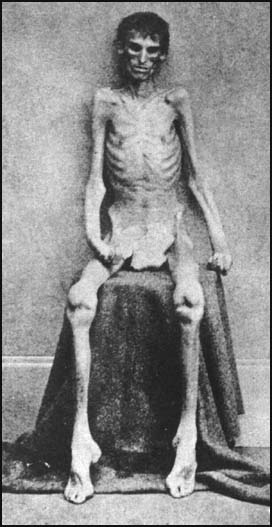
| Andersonville Prison is the worst prisoner of war camp in the Civil War. Its creation in the latter part of 1863 is due to the Union pushing deeper into Confederate territory. The Confederates is also taking larger amounts of prisoners than before causing a need for more POW camps. The other facilities for holding prisoners are mainly old forts and detention centers also they do not have the capability to hold so many prisoners and are in danger of being overrun by the Union. The need for a camp deeper in the Confederacy is extreme and needs to be done immediately. Two Confederate Captains are sent to scout a prison near Andersonville in Sumter County, Georgia in November of 1863. South central Georgia is far out of reach to the Union in 1863 and therefore is deemed the perfect spot to start such a camp. The surrounding area is excellent for a camp. There is potable water from a stream running through the site, lumber from a forest nearby to be used to create barracks and hospitals, also the town is sparsely populated, about twenty people, so political resistance is at a minimum. Slaves are all over the place and were used in the construction of the facility. Construction begins on the camp in December 1863 and the camp is officially named Camp Sumter. On February 24, 1864, six hundred prisoners are transported from Libby Prison in Richmond, Virginia. Artillery pieces are used to keep prisoners from escaping through a wall that is not completed at the time the prisoners� arrival. The walls are 15-20 feet high upon completion and the prison is located on sixteen and one-half acres. It is built to hold no more than ten thousand prisoners. The prisoners are to be used for prisoner exchanges with the Union. Initial conditions at the prison are good. Captain Richard B. Winder is the camp quartermaster and noticed a problem with getting supplies even though they were adequate to begin with. Prisoner deaths are not common during the beginning of the camp. This is how the camp is when Captain Henry Wirz arrives to assume command of the prison in April of 1864. Captain Wirz is under the command of Brigadier General John H. Winder. The prison is impacted heavily a large influx of thousands of prisoners being shipped in. Obtaining supplies becomes difficult as the Confederacy begins to falter making provisions harder to find. The Union ceases prisoner exchanges in June of 1864 since they have greater manpower than the Confederacy has and by exchanging prisoners it makes the Confederacy stronger. There are 26,000 prisoners in a camp built to hold 10,000 maximum. The prison iss expanded to cover 26 acres to try and compensate for the overpopulation. Wirz writes his superior officer pleading for extra supplies but the General fells it is better to let the prisoners die than live. In fact he begins to brag about how bad the conditions are and that the death toll is the greatest of any prisoner camp and he said that more prisoners died in the camp than were killed on the battlefield. The summer of 1864 was the summer when Union General Sherman began his face march through the south using a scorched earth policy. It was during this time that the Confederacy begins pulling the regular troops from guarding POW camps and let the commanders use the local militia which was not up to Confederate standards. Wirz created a �deadline� which was used to keep prisoners from trying to escape. Anyone trying to cross the deadline was to be shot immediately. Also artillery pieces were used to try and keep people from escaping. The last line of defense was the guard dogs. They were used to track escaped prisoners and usually maimed the ones they caught and even killed a few of them to. As the year pushed on rations began to grow scarce for guards and prisoners. They were given just barely over one and beans, peas, rice, or molasses usually supplemented one-fourth pounds of corn meal, one pound of beef, or one-third pound of bacon but these were daily rations. Local residents tried to help by offering additional rations but General Winder denied acceptance of such handouts. The hospital, which was located upstream, used the stream for disposal of body and animal wastes and bathing. The stream was also used for the same purposes inside the camp and the prisoners had to drink from the polluted source of water. There were a few wells, which provided inadequate supply of water and were heavily guarded by Union prisoners and also rain was another water source for the people of the prison. The flow of the stream was inadequate to carry the large volume of wastes away from the prison so the prisoners began to get dysentery and diarrhea and got gangrene from getting the water into wounds. In July of 1864, Captain Wirz paroled five Union soldiers to carry a petition back to Union camp asking for a reopening of prisoner exchanges. The request was denied and the soldiers returned to tell their comrades the bad news. The population in the prison was at 33,000 by August of 1864. Andersonville had one of the highest populations in the entire Confederacy and before they only had twenty or so people living there. A deadhouse was created to house the bodies of the dead with hundreds of them dying daily, had already beyond capacity. Bodies had to be stacked outside before burial. The only clothing given to the prisoners were what they had when they entered the prison, which at this time was nearly nothing or nothing at all. Groups of Union soldiers began stealing from other prisoners what little they had in supplies and clothing. The prisoners began turning each other in and the Confederates tried them for their actions against their fellow Union soldiers. Some where hung for there crimes. In late 1864, the Confederates offered to release prisoners if the Union would send ships to pick them up. Finally near the end of 1864, prisoners were transferred from Andersonville due to such terrible conditions. The death rate began to decline with the reduction in population, but deaths still happened in dramatic fashion. In December that year Union ships finally arrived to carry away prisoners. The forces surrendered by General Johnson, in April of 1865, included the Andersonville Prison. The total number of dead in the prison was around 13,000 during the fourteen-month period Andersonville was used as a POW camp. Andersonville had the highest death rate of all camps in the Confederacy. It had once had up to 45,000 prisoners there at once. The condition of the prisoners was terrible upon its liberation. The living looked worse off than those that were dead. Clara Benton helped with the identification of the prisoners and realized an organization would be helpful in this operation causing her to create the Red Cross. |
|
 |