

 |
| Anasayfa |
|
| 1950'ler |
|
| Zamane |
|
| Türler |
|
| Galeriler |
|
| Linkler |
|
|
 |
|
 |
|
 |
|
||||
|
||||
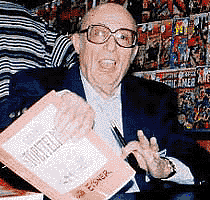
| Interview with Will Eisner by Şahin Artan | ||||
|
||||
|
||||
 |
|
|
|
"Going beyond entertainment" "Following The Spirit, I pursued the application of the medium to subject matter that went beyond simple entertainment comics. I first employed comics as instructional vehicles, then in 1974 I began to experiment with graphic novels that addressed adult subject matter..." |
|
||||
| Question: What were the major aspects of the pre-code comics and what were they replaced with in the following era? In general, how did the code influence comics art? Are there any major aspects in terms of artistic drives and expression that remained common? Will Eisner: The comic-code was created by the publishers as a defense against the threat of federal censorship. The rules did not change comics much although for a while it did inhibit experimental work. In 1970 the rise of underground comics finally put an end to its domination.
Q: What other factors were there beside the code that gave shape to the comics of the last three decades?
Q: Do you feel content and in peace with the comics of today?
Q: Could you please give some information concerning your approach to comics and your works during the long period following Spirit?
Q: What were your motivations in the 80's and 90's that caused you to turn back to 30's and write and draw stories on the people and events of that period?
Q: What do you think is the significance of E.C. books published between 1950 and 1954?
Q: What do you think is the relation between arts of communication and the common individual?
Q: Where do you think comics art is headed to? Could you also comment on DC's attempt to reprint your work and publish new ones in this context?
Q: Has there been a comic book you really loved to read recently?
Q: What do you think survival means in terms of an artist's productivity and creativity? How essential or vital is it? Have you ever felt you wrote and drew, most above all, to simply survive? | ||||
|
||||
| Bir Eisner hikayesi: On-Timesmanship | ||||
|
||||
|
||||
|
||||
 |
||||
|
 |
| Bu banner hoşuna gittiyse tıkla |
|
 |
| Ganimetler Sörf Hatırası'nda |
|
 |
| ÇR tarihinden tam hikayeler |