| What Makes Us See Television? |
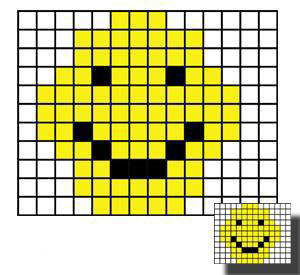 |
| The only reason we can view the effects of television is due to how our brain interprets the signal it emits. The images on a television are made up of timy particles of light called pixels, similar to the image on the right. Each box represents a separate particle, and together they makeup the entire image/text/picture on the display. |
 |
 |
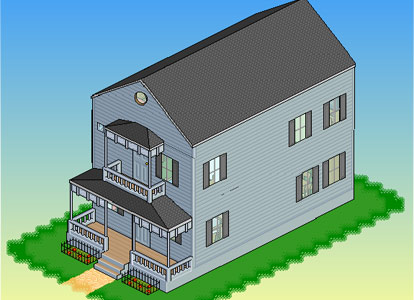
| Think of a computer screen as you would a television, meaning it performs like a television. We can associate ourselves better through the use of computers as their pixel layout and dimenions are readily accessable. A common screen format, similar to the pc used to design this website, is considered 1024 x 728. Thats: pixels horizontal x pixels vertical To the right are two examples of digital pixel art in its simplest form. Below trusly shows the ability for a display to use millions of pixels to reproduce life. |
 |
| <-click here to return to previous page |
| The other reason why our brain is the catalyst for us being able to view television (and other similar displays) is its ability to "fuse" the stationary images, known as frames, together to form fluid looking video. It takes roughly 15 or so images (per second) for the video to be viewed without skipping (otherwise known as frame loss). The video in that case with come out choppy and roughly cut. This is common among online streaming video as a loss of information causes frames to be skipped. |
 |
|
| <-click here to advance to next topic |