
Goal and specific aims

We take empathetic caregivers, medication and medical supplies. Each U.S. caregiver is teamed with a distinguished Indian physician, and together they serve the indigent population in non-profit hospitals in the city and in clinics in remote underserved villages, in collaboration with the government and charity organizations.
What we bring back from Kolkata
We bring back a distinct cultural and spiritual experience, an exposure to a distinct spectrum of pathologies, and most importantly, an increased understanding of the art of healing.
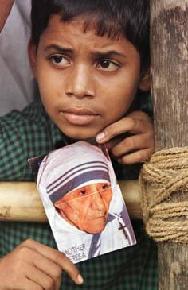
The overall goal is to educate United States (U.S.) caregivers about eastern and alternative medicine, the pathophysiology and management of diseases specific to Southeast Asia, the healthcare system and culture of India, and to instill the meaning of the age-old Indian proverb � �All that is not given is lost.� We are hoping that the priceless experience of practicing the art of healing in its purest form in India will inspire U.S. caregivers to return to India to serve the indigent population and to engage in medical education programs. Furthermore, this well-rounded education and experience will improve upon the ability of U.S. caregivers to deliver healthcare to all U.S. patients, especially to those of Southeast Asian orgin.
Specific Aims
1. To provide sustained medical aid to the indigent population of India, especially to women and children. The U.S. medical students, under direct supervision of U.S. and Indian physicians, will engage in healthcare education programs as well as provide free healthcare, medication and other necessary medical amenities in government-based welfare clinics and remote villages.
2. To teach U.S. medical students and physicians about the healthcare system of India. (Initially, an academic curriculum was specifically developed for this purpose by Dr. Demazumder, and medical students received elective credit on their transcript. Please see the section �Spring Curriculum� in our website for details. Subsequently, this curriculum evolved into an official graduate course, which prepared caregivers for their trip by teaching the language and culture of West Bengal, and advanced physical diagnosis skills.)
3. To teach U.S. medical students and physicians how Indian physicians deliver patient care with limited resources to a large patient population, and perform cost-effective and highly skilled bedside diagnosis without depending on sophisticated technology.
4. To teach U.S. medical students and physicians about Indian culture, alternative medicine, and spiritual aspects related to the art of healing, as well as expose them to a diverse patient population and a distinct spectrum of diseases specific to southeast asia (i.e., chicken pox, cholera, malaria, amoebic dysentry, diptheria, parasitic worms, polio, measles, mumps, rubella, salmonella enterocolitis, shigella enteritis, neonatal tetanus, typhoid, leprosy). This education is necessary for U.S. caregivers to effectively treat patients of Southeast Asian origin.
5. To establish a continuing professional and academic relationship with identified health care centers of U.S. and India. The interaction among the caregivers, while treating the poor alongside one another, will lead to an exchange of ideas that will benefit the health care system of both countries. In addition, the Indian healthcare providers will serve as hosts for future MCV medical students, residents, fellows and physicians during an experiential academic elective abroad. We have formed a strong relationship with the Ramakrishna Mission Seva Pratisthan and medical unit of Sri Aurobindo Institute of Culture as well as the Government hospitals of West Bengal. The India Government, the Indian Ambassador to USA, the US Ambassador to India, and the Virginia government has pledged support and resources for the project.
As you may imagine, this large scale project requires substantial resources and support, and we are requesting your kind help. We are functioning under the aegis of a non-profit �educational and charitable� organization status and as such, all donations are tax-deductible (you will promptly receive a tax receipt by mail). We would graciously accept any help that you deemed appropriate for our project and will publicly recognize your generous support on our project website. We look forward to adding you to our growing list of generous donors and kind sponsors so that we can provide help to a cause beyond any individual, family, group, organization, or company can give alone.
How YOU can help the indigent
You can help in several ways. The following are some examples:
(1) You can directly make a difference by accompanying us as a caregiver.
(2) You can contribute medicine and/or medical supplies that we will use
to treat the indigent.
(3) You can help us fund this project. We are a non-profit organization and
as such, all donations are tax-deductible. Please contact us
for more information on how you can make a donation.