�What is Faith?� Section Journal
1) The secular definition of faith is allegiance to duty or a person, loyalty, or something that is believed (especially with strong conviction). It is complete trust. Everyone puts their faith in something, its impossible not to, people do it without even recognizing they are. It is hard to put this trust in something, but we look at are options and choose what is best to put faith in. Every day my carpool makes a small decision involving some faith when he chooses which route (out of a quite a few) he should take to get to school. He does this with faith involved. The route he chooses is the route he has faith will be the best. The Catholic definition of Faith is that it is an intellectual assent to a loving God and His revelation. Faith is a path chosen (with reason) by us to follow God�s lead even though we do not know where it goes to. It is a tough decision to make, and it takes a lot of effort to persevere through it, but for those who believe it is the right path, it is lived.
2)
�� A) I want to remember the seven major characteristics of Faith. They are all interesting because of the truth in them that I�ve never noticed about Faith before, but are true. The first is that Faith is grace. God extends to us the gift of having a relationship with him, with out his approach a relationship could never occur. It is like a football coach�s relationship with a player. The coach can never have a player on his team unless he tries out first. The player has to extend the opportunity to the coach b trying out, as God extends a relationship towards us. Faith also requires a free human response. We have to choose to believe in God when there are so many other things to believe in. The football coach isn�t forced to pick the player who tries out, he can cut any player he wants to, and play any player he wants to. Faith is a risk. Choosing the path to God is not the hardest step, actually walking the path towards him is. It can go anywhere or have tough things to get through. The coach could play a player who�s going to fumble a lot, or throw more interceptions than touchdowns; he doesn�t know when he picks him to play. Faith is reasonable. We believe in God for a reason. Why else would you risk failure and humiliation without a good reason? A football coach has reasons for why he has a certain linebacker play. He wouldn�t risk letting up a big run because of a poor tackle without thinking that there�s a better chance that he�ll make a great tackle. Faith is certain. When people choose the path to God they don�t just hope it�ll work, they know it will. It�s too big of a risk to not be sure of it. Coaches are sure they have the best player playing at all times to ensure a victory. They don�t hope their safety will make a tackle to save a touchdown, they know he will, otherwise why put him in if he�ll fail? Faith seeks understanding. Because we love God we try to learn all about him. Coaches want to know how their players think and react so they can help them to play games right. We don�t need to help God, but we do want to know how he functions the way he does. Faith is a virtue. We gain the quality by practice. Practicing our Faith in difficult situations makes it stronger. Coaches make their trust in player�s play by leaving them in after a bad play, because they know he�ll learn from the mistake and do better next time.
�� B) I also want to
remember the four biblical ideas of faith. The first of which is that Faith is
not totally intellectual; it is more of a loving trust. Jesus showed this Faith
when he walked on water. To our mind, it does not make sense that you will be
able to walk on water just because you believe in someone. Our mind says it�s
impossible to walk on water, but Jesus did with Faith. Faith also involves
periods of doubt and struggle. Jesus lived though this in the
�� C) I would also like to remember John Brown, a man of faith. I did my web assignment on him, and I learned about the great amount of faith that he had. He faced a lot of trouble from people who were pro-slavery, but even so he stuck with his abolitionist ideals, and tried to take down the system of slavery. He was willing to die for treason for attempting to lead a revolt against slavery with an �emancipation army� of slaves. He had faith that in doing so he brought more publicity to his cause and more people would join his cause even though he was dead.
3)
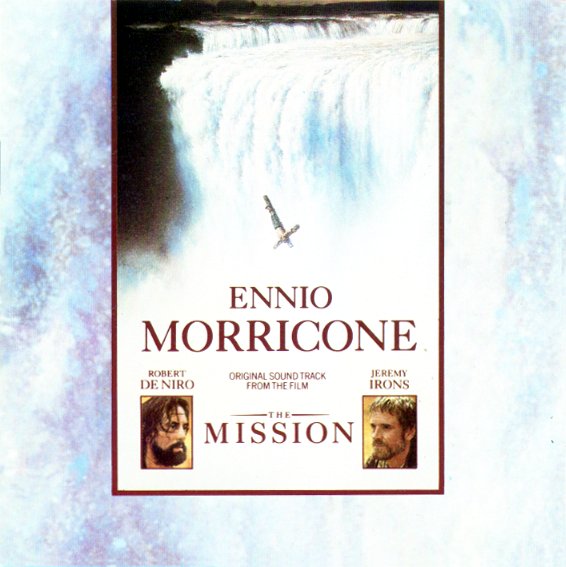
This is from http://www.ilbaluardo.com/Cover/Audio/C%20-%20D%20-%20E/ENNIO%20MORRICONE%20-%20The%20mission%20-%20Front.jpg
"The Mission" is a really good movie about faith, and I would like to remember it always.
4) Why have I chosen to follow God, what is the reason that I am attempting to follow Faith down this unknown path ahead towards God?
5) I believe I can become more faithful by retracing
Ignatius�s steps towards his Faith. By going through his life I can see what
led him to such a great faith, and what could lead me down such a path. I can
live a much shortened version of his experience at
Home
Homework page
Any questions or comments? E-mail me at [email protected]