Jesus’ Morality Web Assignment
I. The Law of Human Nature
A. When we argue we appeal to some standard we expect everyone to know.
B. There must be some Law set within us, since everyone seems to have heard it.
C. We don’t necessarily have to obey this “Law of Nature” like we do other
“laws of nature.”
D. We can see a standard morality within us, because even isolated cultures have the same general ideas of morality, there are differences, but not too terribly big of differences.
E. People who say there is no Right or Wrong go back on that statement quickly, seeing that it isn’t completely.
F. We seem to be forced to believe in the laws of Right and Wrong.
G. We all want others to treat us with a “right” behavior, but we fail to act this way ourselves.
II. Some Objections
A. We feel two desires at an event, one for herd instinct, the other from self-preservation, and we also have a third impulse outside of these, that is not one of the two, but tells which desire of the first two impulses to follow. It is our Moral Law.
B. The Moral Law doesn’t consistently side with one impulse over the other.
C. Since morality is basically the same in all cultures, it is a fundamental truth like math.
D. When we say one person is more in the right than another, it implies there is some real standard of morality, that it is, again, a fundamental truth like math.
III. The Reality of the Law
A. The Natural Laws (like gravity) may only be laws in the sense that they describe what happens, what we see, the things acting to gravity might actually be meant to do something else, we don’t know without an inside look.
B. Things aren’t bad because they inconvenience us (tripping accidentally vs. failed tripping purposely).
C. Good behavior doesn’t necessarily help you, good deeds are not always rewarded, we do them for something else.
D. We consider good conduct doing things that are greater for the whole human race for the long haul.
E. “Men ought to be unselfish, ought to be fair.”
IV. What Lies Behind the Law
A. As human beings we are able to
know that we are under a moral law, we can tell it exists (unlike it was
earlier said that objects might ought to act against gravity, but we’re not
those objects, so we don’t know).
B. The only way we could ever expect to interact a little with the creator is in an influence or command in the way we are built to act (like the architect and the house).
C. There is clearly something directing the universe, urging us to do what is right, and making us feel bad when we do wrong.
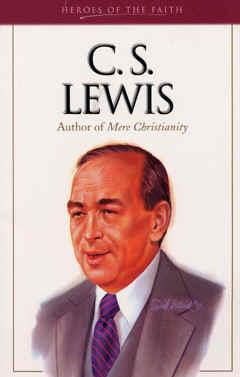
This is from http://www.prayerfoundation.com/books/book_review_heroes_c_s_lewis.htm.
Essay explaining how anyone could believe that they could make statements that apply to everyone everywhere.
People can make these statements because they are parts of the human condition. We are all born into the human condition just by being born and no matter what we will experience certain experiences and feelings. We’ve all experienced these things like loneliness, boredom, dread, and neediness and we have a large amount or people that acknowledge that they do experience these types of things. So by induction, we can say that everyone has felt and experienced these things. It is like a scientific theory though, and it cannot in fact be proven absolutely true, because it only takes one person to make the whole idea incorrect. But a person like that has not come yet, so we can induce that all people feel and experience certain things through out life.
We also know that we want to be treated certain ways, and feel that we should be treated a certain way. Other people feel that around us too, so again by induction we can say that we all want to be treated to certain rights. This is why the Universal Declaration of Human Rights could be made. We know we all want to be treated fairly, so we can make it necessary to be treated that way.
C.S.
Lewis would say it’s possible to make a general statement because of our inner
knowledge of things. If everyone knows it is right within, it is part of us as
a truth from some greater being.
Home
Homework Page