HOME
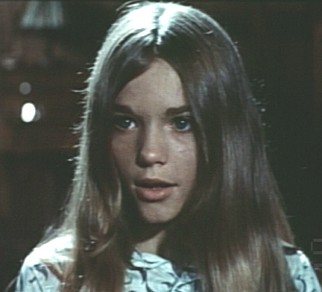
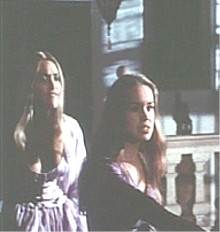
Could this be a Young Carmilla?
THE BLOOD SPATTERED BRIDE-A CLASSIC FOR ALL
THE BLOOD SPATTERED BRIDE is one of the many variations on the "Carmilla"  theme of femme vampire possession beyond those produced in England and is one of the best known for serious Cult Film lovers. Based on a tale by Sheridan Le Fanu, and almost picked up by Bob Cresse (Olympic International's leader of the wild), this is solid film complete with two lovely leads and excellent production.
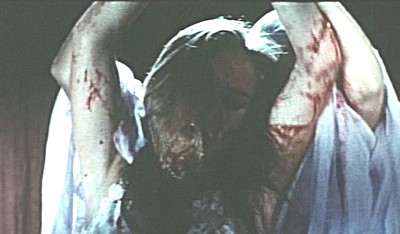
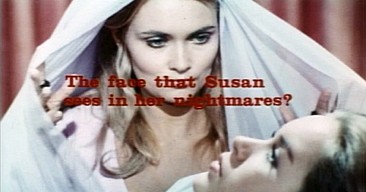
Maribel Martin and Alexandrea Bastedo make a perfect vampire couple in one of the best films of the Spanish Horror boom of The Early 70's, and THE BLOOD SPATTERED BRIDE is filled with Feminist symboligy, excellent music, and great thought provoking scenes, especially the many scenes of vampiric possession and the bride's dream of a rape while staying at a hotel which starts all of the madness as well as a possible dicussion on being married as the trailer to the film even points out. Simon Andreu plays the husband known as "He"  in the film that has a family history that puts the paintings of the ladies in the basement of the house, and is seen as a "timid husband" before he turns into an over-sexed man (A great scene includes Andreau moving in for Martin in a bathtub with her moaning 'Oh, not again").
A very interesting scene involves Susan, the wife, looking through the paintings and conmmenting on one that read 1621-1665, which could be a hint  to King Phillip IV of Spain, noted as "the playboy king" of Spain who waged a few wars in his time for Catholicism (and there is a couple of moments of War / Male symbolism here...note the scene where Martin tears her wedding dress on a small cannon statue), but the most intersting part of the film revolves around the child Carol (Rosa Rodrdguez) who is thought of the return of the legend that is Carmilla (or Marcilla, the name used in this film).
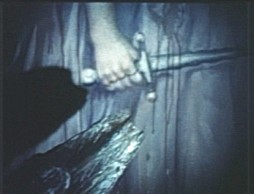
  The Carmilla Karnstein story was written by Sheridan Le Fanu for the 1872 colletion In a Glass Darkly, and has been a basis for many a film through The 60's and 70's, and this is one of the better-known adaptations. The ending where "He" shoots the demonic duo in a casket and later cuts out the hearts has been much debeted in specualtion as fo the scene where he starts to cut through a breast is completed to get to one of the hearts, but that is quite trivial as the film remains excellent to look at. The ad is a fine introduction to some of the things to think about, and the various dream sequences featuring a dagger and Marcilla that lead up to thoughts of killing "He" are evocative.
Hosted by www.Geocities.ws

1