
A Brief History of St Albans, Hertfordshire and St Albans Abbey
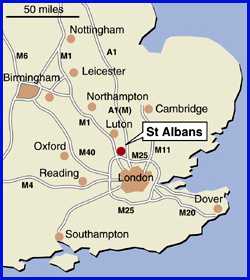
The town of St. Albans is a beautiful little city of 54,000, located on a hill just outside of London. It is named for Britain's first Christian martyr, Alban of Verulaminium. Verulaminium was a town in what is now England, during the Roman Empire. It fell into decay during the 5th century but the materials left formed many of the buildings now in St. Alban, including the famed Abbey and Cathedral Church.
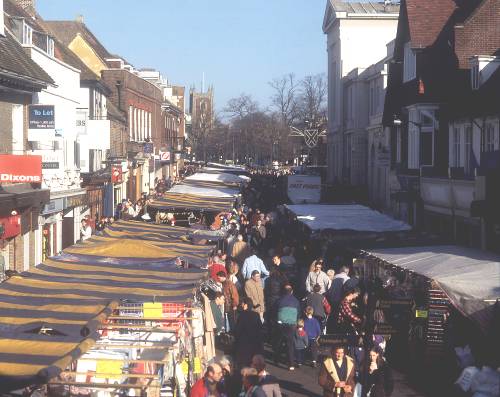
St. Albans evolved as a Saxon settlement around the Abbey, and by the 13th century had achieved enough significance to be the location of the drafting of the Magna Carta. St. Albans Street Market dates to the Royal Charter of Edward VI in 1553. It is held every Wednesday and Saturday.
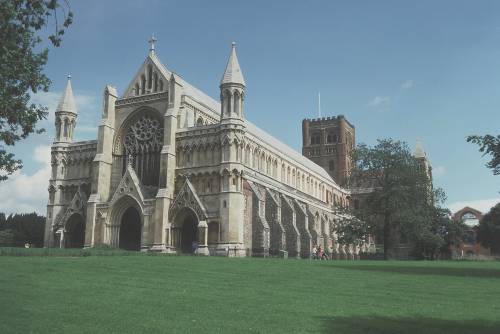
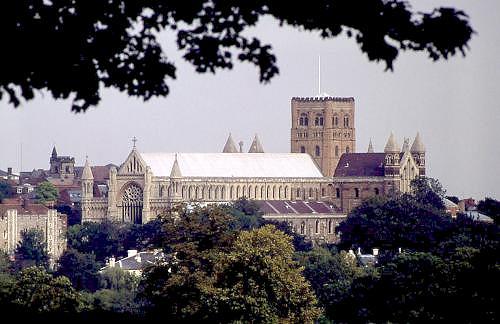
The Cathedral and Abbey Church of Saint Alban is the seat of the Bishop of St Albans and serves the Diocese of St Albans in the counties of Hertfordshire, Bedfordshire, the Borough of Luton and the London Borough of Barnet. The Cathedral is also a parish church with a large and active congregation. The head of the Cathedral establishment is the Dean of St Albans, the Very Reverend Dr Christopher Lewis. Dean Lewis is also the Rector of the Parish of St Albans Abbey.
The Cathedral is a center of worship and mission with a world renowned musical tradition and a highly regarded Education Center. Ecumenical links are strong with honorary ecumenical chaplains from the Roman Catholic, Free Church, Lutheran and Orthodox traditions. Regular services are conducted in the Cathedral by the ecumenical chaplains who take full part in the life of the place.
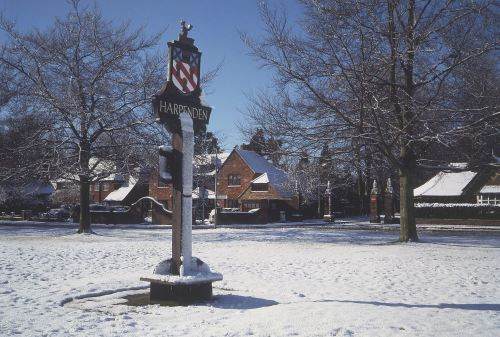
Harpenden Common, St. Albans
St. Albans Town Market dates to 1553. It is held every Wednesday and Saturday.
The Abbey and Cathedral from the southwest
Back to the Williams Main Page