 |
|
|
|
|
|
|
|
|
|
|
|
|
|
|
|
|
|
|
|
|
|
|
|
|
|
|
|
|
|
|
|
NEW YORK CITY's HOME GROWN AFRICAN CICHLID FISHERIES |
|
|
|
 |
|
|
|
Tropheus duboisi |
|
|
|
|
|
|
 |
|
 |
|
|
|
|
|
|
 |
|
|
|
|
|
|
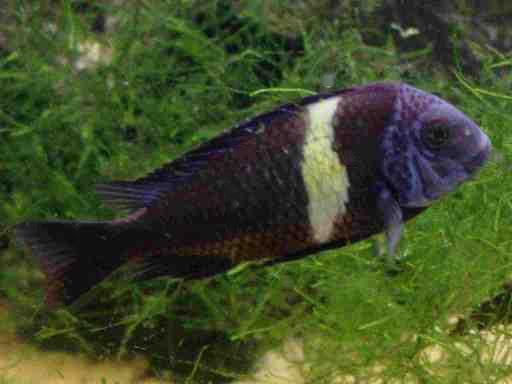
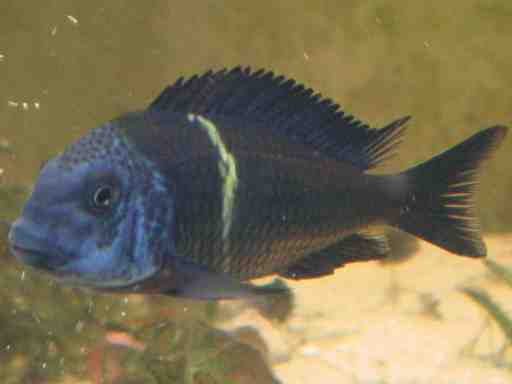
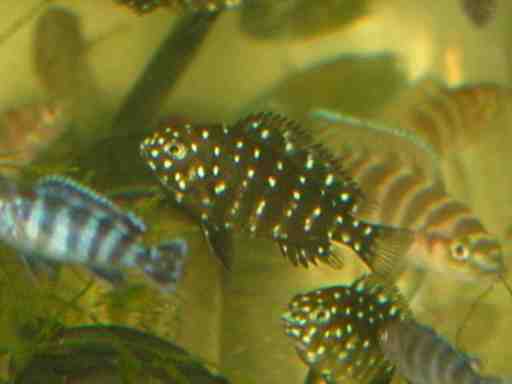
One of most popular Tropheus out there, the juvenile pokka dot pattern is truly unique. No matter how fast they grow, whether they are two inches in size or three, they start losing they pokka dots once they have reached a certain age. They first develop the blue face, as the dots are slowly replaced by the single vertical band. Depending on which race, the band can be solid white, with or without yellow or green highlights. There is much debate on whether the highlights vary with the types of foods found in their local environment. Regardless of the color, the band then becomes bolder with age, and is used to advertise dominance. Subordinate males have lost their band completely after losing battles for hierarchy.
The vertical band is also unique to each individual fish and it seems that no two fish are alike, making them excellent "finger prints." They are also hereditary and you can actually see how the daughter's band matches the mother and the son's matches the father. |
|
|
|
|
|
|
|
|
|
|
|
This duboisi "Maswa" displays a broad white band with yellow highlights. Blue is visible along the base rays of all fins in addition to the face. |
|
|
|
|
|
|
|
This less common duboisi "Karilani Island" displays a thin band. |
|
|
|
|
|
|
|
|
|
|
|
|
 |
|
|
 |
|
|
|
|
|
|
|
|
|
|
|
|
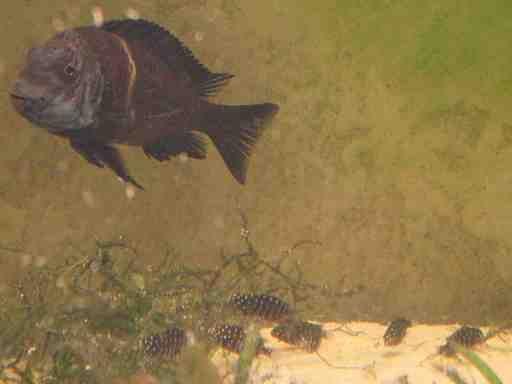
| After mouth brooding eggs for two and a half weeks, a half dozen fry can be seen swimming into and out of the mother's mouth by the end of the month. Later, the mother is returned to the main tank and the fry remain in isolation. |
|
|
|
|
|
|
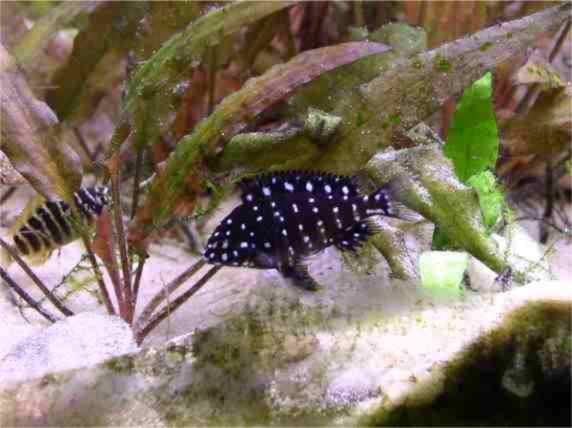
A close up of a fry, showing the juvenile pokka dot pattern, which slowly changes into the blue face and single band pattern of an adult, by the end of the year. This fry has adopted an aggressive posture against another smaller fry. |
|
|
|
|
|
|
|
|
 |
|
|
|
|
|
|
|
|
|
|
| Later, the fry are removed from their hatchery and placed into a mixed species tank, with plenty of algae for grazing on. |
|
|
|
|
|
|
|
|
|
|
|
|
|
|
| FOR MORE INFORMATION REGARDING: |
|
|
|
|
|
|
|
 |
|
|
|
|
Back to Tropheus moorii main page |
|
| Our basic tank setups. |
|
|
|
|
|
| The ecology of the Rift Valley Lakes |
|
|
| About us |
|
|
|
| Homepage |
|