 |
|
|
|
|
|
|
|
|
|
|
|
|
|
|
|
|
|
|
|
|
|
|
|
|
|
|
NEW YORK CITY's HOME GROWN AFRICAN CICHLID FISHERIES |
|
|
|
 |
|
|
|
Tropheus moorii "Ilangi" |
|
|
|
|
|
|
 |
|
|
|
 |
|
|
|
|
|
By far one of the most difficult Tropheus to breed, these individuals from Nkamba Bay usually command a higher price. While other varieties start breeding before they reach two years of age, the female Ilangi start breeding before they reach three years. Given that a Tropheus lives four to six years in a peaceful environment, restricts the total number of fry she can produce in her lifetime. In addition, while other races produce clutches around eight to twelve, a female Ilangi will produce half that.
|
|
|
|
|
|
|
|
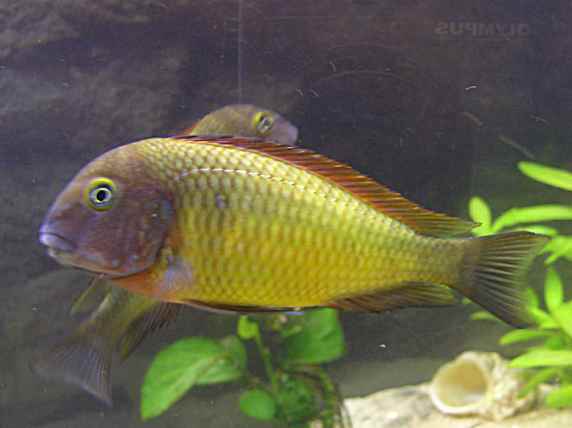
From this angle, this male shows a red throat and dorsal fin, brown head and a yellow body. |
|
|
|
|
|
|
|
|
|
|
|
 |
|
|
|
|
|
|
|
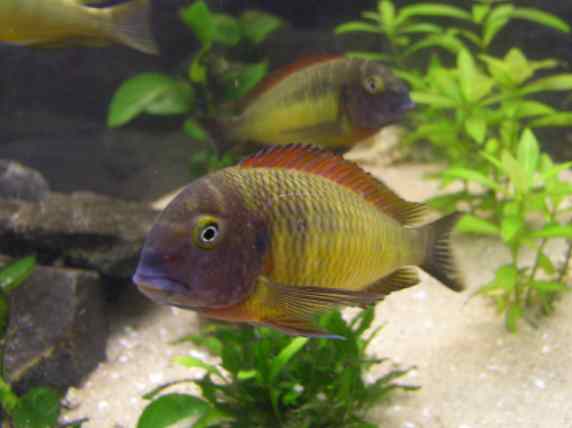
| A dominant female, at first glance almost indistinguishable from a male. She was the first of the colony to start laying eggs. |
|
|
|
|
 |
|
|
|
|
|
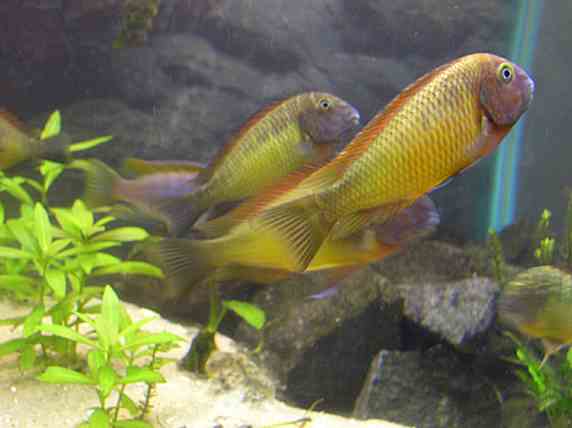
The female to the rear retains her juvenile brown vertical stripes, which is visible only along the upper half of her body. Other submissive females retain brown stripes, which run all the way down to the pelvic fins. |
|
|
|
|
|
|
|
|
|
|
| FOR MORE INFORMATION REGARDING: |
|
|
|
|
|
Our basic tank setups. |
|
|
|
The ecology of the Rift Valley Lakes |
|
|
|
About us |
|
|
|
Homepage |
|
|
|
|
|
|
 |
|
|
|
Back to Tropheus moorii main page |
|
|
|