 |
|
|
|
|
|
|
|
|
|
|
|
|
|
|
|
|
|
|
|
|
|
|
|
|
|
|
NEW YORK CITY's HOME GROWN AFRICAN CICHLID FISHERIES |
|
|
|
 |
|
|
|
Tropheus moorii "Ikola" Kaiser |
|
|
|
|
|
|
 |
|
|
|
 |
|
|
|
|
|
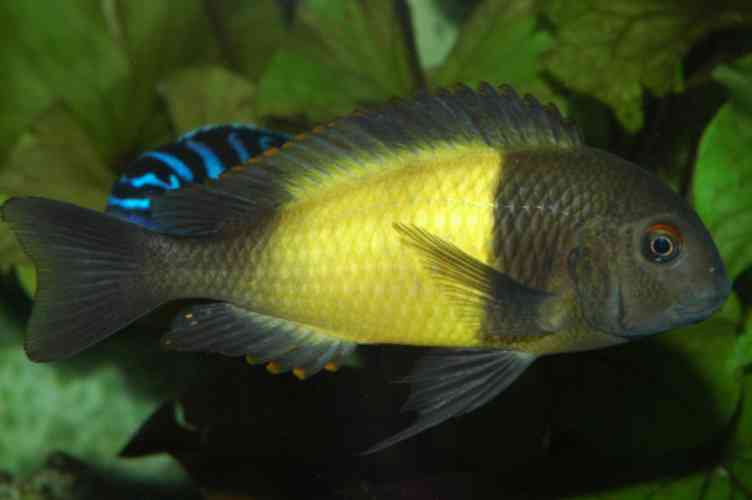
As a member of the "black species" Ikolas fry start out as a solid smoky gray color and slowly develop a broad yellow band across their mid sections, whereas a closely related fish, the Kiriza starts with a narrow yellow band when they are young and loose it as they mature. In addition these two races developed in separate areas of the Lake. The Ikola population can be found along the mid-eastern coastline, whereas the Kirizas are found to the Northwest of the Lake.
Though not a difficult fish to breed, this particular race seems to require more space then others and appear to be extremely active. In addition, a larger population is required simply to maintain their bright yellow band, which would otherwise simply fade away, leaving a grayish drab individual. |
|
|
|
|
|
|
| As with some other Tropheus species, this female lacks egg spots, which provide a clue to her sex. |
|
|
|
|
|
|
|
|
|
|
|
 |
|
|
|
|
|
|
|
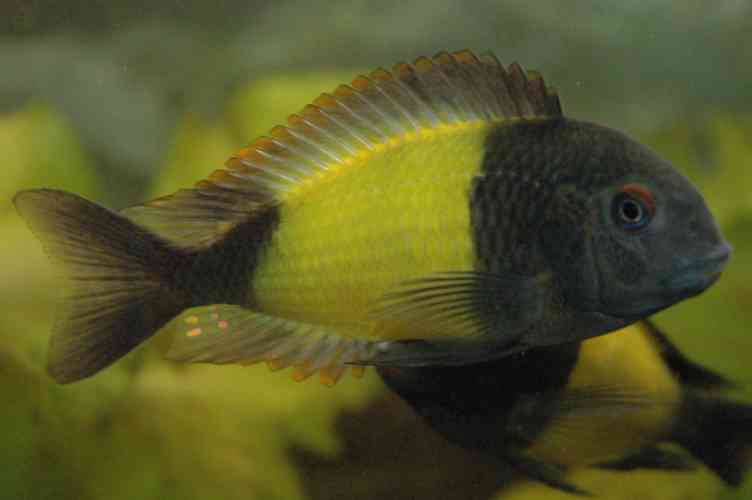
| This male, on the other hand can be seen showing distinctive eggs spots, in addition he sports a more pronounced, orange highlight along the dorsal and anal fin and a brighter red eye lid. |
|
|
|
|
 |
|
|
|
|
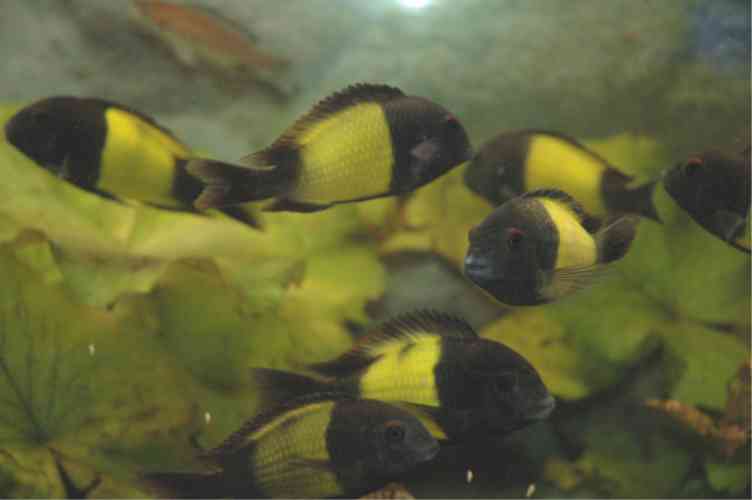
A large colony is highly recommended to maintain good health, vibrant color and to disperse aggression. |
|
|
|
|
|
|
|
|
|
|
| FOR MORE INFORMATION REGARDING: |
|
|
|
|
|
Our basic tank setups. |
|
|
|
The ecology of the Rift Valley Lakes |
|
|
|
About us |
|
|
|
Homepage |
|
|
|
|
|
|
 |
|
|
|
Back to Tropheus moorii main page |
|
|
|