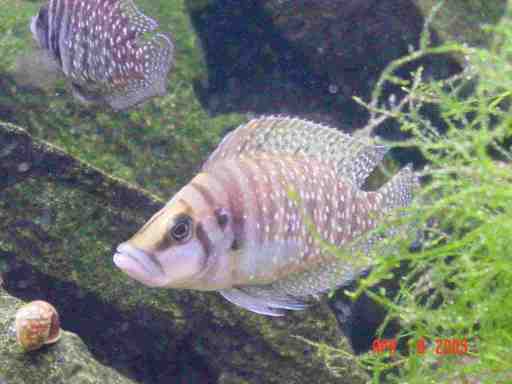
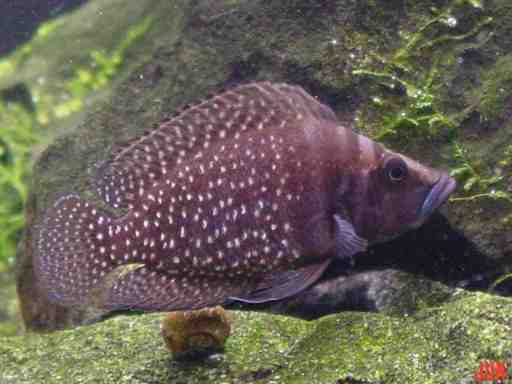
Calvus are egg predators and can be found hovering approximately a foot away from other mouth brooding species during courtship. I have observed on many occasions, these predators dart in and swallow large Tropheus eggs as they roll over rocks. Over the next few months, they became quite adept at egg stealing and would dive in and consume an egg as soon as it appeared in the female Tropheus' oviduct! Needless to say Tropheus brood sized dropped 75% during this time.
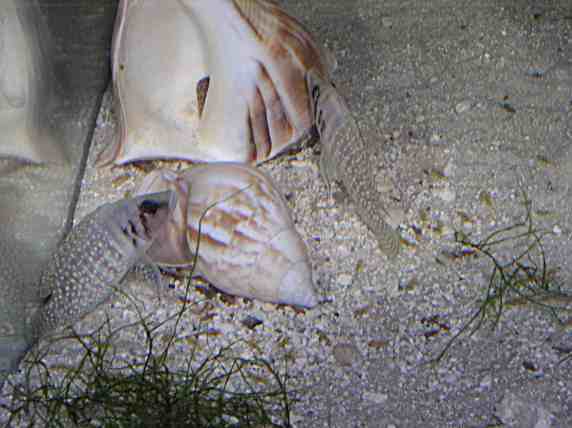
Being such slow growers, the colony did not start breeding till they were almost two years old. Males were twice the size of females and measured a hefty 2.5", even though they have not yet attained a fraction of their full size. The females seem to prefer the seclusion of a large shell to a cave and the only evidence of breeding was the unwillingness of the female to leave her shell. After a couple of weeks individual fry can be seen trying to escape from their shell home, only to be swooped up by the guarding mother. We have been unsuccessful in breeding this fish in a large community tank, since they seem bothered by their more active neighbors. Only in a calm 10 gallon isolation tank, was the mother successful in rearing her tiny young (shown lower). Here two females and their respective shells seem to respect each other's as they both guard their communal school of tiny yellow fry.