MRI Compatibility
Magnetic Resonance Imaging (MRI) is one of several medical technologies used to "see" inside the human body in order to diagnose certain illnesses. MRIs pose an additional challenge because they use powerful magnetic fields which could interact with the magnet inside the implant. At the time of this writing, only the Nucleus 24 and Med-El have been approved for use with MRIs. The Nucleus is approved for use with a more powerful MRI (1.5 Tesla), but requires that a small surgical procedure is done to remove the magnet in the implant and then to replace it after the MRI is taken. The Med-El is approved for use with a less powerful MRI (0.2 Tesla), but does not require a surgical procedure or removal of any magnet. Some people argue that low-powered MRIs are too uncommon, so this isn't a feasible option, but they are common enough--making up at least 20% of MRIs sold in 1994 alone, according to one study. The Clarion has not yet been approved for use with MRIs, although the physical properties of the Clarion CII Bionic Ear and interaction with an MRI are very similar to that of the Med-El while those of the Clarion HiRes 90k Implant are similar to that of the Nucleus, so is not unreasonable to anticipate that someday in the future the Clarion may also be approved for MRI use.
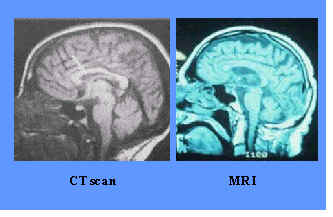
| Meanwhile, how important is MRI compatibility to begin with? Medicine is routinely coming up with new uses for MRIs, and they are commonly used to diagnose significant illnesses. Consequently, MRI compatibility is certainly a big selling point for some manufacturers who argue that this is a vital feature. However, it should be stressed that there ARE alternatives to an MRI--such as CT scans, PET scans, x-ray, ultrasound, and others (angioplasty, mammoscintigraphy, etc.). In fact, anecdotal evidence suggests that doctors almost universally prescribe CT scans instead of MRIs for cochlear implant recipients, regardless of whether or not it is MRI compatible. For most purposes, with a few extremely rare exceptions (such as diagnosing Multiple Sclerosis), a CT scan is sufficient for diagnosis. In fact, although MRIs are generally considered slightly superior to CT scans, in some cases CT scans are actually considered superior. Regardless of whether or not the magnet is removed, the cochlear implant blurs the resolution of MRIs in the area around the implant, which also limits its effectiveness and is another reason that cochlear implant recipients tend to receive CT scans instead of MRIs. | |
The risks involved with getting an MRI with a cochlear implant are different for the different devices. If the magnet is not removed, research suggests that there is some risk that the MRI will demagnetize the magnet within the implant. For instance, One study showed that, with the Clarion device, there was no implant damage except that the internal magnet was demagnetized by 78.5% with a 1.5 Tesla MRI and 3.36% with a 0.3 Tesla MRI (St. Croix Medical, Weber BT (http://www.stcroixmedical.com/cgi-bin/i_abstra.idc?key=125). Other than that, the evidence suggests that MRIs may be safe for Clarion and Med-El recipients in the event of such a dire need.
Even if the magnet is removed, there are complications involved with the surgical procedure necessary to do so. In addition to the general risks of anesthesia, it is logistically difficult for hospitals to manage and coordinate such a process. Certainly, in almost any emergency situation, this would not be an option as it requires a cochlear implant surgeon to be on hand at the moment. Furthermore, there may be complications involved with scarring of the tissue (which could make it hard to keep the headpiece on) or even skin tissue breakdown in the area above the headpiece, especially if the procedure is done repeatedly. This are more reasons why cochlear implant recipients almost universally get CT scans instead of MRIs, even with the option of a removable magnet. Nevertheless, the fact remains that as of today, the Nucleus and the Med-El are the only implants that are FDA-approved for use with an MRI.
Is the issue of MRI compatibility hyped up by manufacturers as a selling point? Is this a legitimate concern for people who expect they may absolutely need an MRI in the future? This is a personal decision that has to be made. Anyone who is concerned about this issue should consult their doctor and/or radiologist for more information.
