 |
|
|
|
|
|
|
|
|
|
|
|
|
|
|
|
|
|
|
|
|
|
|
|
|
|
|
|
|
|
|
|
|
|
|
|
|
|
|
|
|
|
|
Research interests:
1. Disease resistance with plant ethylene.
Ethylene is widely used in agriculture because of its unique and powerful role as a regulator of many aspects of plant growth and development. Plant ethylene increases in several plant-pathogen systems after pathogen attack, however, it is not clear if this increase is a factor of resistance or susceptible. The goal of this project is to understanding the role for ethylene in resistance to pathogens and other stress, to be able to improve quality and quantity of tomato through biotechnology.
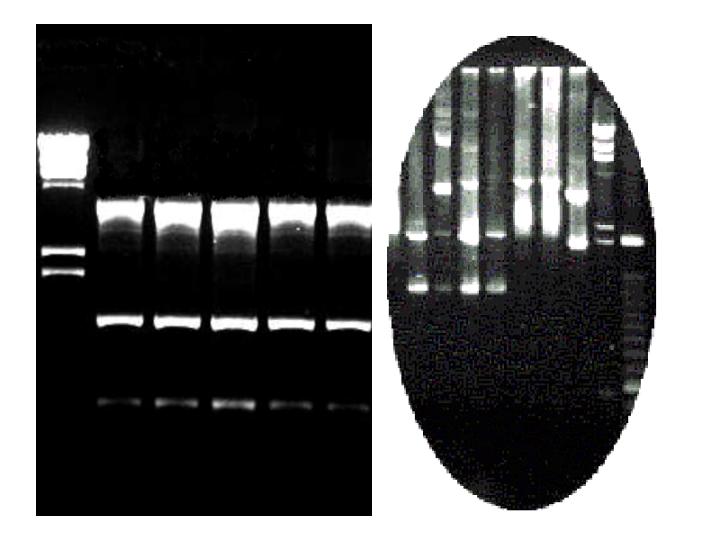
We use gene isolation, construction and transformation technologies to modify ethylene level in tomato (Fig. 1), |
|
|
|
 |
|
|
|
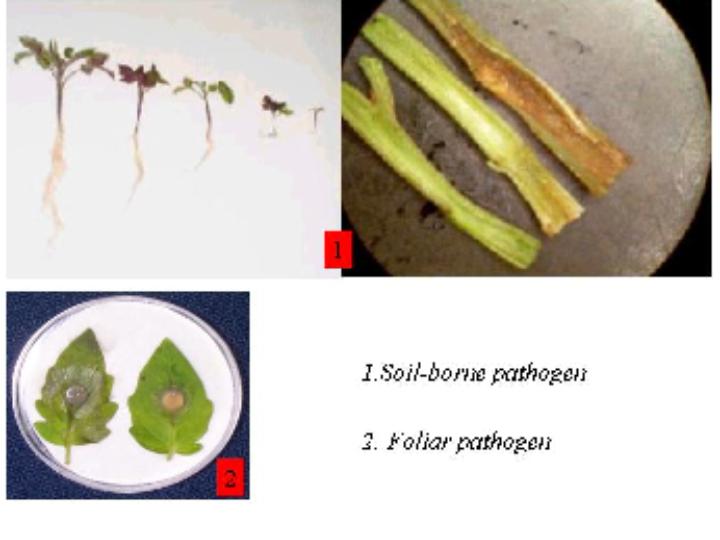
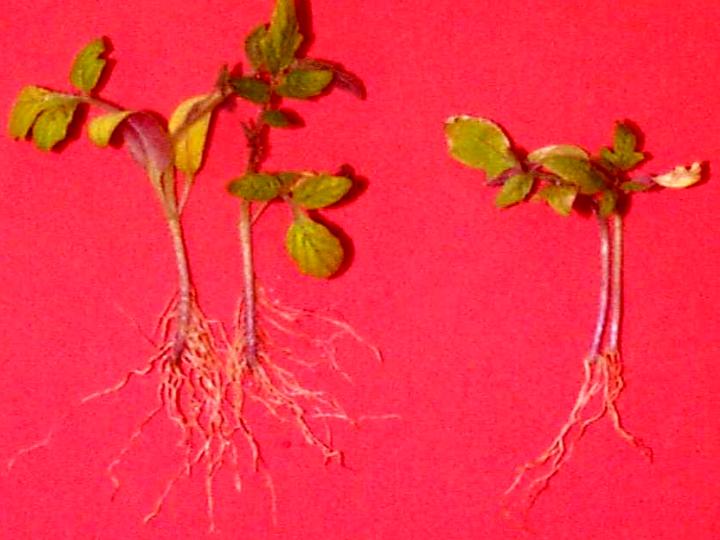
investigate the resistance of transgentic tomatoes to major fungal pathogens Fusarium oxysporum and Verticillium dahlia which cause the wilt of tomato, and major bacterial pathogens Pseudomonas syringae which causes speck on tomato, and Xanthomonas campestris which causes spot on tomato (Fig. 2, 3) . |
|
|
|
|
|
 |
|
|
|
|
 |
|
|
|
|
|
Fig. 1. Ethylene-related gene isolation and construction |
|
|
|
|
|
|
|
|
Fig. 2. Tomato infected with pathogens |
|
|
|
|
|
|
|
|
|
Fig. 3. The reaction of Transgentic tomato to root-cut |
|
|
2. Biological control of plant diseases |
|
|
|
|
|
|
(1) Analysis antibiotics biosynthetic locus in Pseudomonas spp. |
|
|
|
 |
|
|
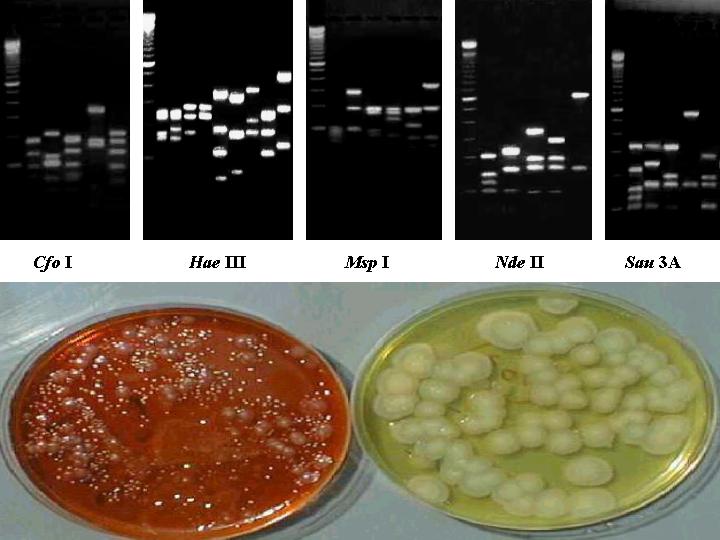
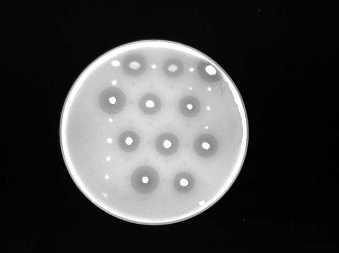
Antibiotic Phl (2.4-diacetylphoroglucinol) produced by fluorescent Pseudomonas spp. play a key role in suppression of soilborne plant pathogens. Understanding of the genetics and regulation of Phl biosynthesis will facilitate their exploitation as effective and reliable biocontrol agents. With colleagues at ETH Switzerland, we have investigated the conservation of the PhD biosynthetic locus, the genetic diversitry, carbon source ultilization, and other relative biocontrol properties among 87 worldwide Phl-producing strains (see Fig 4,5) |
|
|
|
|
|
Fig. 5. Similarity analysis by PCR-RFLP, and Phenotypes of biocontrol Pseudomona spp. |
|
|
|
|
|
 |
|
|
|
|
|
Fig. 4 Inhibitory to Bacillius in vitro |
|
|
|
|
|
|
|
|
|
|
|
|
|
|
(2) Mechanisms and molecular ecology of the plant growth-promoting rhizobacteria (PGPR)
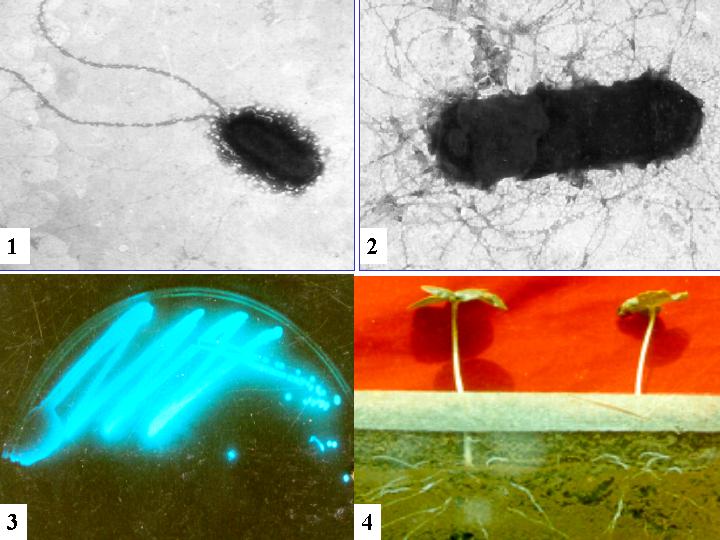
With sucessful isolation and identification biocontrol agents from rhizosphere, I have introduced marker genes (gusA and luxAB) into Pseudomonas spp. to monitor the colonization of PGPR in soil and root (see Fig. 6). Study on the biocontrol mechanisms of PGPR to seedling diseases caused by major fungal pathogens (Fusarium oxysporum f. sp. vasinfectum, Verticillium dahlia, Pythium ultimum, Rhizoctonia solani, colletotrichum gossypii, and Gaeumannomyces graminis van. tritici) and major bacterial pathogens (Erwinia carotovora, Pseudomonas syringae pv. tomato, and Xanthomonas campestris pv. vesicatoria). Extraction and detection of antibiotics, enzymes, and other metabolites produced by biocontrol microorganisms. |
|
|
|
 |
|
|
|
Fig. 6
1. Pseudomona spp.
2. Bacillus spp.
3. Marked-strain in dark
4. Detection in situ |
|
|
|
|
|
3. Use of the metagenome to discover novel metabolic genes or useful products from environment |
|
|
|
It is an exciting new research area. I was able to construct 10 metagenomic DNA libraries. More than 3o useful genes (e.g. bioplastic related genes or biocontrol genes) have been isolated by bacterial genetics, mutagenosis, protein recombination and purification, bacterial physiology and biochemistry. |
|
|
|
Will continue when I get time later.... |
|