Protect America Act
Protect America Act
Protect America Act expires
Insider Trading by Congress
Insider Trading by Telco
Insider Trading and 911
Insider Trading and FDA
Insider Trading and Media
Insider Trading and Democrats
Insider Trading and Republicans
Insider Trading and Energy
Insider Trading and the U.N.
Insider Trading and France
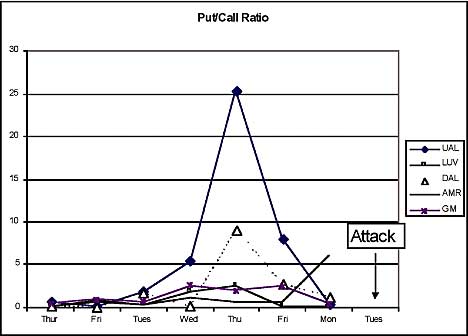
911 stockputs
911 stockputs
911 attack
What is a "put" option?? (click here...
)
Insider Trading and ISP's
Mammon Definition
Wikipedia Mammon Definition
What is a "call" option?? (click here...
)
"Complete 911 Timeline"
CSP
CSPWiki
posted October 24, 2005 at 02:19 pm James Surowiecki on insider trading and members of Congress. From 1993-1998, "senators beat the market, on average, by twelve per cent annually".
So where should investigators be looking? The price action in the S&P 500 index options, specifically September 1100 S&P puts, was curious. Those options were "in the money," meaning they gave the right to sell at a price above the market -- but only until they expired in September. As they approach expiration, the price of such an option theoretically should fall to the difference between the strike price and the underlying index level. But for two weeks leading up to the attacks, the September 1100 index options stopped declining as theory dictates, indicating demand for those options remained inexplicably high. Those index options rocketed from around $12 a contract to over $90 after the attack. Just 100 of those options would have netted $780,000, and thousands change hands on a typical trading day. "It wouldn't be that tough to build up a position of a few thousand of these contracts over a few days," Najarian says. "By then, you're getting into the tens millions of dollars pretty quickly." So, as Deep Throat suggested in the Watergate scandal, maybe investigators should follow the money -- to the S&P index options.