|
North Yorks Powered paragliding |
STORYS
The Dark Peak That Turned White
The first snows of the winter had covered the Peak District National Park so I thought it would be the perfect opportunity to load the car with my wife, two kids, mother and the powered paragliding gear and head for the snowy scenery. The planned take off area is conveniently positioned next to a pub on the outskirts of Derbyshire and after finished a short walk I left the family to the comfort of a meal and a drink while I grabbed my flying kit from the back of the car and prepared everything for a tour of the Dark Peak by air.
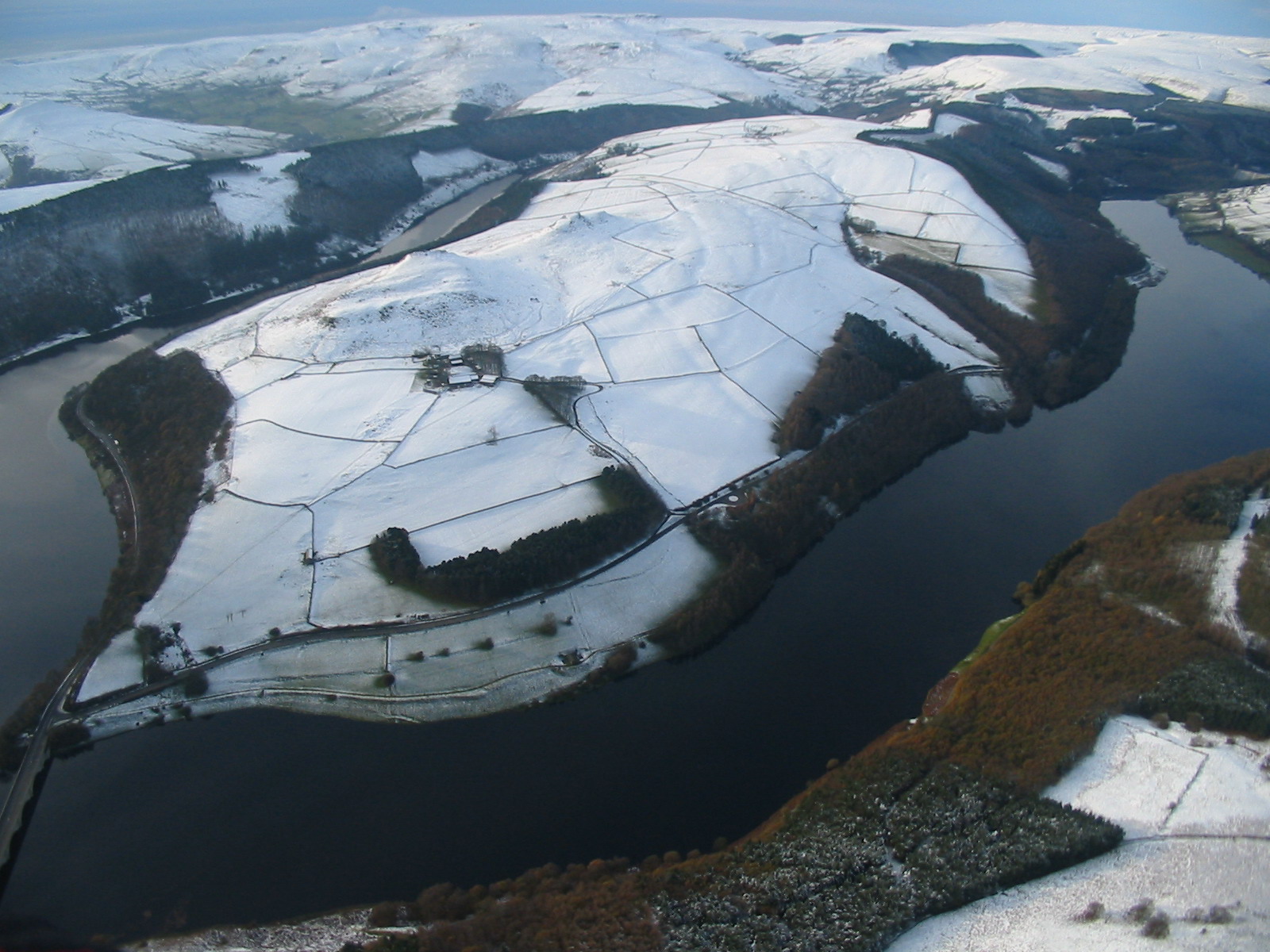
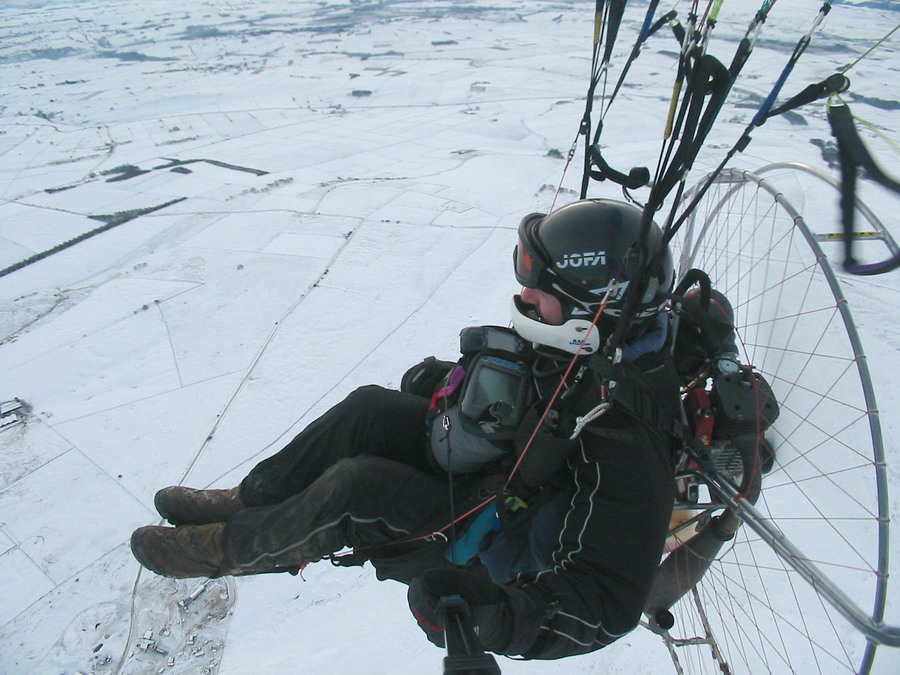
The snow and a full tank of fuel led to a longer than usual take off run but once I was in the air I was able to sit back and relax while scanning the white expanse in front and beneath me. The higher I climbed the more distant valleys and reservoirs became visible and I set off in the light winds towards the dark peak area of the Peak District. It’s called the Dark Peak area because the dark colour of the moorland and the peaty soil, but on this day it was coated with a good covering of snow and the open high ground had a completely new appearance. The silky smooth air allowed me to point the wing in the right direction and release the steering controls to let the paraglider fly at trim speed while I hid my gloved hands behind the reserve parachute container out of the wind chill. Although I had a flight planned, I didn’t know if a stronger than expected wind speed or the cold would force me to alter my course.
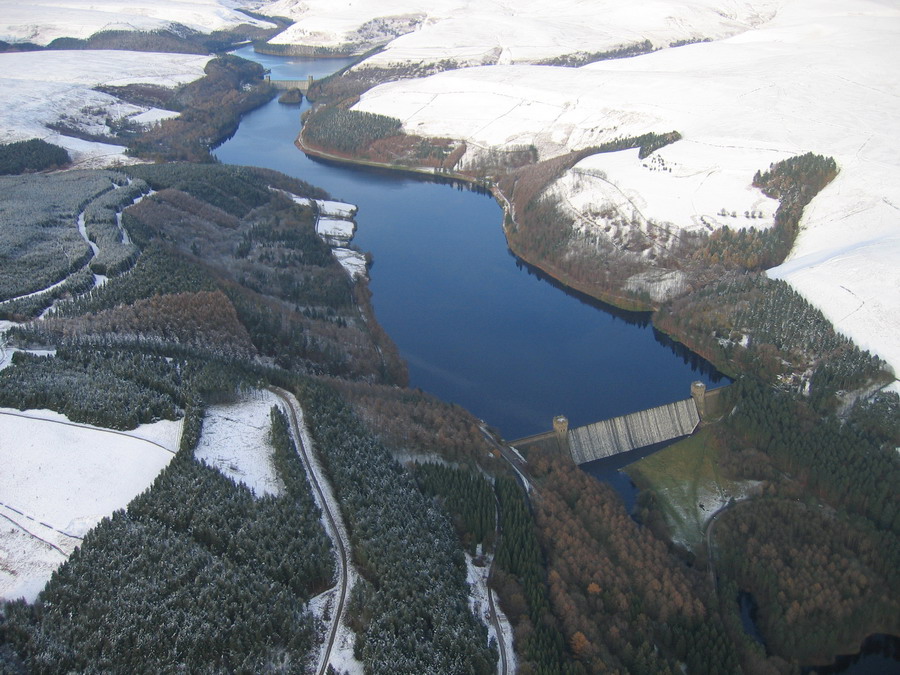
When I reached Ladybower reservoir easily I realised that this little venture was well on track and I continued with confidence towards the Derwent and Howden dams. The big reservoirs and dams are an impressive feature in this area and were the practice target for 617 squadron during the Second World War. They later went on to complete successful attacks on dams in Germany where they earned their name “Dambusters”. I was at least a two thousand feet above the reservoirs at this point thinking how much safer it was flying an aircraft at this height instead of piloting a Lancaster bomber through the narrow valleys close to the water and over dams. When the dams were finished the valleys were allowed to fill and two villages became victims of the rising water levels and were evacuated, but their ghostly remains are sometimes visible from the air, or during periods of drought. There weren’t any signs of a water shortage during this day because hundreds of litres were spilling over the walls of the dams into the larger Ladybower reservoir. I circled in the area for a while before venturing upwards and onwards towards my next turn point five miles away.
Howden & Derwent Dams
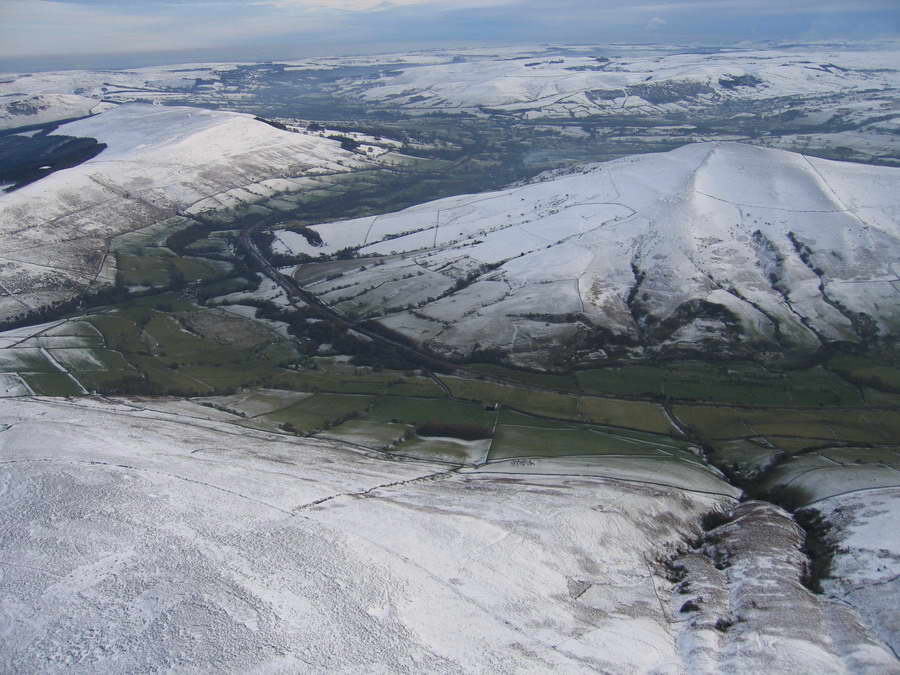
As I crossed the vale of Edale I could see a large group of people at the top of a hill called Mam Tor which is sometimes used for people who fly with hang gliders and paragliders without engines. I used to fly from the hills in the area before paramotors became legal and find it difficult to understand why more people launching from the hills cannot see all the benefits that a lightweight method of propulsion provides. When I flew over the top of Mam Tor I watched a paraglider was having a steady glide down to the valley while I flew around Castleton and Peveril castle. I was near Great Hucklow gliding club and half way on my route with at least six litres of my original eight and a half litres remaining and I decided to increase the speed by releasing the trimmer controls that allow the trailing edge of the wing to be raised. When the trailing edge is raised the wing profile becomes flatter and faster, but the only problem was that one of the trimmer controls had frozen and initially I started to fly in a big circle. I pulled the free trimmer control back on while I could break the ice out of the frozen one. The throttle control became a useful ice hammer and it wasn’t long before I had cleared the ice that must have formed when I set the wing up in the take off field. With the trimmers fully released I was now covering the return leg of the tour at well over thirty miles an hour. I cruised past the inactive gliding club and quickly skirted around the village of Hathersage.
The Vale of Edale
Although I spent many years hill flying in Derbyshire I only got the chance to glance at the scenery because you had to spend too much time actively flying to stay up and were constantly looking out for other hang gliders and paragliders that fly from the same crowded take off sites. The flying on this day with the paramotor was totally different with the ability to use the power to fly clear of the hills and have a good look round. The icy roads restricted the numbers of cars over the high ground despite the Peak District being the most visited National Park in the country, but plenty of people were visible walking along Stanage edge for a chance to get to see the excellent views in this sea of white. At this point I the light was beginning to fade and my little twenty four mile outing had taken longer than planned due to the fact I slowed in certain areas to take photographs. I landed next to my waiting family and quickly bundled the paramotor and paraglider into the back of the car. The flying excursion had taken an hour and fifteen minutes using the Skywalk Tequila paraglider / Rad paramotor combination and I used about six litres because I opted for speed on the return leg of the run. I returned home after spending time with the family and experiencing extreme views that only a few people get the chance to see. Paramotors can give you a taste of adventure, fit into the family life and the back of a car. Portable adventures with a foot launched microlight are a seriously addictive way exploring beautiful skies and scenery without spending ridiculous of time and money learning and paying for the equipment. I would recommend it to anyone who has the urge power up, fly off and leave the crowds.
Paul Haxby.
Contact paul if you are intrested in taking up powered Paragliding
Tel.... 01302 880496 or Mobile 07946 548292