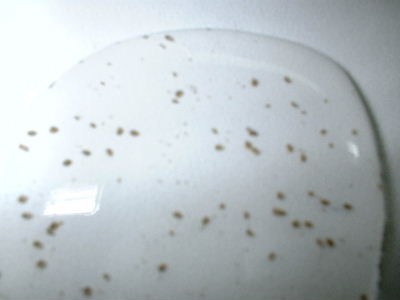
| Microworm Culture The culture media can be prepared with plain oatmeal, cooking the amount you need to fill about a third of a rectangular plastic container. The container must have tall sides for the worms to crawl up. Cooking the oatmeal kills spores and mold which will harm your culture. The container needs to have a lid. A lid can be made out of plastic wrap. After you cook your oatmeal let it cool and mix it with water until it becomes a thick slurry. Add a pinch of bakers yeast to the oatmeal and mix it in. Carefully pour it into your container making sure you don�t get any media on the sides of the container. The starter culture should then be spread over the surface of the oatmeal. The culture should stay in a well lighted area at room temperature between 68-85*F. After three to seven days the worms will start climbing up the sides of the container. They can be collected by scraping them up with a tooth brush and fed to the fry. Avoid getting the media into the water because it will spoil and dirty the tank. The culture will produce about one teaspoon of worms a day for three weeks or so. BRINE SHRIMP All that you need is a clear 1-gallon container with a lid.. Fill it with water and stir in 8 table spoonfuls into the water. ( 8 TBS per gallon) The water needs to be aerated with an air tube. Now add some eggs. Keep in a well-lighted area that is relatively warm to make them hatch quickly. Soon you will see tiny little orange things swimming around in the container. You can use a turkey baster to slirp them up and into a brine shrimp net. A brine shrimp net can also be made out of a piece of cloth. Rinse the shrimp in the net with cool fresh water to rinse off the salt. I use a turkey baster because I can get the shrimp without picking up egg shells too. Then you can feed them to your fry in small amounts. Do not over feeding them. After a while the water will turn colors and start to smell as unused shrimp begin to die. You can pour the old water into the shrimp net to filter out particles and use the water again. After that, though, you need to start over with new water. If you want to keep your shrimp alive you can feed them. They will grow larger, however, and may get too big for small fry. Older brine shrimp are not as nutritious to fry who need more fats. Newly hatched naupulii are high in fats. You can feed adults to larger fry and adults. Foods to use include yeast, whey, wheat flour, soybean powder, fish meal, and egg yolk. These are just the ones I use. Drip a little food in around three times a day. Feed more often if you want faster growth. If you want to grow adults you should use at least a ten gallon tank which will have to be cleaned often.. It takes about eight days for the shrimp to reach adult size and they will live about 50 days. Decapsulating Brine Shrimp Eggs Use the water that is left after one hatching of the shrimp. Put it in a container and add as many eggs as you wish to decapsulate. Aerate for about an hour or so. Next add a measured amount of bleach that is about 2/3 of the amount of water that you used. Aerate for some time after that. Once the eggs start turning orange or whitish, strain the eggs using a cloth. Rinse the eggs very well, at least three or four times with fresh water. For more information about Brine Shrimp visit http://www.ee.pdx.edu/~davidr/discus/articles/artemia.html |
| Infusoria or Green Water The best way to make green water is to put old aquarium water from your fish tank into a clear container and place it in a sunny window. Put pieces of lettuce (small pieces) in the container. The culture will develop after a few days. In a week the water should become cloudy as the bacteria begins to grow. Then the water will start to clear up as the infusoria start growing and eating the bacteria. Once the water is completley clear you will be able to see areas that are filled with infusoria. Siphon them out and put them in your fry tank. |
| Mosquito Larvae Adult bettas love mosquito larvae. To culture them all you have to do is put a bucket, or some other good sized container of old dirty tank water, pond water, river or lake water outside in your yard somewhere there is usually some shade. Put some dirt, grass clippings, and some dead leaves in the water. (Not too much. Just fill the bottom of the bucket.) This of course has to be done during warm weather when mosquitos are out and breeding. The water will stagnate creating the perfect environment for mosquitos to lay their eggs in. You will start to see larvae after a few days. They look kind of like really hideous worm things floating vertically from surface of the water. Have a net ready and sneak up on the bucket. You have to sneak because if the larvae see you move they will dart to the bottom and hide in the muck. If they do this, just sit there for a few seconds and they will return to the surface. Scoop them up in the net and rinse them off in cool, clean water. Feed sparingly because if your bettas don't eat all of them they may grow up and your house will be full of mosquitos. |
 |
| The culture needs to be stirred each week to keep up production. After a while the media will get thin and runny. Placing a piece of sponge or a few cotton balls on the surface will help absorb access liquid. Eventually the media will start to get a strong odor and turn a soupy grayish color. Although worms will still be crawling up the sides, the media is bad and a new culture should be started using a spoonful of the old to introduce the worms. |
| This is not a good staple food for your fry. They are only best for them their first week or two along with microworms and vin eels. |
 |
| iygyt |
| iygyt |