

GENERAL CAMPING TIPS -Although most wild animals are afraid of people, some of them may still approach our campsites. Do NOT feed them. This not only hampers the animals
natural instincts but it encourages them to make repeat visits. They may even
decide to help themselves. ALWAYS store your food away in a car or hang it in
a tree. NEVER leave food in your tent. These animals can and will do a lot of
damage.
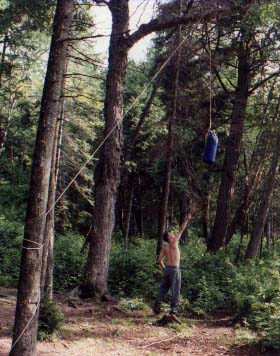
Proper way to hang a bag in a tree. -Measure ingredients for each meal ahead of time and pack in ziplock bags.
Label each bag accordingly. Reuse bags if possible. -Don't forget the heavy duty aluminum foil. There are many uses for it at camp. -Cover pots whenever cooking outdoor. Food will get done quicker and you will
save on fuel. Also helps keep dirt and insects out of your food. -Freeze meat before putting in cooler. Keeps other foods cold and will keep
longer. -Apply cooking oil on camp grill to keep foods from sticking. -Use convenience or instant foods for quick meals. -To keep matches dry, dip stick matches in wax and when needed, scrape off the
tip of the match and light. Also keep matches in a waterproof container. -Use ziplock bags to store foods like soup, sauces, chili etc. Freeze the bag
and put in cooler. It helps keep other foods cold and when ready to eat, put
bag in hot water to heat through. -Put a pan of hot water on the fire while you eat so that it'll be ready for
cleanup when you are done. -Bring energy boosting snacks such as GORP trail mix, granola bars, dried
fruit, beef jerky etc. for in between meals. -Pita bread packs better and stays in better shape while camping than regular
type breads. -To remove odors from your cooler, wipe with a water and baking soda solution. -Fill gallon milk jugs or 2 liter soda bottles with water or juice and freeze.
They keep the cooler cold and provide a cold beverage. -On your last day of camp, use your leftover meats and vegetables to make
omelets for breakfast. You can use almost any ingredient in omelets. Then
you don't have to take the leftovers home with you. -Pre-chop ingredients such as onion, peppers etc at home. Pack in ziplock
bags. Pre-cook select meats and freeze for quick meal preparation. -Use a separate cooler for drinks so not to open the food cooler too often. -Pack food items in separate ziplock bags. Saves space. Easy to pack.
Resealable. Can use for trash container when empty. -Instead of "stick" or "tub" butter or margarine, try "squeeze" margarine.
This squeeze bottle is much easier and cleaner to use when in the woods. It is
also great for cooler temperature. If it gets too hard, simply place the bottle in a pot of warm water for a few minutes. -Cook on or over coals (either wood or charcoal). Coals provide a more steady,
even heat without the smoke. Avoid burning your food and avoid undercooked
food in the middle. -To save room when packing your camp kitchen, use your pots as mixing bowls.
Also use large pots to heat up water and do the dishes in the large pot.
Then lean the pot last with fresh soapy water. -When barbecuing chicken, grill the chicken without the sauce until it is
halfway cooked, then coat with sauce. The sauce won't burn onto the chicken
and your meal will be more flavorful. -To easily remove burnt on food from your skillet or pan, simply add a drop or
two of dish soap and enough water to cover bottom of pan and bring to a boil. -Precook rice or noodles at home. Let cool. Store in a ziplock bag. Just heat
up and add to your favorite dish at camp. -Leather work gloves double as an oven mitts. -If you are truly into outdoor camping, invest in one of those airtight
bag/sealing systems. Without air, bacteria doesn't grow (as fast) and cold
foods seem to keep better. Prepare individual servings in airtight bags so
you only open what you need. For frozen items, individual servings defrost
faster than large portions. Since the bags are reuseable, use them for
your litter. They are also lighter than cans. Finally, the bags are
thicker than other storage bags and will help cut down, if not eliminate, food
odors. - Submitted by C. Berman -Use two or four large coffee cans filled with water and covered with heavy
duty aluminum foil as grill holders. As your meals cook, water heats up for
dishes or cleanup. Store in their own plastic bags to keep soot from other
items. Fold plastic bags inside for storage along with roll of T.P. and other
small camping items such as dishcloth, soap etc. - Submitted by Penny Drozd -Put a rope through the paper towel tube. Tie ends together. Loop over slat
in picnic table or from a low limb - Submitted by Jo Ann Hlavac -If you bring canned food, clean the can well, use a knife to poke holes in
the can and put tealight candles in the cans. The cans make a nice light for
anywhere. This helps when going interior camping, just another way to not
creat garbage. -Use pine cones covered with wax. -Pack charcoal in paper egg cartons and tie shut. When ready to use, just
light the carton. -Put a piece of charcoal in each section of a paper egg carton. Cover with
melted wax. Tear apart and use as needed. You can also use sawdust, dryer
lint or Pistachio shells instead of the charcoal. -Take 100% cotton balls and thoroughly rub Vaseline into them. Keep in a
ziplock bag. -Newspaper cut into strips(3"-4" wide). Roll up and tie with string. Cover
with melted wax. -Use lint from your dryer as a fire starter. -Bundle about 10-12 Diamond brand "strike-anywhere" wooden kitchen matches
together with waxed dental floss. The heads of the matches should all be
pointing in the same direction. Generously soak the buddle of matches
(except heads) in melted paraffin wax to waterproof and to provide a long burn
time. -Dip heads lightly only to waterproof them. Simply strike on flat rock to ignite. -Cut a cotton cord into 1" lengths and soak in melted wax. Let dry and store
in empty film container or ziplock bag. -These are called candy kisses. Use the small 6" emergency candles and wrap
them up in waxed paper. Tie/twist both ends of the waxed paper to seal in
the candle (looks like a salt water taffy candy). Light an end when you
are ready to start your fire. -Cut waxed milk cartons into strips to be used as kindling for your campfire. -Stuff paper towel or toilet paper rolls with paper. -Newspaper crumbled into a ball. -Use dried pine needles. -Soak a piece of charcoal in lighter fluid. Coat with wax. -Use small condiment or "sample-size" cups. Add a long wick to each cup and
fill with melted wax. You can also fill them with sawdust. Stack of small pieces of cardboard covered in wax. -Waterproof your matches by dipping them in wax or coating them with clear nail polish. -Use cotton string about 3-4" long, put in wax paper bathroom cup with about
an inch hanging over the edge. Fill cup nearly to the top with saw dust
and pour melted wax into the cup. The saw dust will compact and become
waterproof. The extra string length is a wick to start burning the
starter, but can also be tied to another starter string through a pack
loop to carry outside your pack. - Submitted by C. Berman -A campsite at the water's edge on the Eastern side of the land will provide
shade on the tent in the moring, keeping the temperature from rising
inside the tent. At night the sun stays on your campsite right until it
goes down and provides a great view of a sun set.