


|
|
|
|
|
|
 The
The
Christian
Travelersbbbbbbbbbbbbbbbbbbbbbbbbbbbbbbbbbbbbbbbbbbbbbbbbbbbb 2560 N Hwy 92, Jefferson City, TN E-Mail [email protected] |
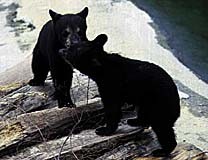
The Great Smoky Mountain National
Park is one of the few places remaining
in the eastern United States where black
bears can live in wild, natural surroundings.
For many, this famous Smokies� resident
is a symbol of wilderness
Bears inhabit all elevations of the park.
Though populations are varied, counts con-
ducted in 2000 indicated approximately
1,800 bears live in the
park. This equals a
population density of
approximately two bears per square mile.
At one time, the black bear�s range included
most of North America except the extreme
west coast. Because of the loss of
habitat, the black bear is now confined
to wooded areas or dense brush land.
All black bears in the park are black
in color, but in other parts of the country
they may be brown or cinnamon.
Black bears may be six feet in length and
up to three feet high at the shoulders.
Females are generally smaller and
weigh less than males. Bears can live
12-13 years or more, except �panhandler�
bears which have a life expedience of
less than half that time.
Bears in the park are wild and their
behavior is sometimes unpredictable.
Although extremely rare, attacks on
humans have occurred, inflicting serious
injuries and death. Treat bear encounters
with extreme caution and follow these
guidelines.
If you see a bear remain watchful. Do not
approach it. If your presence causes the
bear to change its behavior, you�re too
close. Being too close may
cause aggressive behavior
from the bear such as
running toward you, making
loud noes, or swatting the
ground. The bear is demanding more space. Don�t run, slowly back away,
watching the bear. Try to increase the distance
between you and the bear. The bear will probably do the same. If a bear persistently
follows or approaches you, without vocalizing
or paw swatting, try changing your directions.
If the bear continues to follow you, stand
your ground. If the bear gets closer, talk loudly
or shout at it. Act aggressively and try to
intimidate the bear. Act together as a group
if you have companions. Make yourselves look
as large as possible. Throw non-food items at
the bear. Don�t run and don�t turn away from the
bear. Don�t leave food for the bear, this just
leads to more problems. If the bear shows no
interest in your food and you are physically
attacked, fight back aggressively with any
available object the bear may consider you
as pray! Help protect others, report all bear
incidents to a park ranger immediately. Above
all keep your distance from bears!
Habitual panhandler bears must be
aversive conditioned or destroyed. If
the bears are managed
soon after they start to
loose their wild behavior,
they have a better
chance of returning to
natural food foraging
habits. Until 1991 , the park�s management policy centered on trapping
problem bears and relocating them
away from populated areas. Frequently,
they returned and had to be trapped
repeatedly or removed from the park.
Now wildlife managers use proactive
aversive conditioning that involves
capturing, working-up, and releasing
black bears into the same area. The
work-up involves tranquillizing the
animal and performing a safe medical examination on the bear. While
the procedure is harmless to the bear,
it is unpleasant and re-instills a fear of
humans. This approach allows bear to
remain in their home range, but they
shy away from the developed areas.
In addition, bear-proof garbage cans
have been replaced with larger bear-
proof dumpsters. Volunteers and park
staff diligently patrol the busiest picnic
areas in the evenings to watch for
potential problem bears and to
clean up any trash that has been left
out. Public education and law enforcement efforts have also been stepped
up. So far the results are encouraging
and the number of problem bears has
been reduced.
The bears keen sense of smell leads it to berries, but the animal is also enticed by
human food left on a picnic table or offered from an outstretched hand. Feeding
bears or allowing them access to human food causes a number of problems. It
changes the bears wild behavior and causes them to lose there instinctive fear of
humans. This lack of fear causes panhandler or �nuisance� bears to be more unpredictable and dangerous when they encounter humans. At best, panhandler bears
perform tricks to obtain food. At their worst, they damage property and injure people.
In 1999, 116 bear-related incidents were recorded and extensive property damage
occurred. It transforms wild and healthy bears into habitual beggars. Studies have
shown that panhandler bears never live as long as wild bears. Many are hit by cars
and become easy targets for poachers. Beggar bears may die from ingesting food
packaging. Many bears have died a slow and agonizing death from eating plastics.
Fines up to $5,000 and six months in jail can result from feeding the bears.
|