

|
BRING SOME HOME TO LOVE Home Phone: 609-448-7806 Cell Phone: 609-672-9515  Email me for fast response
 Getting Ready for Your New Kitten:A Wish List Getting Ready for Your New Kitten:A Wish List  You will need a litter box with low sides, a cat carrier, comfy bed, scratching post or scratching furniture, small ceramic or metal bowl(plastic can contain harmful chemicals!) Purchase some healthy kitten food (I recommend Purina Growth & Development or Purina Kitten Chow to start off to with then Purina Cat chow later in life or any brand you have tried and trusted) 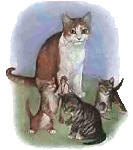
How to Bring a Kitten into the Home of Older Pets Even if your older pet has lived peacefully with other animals in the house, there is no guarantee that he will welcome a new kitten with joy, or even tolerance. When you bring a new kitten into the home, your older pet will need lots of extra attention. The cat needs to know that you still love him and that the newcomer is not a threat to his position in your household. When you bring your new kitten home, it is important to isolate her. Choose a room in neutral territory. The first time the two pets meet face to face should be short. If the older pet is a dog, proper restraint, such as a leash, will prevent him from chasing and scaring the kitten. Your older pet needs to be reassured that the newcomer will not take over his territory. If he has a favorite sleeping place, don?t let the kitten sleep there. Provide the youngster with her own toys. Animals are often possessive of their food and feeding dishes. Ideally, since the kitten should be eating her own kitten food, have her feeding dishes in a different room or area for as long as possible.  Household Safety Make sure you go through your house, top to bottom looking for any potentially hazardous things kitten can get into such as small chokeable items, electric cords that could be chewed, plants, small holes they could get trapped in, etc. Just as you would a baby. Kittens are very curious! ALL CATS/KITTENS WILL BE ADOPTED TO INSIDE HOMES ONLY!!   "A cat needs to be free." "It's cruel to keep a cat cooped up all day long." "It's in a cat's nature to roam." "But she's an outside cat." "My cat has enough sense to stay out of danger." Too many well-meaning pet owners expose their pets to needless danger and tragedy because of beliefs like these. Outside cats are not "free." They are exposed to daily dangers such as: automobiles (the #1 killer of cats) stolen (and possibly sold to a research laboratory) stray from home and get lost diseases attacks from larger animals causing serious injury or death abuse by people poisons (such as rat bait or the sweet but deadly taste of antifreeze) frost bite leghold traps injury or death from belts or rotating blades from under the hoods of cars when the engine is started (cats often crawl under car hoods to escape the cold in winter) The dangers out there are so prevalent that the average life span for an outside cat is little more than three years! In addition, outside cats are a nuisance to the community, and costly as well. They kills birds, pollute the area with their feces, scavenge in garbage cans, and if unaltered, add to the pet overpopulation explosion. It is not part of a cat's "nature" to be exposed to such hazards. They are domesticated companion animals and thus have the need and the right to be protected. As responsible pet owners, we owe them that much. Interesting toys, watching the world from inside a screened-in window and your attention will keep your indoor cat stimulated and happy. (They usually sleep while you're gone anyway). Also, getting a feline or canine friend for your cat can provide him with constant companionship and keep him from getting lonely while you're away. Please, keep your cat inside and give them a chance to grow old.  
 CLICK HERE FOR IMP. LINKS 

|
