September 3rd, 2007
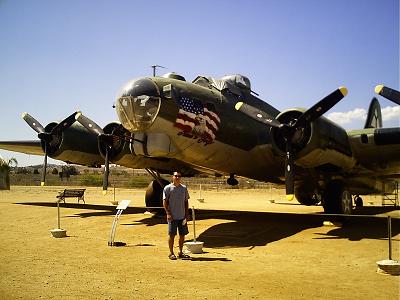
As an example, here's a B-17. While many museums and even hobbyists have one on display, its presence at March field is important becuase there are so many other historic planes there. It is rare to find a B-29 and a B-17 both on display, and yet March field has them and more.
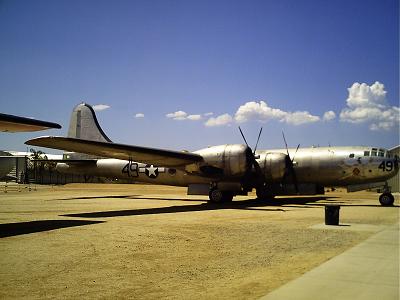
Simply put, it was the one and only superbomber of WWII. Equipped with two bomb bays, a large weight capacity, and a high ceiling of operation, it was the obvious choice to drop the first and second atomic bombs.
I admire this plane perhaps more than any other WWII plane because it really is a great feat of engineering: the plane's wings weren't nearly as broad as the B-17's, but its speed and accelleration more than made up for that privation.
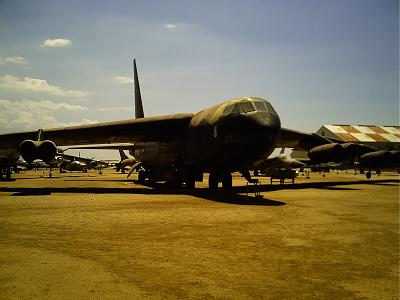
The plane was build for carpet bombing, dropping large quantities of lesser bombs over a broad area. Its cargo capacity was quite capable of delivering this goal. So great was the weight of the fuselage that huge wings had to be engineered . . . so big, that wheels put at the wingtips.
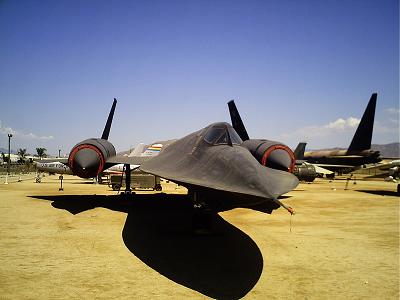
A plane built for pure reconassance, the Blackbird, from my understanding anyway, could outrun any missle constructed in its day. So high was its ceiling of operation that its pilots had to wear relative space suits.