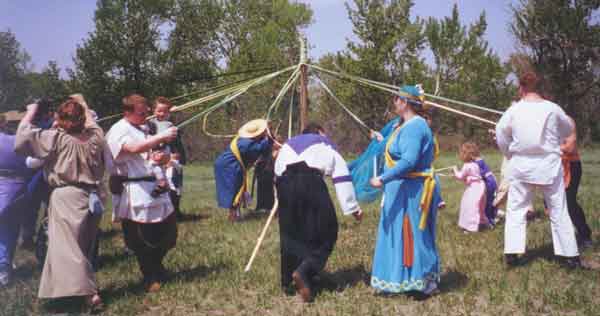
In smaller shires the promotion of fertility within it's own boarders was seen by the tradition of the May Queen. Here a May Queen, depending on location, could of had a Green Man or a May King. However some traditions also showed that the May Queen would chose child attendants, called May Princesses. The Queen normally wore a crown of flowers and depending on location, the Green Man would either wear leaves and foliage in a crown or branches like horns. May pole dancing was performed by interweaving ribbons down a pole. Traditionally the men would make the pole and the women would dig the hole.
Today May Days is used in some countries as a "Agriculture Day" to remind us the importance of our roots and promoting awareness.