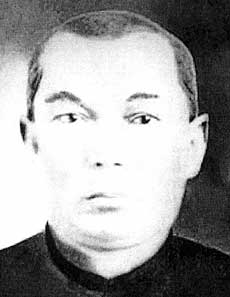
Yee Chung: A Madera Pioneer
Tuesday, March 7, 2006
As the public sale of lots commenced, a gargantuan figure astride an overworked draft horse bought the first lot. Yee Chung and Man Wah knew him well; who didn't? Captain Russel Perry Mace owned the Borden Hotel. The captain wasn't like most of the other whites in Borden. He didn't insult them. He was never heard applying epithets to Yee Chung or Man Wah, at least not to their faces. On the contrary, he actually seemed to think they were human. Maybe that's why he patronized both merchants, whose stores stood side by side. By four o'clock in the afternoon, all of the town lots were sold, and Madera had sprung into existence, at least on paper. The two compatriots turned their faces from the parched land that would one day become the county seat and headed south in Man Wah's spring wagon. Only the creaking of the wooden wheels broke the silence, yet the nippy October air was heavy with thought; both men knew what was going through the mind of the other. By some strange twist of fate they had been cheated. The lumber flume was to have terminated in Borden. That's where the planing mill was supposed to have been built, bringing with it a population explosion and a business boom, even in Chinatown. Instead it had been brought to Isaac Friedlander's land. Now all eyes would be on Madera. If it grew into a real town, what would happen to Borden? What would happen to its Chinatown? What would happen to them? Daylight was about to give way to dark when Yee Chung reached his store in Borden, just across the alley from Man Wah's building. The iron doors were tightly closed; apparently his partner, Ah Yen, had closed up shop. It was anybody's guess as to where he might have gone. Yee Chung reached for the lock and then changed his mind. The bags of rice on the front porch beckoned him to rest his 150-pound frame on their absorbing burlap. There he could chew on the roots of his memory, no matter how bitter the taste. A passerby would not have given the man, sitting stoically on his merchandise, a second look. He was just another Chinaman. The eyes, transfixed beneath the brim of his old slouch hat, gave no hint of the turmoil within. His shoulders slumped, but not from the weight of his long-sleeved, collarless blouse. Bare legs and feet protruded from shin-length cotton pants while toes dug at the dirt in silent protest. Behind a mask of resignation, so characteristic of his countrymen, Yee Chung groped for understanding. His dealings with the Americans had been difficult from the start. He had left his wife and child in Canton for Gold Mountain, the Chinese nickname for America, knowing that the rich and powerful there would never accept him as an equal. He expected shabby treatment from the wealthy elite; that was true in China as well. He was somewhat unprepared, however, for the hostility of the working class whites. Laboring on the Central Pacific Railroad, he had been unable to escape the twin monsters of hatred and fear. Not a day went by without the seething resentment emanating from every camp, smothering him with the noxious fumes of racism. Even the Mexican and Irish immigrants turned their backs on him. He was different. He was isolated. He was Asian. For seven years he toiled for the Central Pacific, first working on the transcontinental railroad and then joining the hundreds of Chinese workers who were hired to lay the company's tracks up the San Joaquin Valley. Slowly they inched their way south, laying the foundations for a handful of railroad towns as they came. After Lathrop they left Modesto, Merced, Minturn, and Berenda in their wake. Then in June of 1872, they reached the Alabama Settlement and Yee Chung's life changed forever. The railroad decided to plant another town there on Cottonwood Creek, but it couldn't decide on a name. Then Governor Leland Stanford, chief among the "Big Four," showed up, and he settled the matter. Dr. Joseph Borden, one of the southern expatriates of the Alabama Colony who fled Dixie during Reconstruction and who farmed nearby, issued a propitious invitation. He asked the governor home for the night, and by morning a town was born. It would carry the name of Borden, after the gracious host who had extended a generous portion of southern hospitality to his guest. Within days the Chinese continued laying the track south. They would bridge the San Joaquin River on July 26 and reach the Dry Creek bottoms by August 1, where the town of Fresno was laid out. Yee Chung, however, wasn't with them. He had abandoned the railroad at Borden. In time he would become a Madera pioneer. ...To be continued. ref: http://maderatribune.1871dev.com/life/lifeview.asp?c=180448 © 2006 Madera Tribune - All rights reserved.
|