
'cause ya just don't want to breathe 1.6 and live at the same time...
Either way, you may see dead relatives coming out of a bright light... and there are better ways to relive those fishing trips with grandpa.
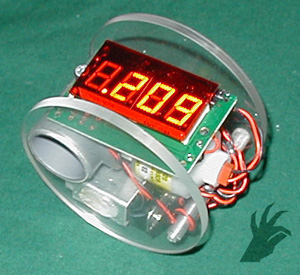
The goal here is to keep your partial pressure of oxygen between 13% (seeing the wizard - pass out and drown) and 160% (oxygen toxicity convulsions - pass out and drown). Guessing would be one way to do this but it is probably better to look at the pretty digital display and add air or pure oxygen as needed.
This breaks the 6 meter limit for oxygen rebreathers!
Here is the short version for all you guys wondering how the hell this is possible.
Air has twenty-one percent (20.9% actually) oxygen. When you go 10 meters underwater, the pressure is double. This means your lungs contain twice as much air as they did at the surface.
Still with me? Sure.
Since the air has 21% oxygen but the pressure is double, you are breathing the same number of oxygen molecules as if you were breathing 42% oxygen at the surface.
Get it?
The deeper you go, the higher the pressure and the higher the partial pressure of the oxygen. When you start breathing the same number of oxygen molecules as if you were breathing 160% oxygen on the surface (around 65 meters with air) oxygen starts to become toxic to your body.
If you breathe 100% oxygen at the surface, you will be breathing 160% at 6 meters (and 200% at 10 meters/double pressure). This is why there is a 6 meter limit on oxygen rebreathers.
Diving at a partial pressure of 1.4 (140%) is safe and is better than breathing pure oxygen (measly 100%) on the surface when trying to get rid of a pesky hangover.