|
River Cooter |
|
| Links to other good sites |
CLASS: Reptilia ORDER: Testudines FAMILY: Emydidae GENUS & SPECIES: Pseudemys concinna
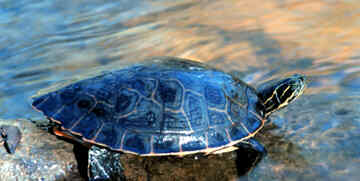
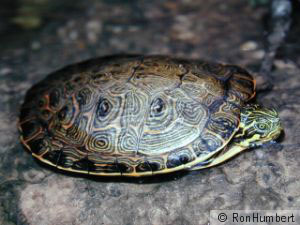
IDENTIFICATION:They are brown or olive green, with yellow to cream markings. Wide stripes under the chin form an upside-down "Y". The most prominent marking is a posterior facing "C" shaped figure on the second scutes. Cooters are large, ranging in length from 12 to 16 inches. The yellow plastron is marked with a large, darker pattern, especially the anterior portion. With age, the plastron markings fade and, in males, the carapace becomes melanistic, obscuring the markings. Males have long front claws and females are larger and more domed than males.
HABITAT: The river cooter is primarily a river turtle but can be found in a variety of fresh water and brackish locations, including oxbow lakes, marshes, ponds and flood plain river pools. Many develop fairly large home ranges, which they seldom or never leave. They sleep in the water under heavy vegetation and those in cooler climes will hibernate up to 2 months.
BREEDING: Cooters mate in the spring and eggs are usually laid in late May or June although some are as late as the end of July. The female lays 1-3 clutches of 9-29 pink to white ellipsoidal eggs in a nest cavity 4-5" deep. Hatchlings emerge in 80-150 days, but, in colder climates, often overwinter in the nest.
DIET: Juveniles are carnivores and eat insects, small fish, mollusks including snails, crayfish and tadpoles. Adults tend more toward a diet of vegetation: including algae, eel grass, leaves, stems, and roots. CAPTIVE HUSBANDRY: Cooters prefer an aquarium with a large water area for swimming. Water temperature should be between 75 and 85 degrees. They also require a land area for basking. UV lighting is imperative for the maintenance of healthy shells and bones. They tend to be shy so there should be hiding places and plants. Hatchlings and juveniles in particular eat better if they feel secure. In addition to the above natural food items, a good quality food such as Reptomin may be fed. |
 Additional photos |
| Cooter Pictures |
 |
|
�
Go back
|