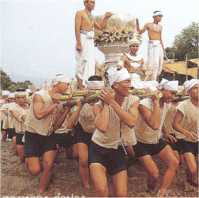
|
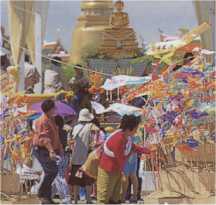
There are three aspects to Songkran,. On
the first day, April 13th , various activities are undertaken
to "send off" the outgoing year. In the morning,
merit -making rituals are performed and offerings are made
to the Buddhist monks. Spring-cleaning and personal cleansing
are also part of this "renewal" process.Later in
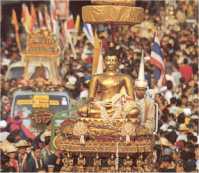
the day, Buddha images are bathed with lustral water in a
gesture of respect. The religious ceremonies include a procession
of Buddha images through the city streets offering an opportunity
for residents of the community to take part in the bathing
rites. An annual "Miss Songkran" parade and floral
floats are part of the popular festivities held to greet the
Thai new year.
On April 14th, the day when the position
of the sun is mid-way between Pisces and Aries, merit-making
continues in the morning with offerings being made to Buddhist
monks. The world-famous Songkran water splashing festive fun
takes place all day helping revellers to beat the summer heat.
In the evening, sand is brought to the temples for the building
of sand castles which are then decorated with colourful flags
and flowers.The practice reflects and ancient belief that
when an individuals walks away from a temple, particles of
sand from the temple grounds are inadvertently carried away
on one's shoes or sandals. The building of sand castles for
the temple is seen to be a practical way of replacing the
sand lost and a merit-making act through which blessings are
earned
Go Top |
During this time, the sun is equidistant
to the earth so there are an equal number of hours during
the day and night, a phenomenon known as "mahasongkran"
the supreme cycle". This marks the beginning of the Thai
new year.
The Thai New Year fails on April 15th. Typocal
merit-making rites performed on this day include the presentation
of food and other offerings to Buddhist monks at the temples
: donations are made.: fishes and birds are released : and
a bathing ritual is observed whereby lustral water is poured
over respected elders in a gesture of respect and reverence.
The seeking of their blessing or forgiveness for past wrong-doing
is also implied. Additionally it is believed that through
these acts of merit-making, loved ones, long departed are
endowed with blessings and good fortune.
The religious ceremonies and folk rituals associated with
Songkran are principally performed to bring good luck and
prosperity. The rituals are also acts of gratitude and indebtedness
undertaken in the memory of those who have passed on to another
world.
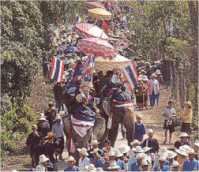
The Songkran activities that take place in various locations
around the kingdom are culturally unique and reflect local
beliefs and practices. Each offers varying elements of interest.
For example, in the North, gunshots are fired to ward away
evil spirits and jinxes. While on New Year's Day, residents
of the comunity prop up banyan trees in the temple grounds
or the surrounding area with wooden structures.
|