Marketing
Contents
Marketing principle
Marketing
Information System (MkIS)
Market
Segmentation
Consumer behaviour
Product
Price
Promotion
Marketing
philosophy (top)
| Concept |
Description |
Example |
|
|
- consumer favour available, affordable
product
- company focus on increased
prductivity
- risk : ignore market
preference because over-emphasize on productivity
|
|
|
|
- consumer favour quality,
performance product
- risk : marketing
myopia - narrow-sighted view of marketing opportunities/threat.
Seller emphasize on quality product but not consumer wants
|
- oil company
regard oil as product not as energy
|
|
|
- consumer will buy enough
organization product unless large-scale selling and promotional effort
done
- used by over-capacity
industry
- aim : sell what they make
- 'inside-out' perspective
- tracked down interested
buyers
|
- unsought
product - insurance, encyclopedia
|
|
|
- outside-in
perspective
- determine needs of market then
sell the demanded product
- involve 4 pillars of marketing
- target customer
- consumer needs
- integrated marketing
- profit
|
- college provide courses for
over-demanded degree courses
|
|
|
- must balance
- company
profits
- customer wants
- society interest
|
- Phillips
Morris (cigar) advertise on smoking hazards
- Body Shop banned on animal
testing
|
4
pillars of marketing concept (top)
- target market
- specific group of buyer whose
wants is focused by marketing company
- eg : Nike shoes for teenagers
- customer needs
- needs marketing research
- consists of
- stated needs - I want expensive cars
- real needs - I want a car with low cost operation
- unstated needs - I expect good service
- delight needs - Buy ticket cinema, free poster
- secret needs - wearing branded stuff to be seen by
friends
- integrated market
- 1st level - various marketing
function - sales force, advertising, market research
- 2nd level - coordination -
coordinate with other department eg Finance, HR, R&D
- profitability
Marketing
response (top)
- passive - Wait and see approach
although competitors start to change their strategy
- reactive - 'Fight back' - eg hawker
reduced fried noodles price when others do so
- proactive - initiate action 1st, eg
: promotion
Marketing
Information System (MkIS) (top)
- Internal Records /
Accounting Records
- info collected within company
- internal sources :
- sales figure
- pricing info
- customer complaints
- accounting info
- adv : cheap, fast to get
- disadv : incomplete, out of
date, info collected for other purposes
- Marketing
intelligence
- info available publicly
- source :
- agents, suppliers,
competitiors
- publication : magazine, news
report
- international sources : WHO,
FAO, ILO on demographic facts
- Marketing research
- research process
- define objective, develop
research plan ,survey, interview, collect info, analysis, report
- Information Analysis / Decision
Support System
- statically analysis eg SPSS
Market
Segmentation ( 3 Stages - segmentation, targeting, positioning) !!!
(top)
- Segmentation
(top)
- divide market into segment +
develop marketing mix tailored to that segments
- outcome
- mass marketing eg 'Coke for
all ages'
- segment marketing
- niche marketing
- micromarketing
- individual (1-1)
- self (online shopping,
eBay)
- choices/variable used for segmenting
consumer market (top)
- geographic
- KFC must halal in Muslim, Japanese (island based country) like
fish
- demographic
- high income likes luxury car, elders demand better health
care
- psychographic
(lifestyle) - prefer diet-related product, health conscious
food, herbal food
- behavioral
-Valentine sells more flowers, house sales increased because
property speculation
- multi-variable
- combination of variables
- Targeting
(top)
- evaluate each
segment attractiveness
(top)
- measurable
- eg : size of purchasing power (income)
- accesible
- can be reached/ served eg service to the rural area
- sustainable
- market large / profitable eg China population
- differentiable
- distinguishable eg cinema ticket - kid, adult, elderly
- actionable
- programme can be designed - promotion, adverting,
post-sales service
- size
growth - sales, growth rate,
demand of product
- structural
- eg : bargaining power in grocery vs supermarket
- targeting
strategy
(top)
- differentiated
- target several segment +
design separate offer for each segment
- product
modification
leads
to higher
expenses because
of R&D
- create more total sales
- eg: M'sia car indusry
- small, low income,
compag size - Kancil
- Sedan type - middle
income - Wira
- SUV(sport utility
vehicle), family car - Kembara
- luxury car - Perdana
- concentrated
- towards niche
market
- specialization leads to lower
operating cost
- disadv : hard to enter
other segment eg Ferrari only served to rich people
- 2 type specialization
- product
specialization
- one product many
market
- eg : furniture
for govern office, college classroom, house
- market
specialization
- one market many
product
- eg : Bunsen
burner, microscope, medium culture, slides for
university laboratory
- undifferentiated
- towards mass
marketing
- lower
operating cost because no R&D, inventory, product
modification
- standardization, mass
production will reduce costs
- heavy competition will
reduce profit
- eg : clothes, Cola
drink as compared to Pepsi Blue/Lemon
- Positioning
(top)
- create / maintain concept of
product eg Volvo- safety
- identify
competitive advantages
(top)
- product
differentiation - feature, performance, durable, reliable,
style, design
- service
- ordering ease (Pizza), post sales service, warranty card
- personnel
(staffing) - courtesy, experience, skills, responsible,
reliable
- channel
- marketing network, coverage area eg telecommunciation Digi
cover rural area
- image
- symbol, logo eg Maybank use tiger head
Consumer behaviour
- type of
consumer behaviours - depends on what is bought
(top)
|
High
|
Type
of consumer behaviour
|
|
Consumer
involvement
|
|
|
|
|
|
|
|
Low
|
Brand
significance perceived
|
High
|
- Habitual buying behaviour
- eg : groceries - onions,
sugar, bread
- marketing strategy
- use price, sales
promotion
- use visual, symbols
which easily recognized / remembered because buyer xxx committed
to any brand
- Variety seeking buying behaviour
- consumer do brand switching
- eg shoe - Bata, Nike, Power
- marketing strategy
- dominating shelf space,
avoid out-of stock condition because consumer kept changing
brand
- reduce $, give coupon to
encourage consumer to seek new/switch to our brand
- Complex buying behaviour
- product - expensive, risky,
purchased rarely
- eg : car, land , house
- marketing strategy
- salesperson promote
product, influence customer mind
- Dissonance- reducing buying
behaviour
- expereince post purchase
dissonance
- eg : TV, air-con, refrigerator
- marketing strategy
- supplying belief that
consumer feel good after purchase
- buying decision
process
(top)
- need recognition
- internal stimuli leads
to drive
- eg: Chinese New Year -
mandarin oranges
- marketing strategy - build
customer demand, product awareness, product importance
- info search
- info sources:
- personal - family, friends
- commercial -
salesperson, newspaper
- public source - mass
media
- experimental
sources - handling, examining
- evaluation alternative
- compare physical attribute -
quality, price, design, brand
- develop set of brand belief
- purchase decision
- influenced by
- other attitude eg sales
personal, relative influence
- unexpected situational
factor - job lost, accident
- post-purchase behaviors
- cognitive dissonance - post
purchase conflict
- satisfaction - product
performance > consumer expectation
- new customer -
'expensive' to be attracted
- repeated customer -
tells others about experience. Hence, need to satisfy them
happily
- factor influencing buying
behavior
(top)
- cultural
- culture
- set of basic value learned in the society
- culture shift ( healthy diet food in the 1990s)
- subculture
- different races, religion belief
- KFC-halal in M'sia
- social class
- social status - RICH buy BRANDED names for
social recognition
- social
- reference
- close reference - family, friend
- option leader - Chef Wan promoting cooking oil
(expert promote related field)
- aspiratinal - Britney Spear for Pepsi
- family value
- wife - kitchen, clothing stuff
- husband - car, television
- role/status
- manager drive Volvo, clerk use motorbike
- personal
- age - young, old
- occupation - computer engineer buy more IT stuff
- income - purchasing power
- lifestyle - health conscious society prefer sport
stuff, low-sugar diet
- self-concept - self-confidence ppl dress smart, use
branded stuff
- psychological
- motivation
- Maslow - needs according to certain time
- basic necessities, psychological, safety,
self-esteem, self actualization
- perception
- process ppl intepret info to form meaningful
picture
- selective attention - tendency to screen
out most info - advertisement
- selective distortion - tendency to twist
facts - salesman
- selective retention - tendency to retain
what to believed - MAS safe airline
- learning
- changes in behaviour result from
experience
- positive reinforcement eg reward, prize draw
winning in supermarket
- belief
- person 'hold' about something
- eg : Fengshui, fortune teller
Product
Product classification (top)
- consumer product
- convenience
- staple - regular - toothpaste, onions
- impulse - no planning - magazine, candy
- emergency - urgent - panadol
- shopping
- selection process - car, cloth
- specialty
- unique, willing to buy - custom made jacket
- unsought
- not known , less product awareness - insurance,
encyclopedia
- industrial product (business,
further processing)
- raw materials - agriculture products, raw steels, ore
irons
- major equip. - capital item - crane, truck, lorry
- accessory equip. - office use - calculator, stapler
- components - tyres, spare parts
- service - consultation fees, advertising
- organizational, place, person, ideas
- org. marketing - INTI Fest, sponsorship
- person mkt. - campaign leader, politics, celebrities
- place mkt - tourism, Visit Malaysia Year
- idea mkt - Recycling, Crime Watch Neighbourhood
Service classification
(top)
- market type
- consumer - mechanics, child care
- business - consultation, janitorial services
- degree of labour intensive
- people based - education, haircut, construction
- equipment based - telecommunication, public
transport
- skill of service provider
- professional - health care, accounting
- non-porfessional - dry cleaning, public trnasport
- goal of service provider
- profit - insurance, health care
- non-profit - education, government, health care
Product strategy
(top)
- product -anything offered for attention, acquisition, use,
consumption
- service - characteristic :
- intangible - cannot owned, attained
- inseparability - service produced + consumed at the
same time
- variability - quality varied
- perishability - no storage
- hybrid - goods + service eg airline service - transportation
and food, drink
Product characteristic / attributes
(top)
| Attribute |
Description |
| Quality |
- perform as expected
- level quality
- relative concept - Rolex > Casio
- eg : Rolls Royce - performance
- consistence
quality
- degree quality same / better over time/ different
places
- eg : Mc Donald burger taste same at all branches
|
| Design /
Feature |
- feature = performed task
- Nokia hp - SMS, communication, calculator, camera
- design = style
- HP - laser printer, Levi - jeans
|
| Branding |
- brand - name, term, sign, symbol identify product
- brand name - part of brand can be spoken
/ written eg Kodak, 7Ups
- brand mark - not made up of
word eg Tiger (Maybanl), M (McD)
- trade mark - legal designation
of brand eg Ford
- trade name - full and legal
name of org. eg Ford Motor Company TM
- brand loyalty - customer
favorable attitude towards a brand
- brand equity - marketing / financial value
eg Coca-Cola $43 247 million
- brand type
- manufacturer
- initiated by producer eg SONY, APPLE
- private distributor / reseller /
dealer brand
- initiated by reseller eg Everise Rice, Wal
Mart 'GREAT VALUE BUY'
- license brand
- borrowed by manufacturer to use on its
product
- Nike symbol on clothes, cap, eyewear
|
| Packaging |
- type
- 1° - product inside it (Colgate tube)
- 2°- box the tubes
- shipping package - cardboard caste for box,
contenna
- consideration
- cost - sandwich box
contribute much to entire cost
- promotion - graphic,
design of package
- colour - assoc,
feeling
- red - fire, dynamic
- yellow - warmth
- blue - cool, eg mint toothpaste
- reseller needs - convenient
carrying eg 24 tin canned drinks in cartons
- environment -
recylable, biodegradable product eg distilled water bottle
|
| Labeling |
- function
- identify product
- grading - eg rice grade A, B, C
- describe ingredients
- promote - graphic eg enriched Vit C product
- Universal Product Code (ISDN) -
pricing, inventory
|
| Product
Support Service |
- service augment product
- monitor customer complaints
|
Levels of product
(top)
- refers to customer value hierachy
- consisted of
-
| Product level |
Description |
Example eg hotel |
|
|
- core benefit that really bought
|
- rest & sleep - bed, bathroom
|
- actual / expected product
|
- expectation about the product
|
- clean bed
- fresh towel
- automatic light
|
|
|
|
- remote control / satelite TV
- water bed
- rapid check in and out
- free brakfast
|
|
|
|
- biometric scan for check-in/out
|
Product line
(top)
- group of closely related product
eg Stabilo product - pen, eraser, colour pencil
- product line length - number of items along product line
- product line strategy :
- stretching [high end
(expensive stuff) vs low end (cheap stuff)
- downward stretch.
Reasons :
- growth increase at low end market
- need a lower end to fill gap eg baby shoes
- xx compete with high end from other company
- upward stretch. Reasons:
- growth increase an high end market
- position as full line company eg Honda made
cheap and expensive cars
- 2-way stretch eg hotel
provides expensive presidential suite but cheaper rooms during
weekends.
- filling - add new items to
fill gap eg: baby shoes which is rare. Reasons:
- reap extra profit by opening new market segment
- satisfy users
- become full-line company
Product life
cycle (top)
| Stages |
Profit / Sales |
Characteristic |
Marketing
strategy |
- Development / Introduction
|
- sales zero
- profit negative due to
- research cost
- development cost
|
- price high because
- low output
- high promotion expenses
- zero competition
|
- launch product with long term focus
- focus on buyers who is ready
- educate customer on new product awareness
|
|
|
-
sales climb
-
profit positive
|
- early adopters followed by late adopters (laggards)
- new competitors (entry)
- price will be reduce to
- prevent lost of customer to new competitors
- create entry barrier
- capture more market share
|
- increase aggressive promotion
- continue educating consumer
- trade off between
- high market share or
- high current profit
|
|
|
- sales peak / levels off/ maximum
- profit peaks / levels off / maximum
|
|
- modify market
- reposition brand
- look for new user / segment
- eg : Johnson & Johnson initially baby product
now into drug
- modify product
- change product attributes eg style, design,
quality
- modify marketing mix
|
|
|
- sales decline
- profit decline
|
- Due to
- technology advance eg groceries loss out to
supermarket which use computerised system
- shift customer taste
- increased competition
|
- mantain brand - hope
competiors leave the market
- harvest product - reduce
various costs by minimize promotion. Promote only to those loyal
customer
- drop product -unworthy
which increase storage costs
|
Price (top)
- definition : amount of money charged for a product /
service
- the ONLY marketing mix that produce REVENUE ( marketing
mix, 4Ps - product, price, promotion, place)
Factor affecting price
(top)
- internal
- marketing objective
- survival - reduce to price to keep u demand just to
strive
- current profit maximazation - MC=MR (marginal cost
= marginal revenue)
- market share leadership (low price to capture
market share)
- non-profit (eg hospital government)
- marketing mix strategy
- use price as product positioning factor eg Ferrari
- expensive
- target costing - set selling price, then target
cost to ensure price is met. "Design to price"
- now, customer emphasize VALUE eg customer dont mind
to pay high price for tasty food in restaurant
- cost
- internal factor that FLOOR the price
- cheaper over long term / experience /
specialization /production
- organization consideration
- dependent on company
- small company - top mgt
- large company - product line mgt
- price department
- external
- market type / demand
- monopoly market - price increase compared to
perfect competition
- value by customer - price increase in Mercedes car
- price elasticity - customer sensitivity to price
change
- competitor cost /price
- price high - attract competitors
- price low - cannot reap prfot, but dominate market
share
- other external factors
- economic condition - boom / recession / inflation
- government policy - AFTA, protectionism of Malaysia
local car
- social concern - alcohol, tobacco price increased
Pricing method
(top)
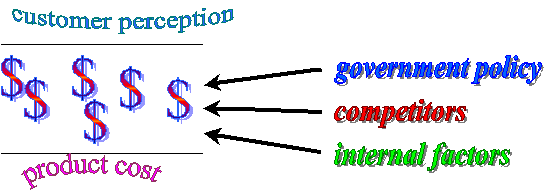
- product cost set the floor
- consumer perception set the ceiling
- 3 approaches
- cost-plus pricing
- adds a STANDARD mark-up to
the cost product
- eg : professional service - lawyer, doctor
- disadv : ignore current demand / competition
- popular because
- seller certain about cost than demand
- pricing simplified - only need to consider cost
- price similar to all firm in same industry,
which prevent competition
- fairness to both seller / buyer
- break even / target profit pricing
- initially, set price to break even / target profit,
then achieve that volume sales
- psychological pricing
- odd-even pricing
- $99.95(odd) - sense product < $100.00,
bargain
- S88.00 (even) - perceived as high quality
product because of .00
- prestige pricing
- price set high to show quality eg jewellery,
perfume, liquor
- pioneer pricing policies
- set the BASE price
- provide a reference point
- price skimming
- set a HIGH price to skim maximum revenue
- occurs only if
- product quality support its higher price
- competitor unable to undercut
- penetration price
- set a LOW price to gain market share
- condition applied when
- market is price-sensitive
- keep out customers, dominate market share
- long term production when cost decrease as
sales volume increase due to economies of scale and learning
experience
Price Adjustment Strategy
(top)
- promotional pricing
- temporary pricing, $ </= cost
to increased short term sales
- loss leader pricing - < markup, attract customer
eg supermarket
- special event pricing - reduce price in event eg
Christmas, Chinese New Year holiday
- cash rebate given by manufacture to customer at a
specified time, valid at short period only eg voucher
- discount / allowance
- cash discount - price reduced if pay bill on
time-improve seller cash flow and reduce bad debt
- quantity discount - price reduced if buy big quantity
- trade discount - price reduced for trade channel
(dealer agent) eg pharmaceutical sells to pharmacy
- seasonal discount - discount during season eg winter
clothing
- allowance - price reduced for turning old item when buy
new eg car/handphone trade in
- perceived value (value-based)
- setting price based on buyer perception rather than
cost
- eg : everyday low pricing (EDLP) for consumer goods,
expensive for jewellery (value)
- competition based
- going-rate pricing - set based on competitor price
- sealed-bid pricing - based on how firm thinks
competitor will price rather than its own cost eg tender, contract
- segmented pricing
- set price based on differences in customer, product,
location
- product form - different version, different price
eg car -automatic vs manual
- location pricing -eg Proton in KL vs Kuching
different price
- time pricing - eg movie ticket cheaper on holiday
- geographical
- FOB (free on board) pricing - goods placed free on
board a carrier
- uniform delivery pricing - same price + freight
regardless location
- zone pricing - higher in distant zone, duty free in
airport
- basing-point pricing - charge
same freight cost
- freight absorption pricing - company absorb the freight
cost not the customer
- product mix
- product line pricing -
based on cost differences eg different size clothes RM10,20,30
- optional product pricing -
accesory product eg car -power steering, CD player
- captive product pricing -
product must be used along main product eg torchlight and battery
- 2-part pricing - fixed
plus variable fee eg electricity - 1st 100 unit and subsequent 50 units
different price
- by-product pricing -
chicken drop (fertiliser), oil palm hurst (fertiliser)
- product bundling pricing -
in a bundle eg Gillete razor blade and holder, battery + torchlight
Promotion
Promotional Tools
(top)
| Type |
Description |
Advantage |
Disadvantage |
|
|
- paid form on non-personal presentation
|
- expressive
- impressive
- seller can repeat
many times
|
- impersonal
- not persuasive compared
to salesman
- costly
- 1-way communication, non
interactive
|
|
|
- personal presentation by firm
|
- build up preference
- personal interaction,
2-way communication
|
- long term commitment
required
- most expensive tools
|
|
|
- short term incentive eg coupon, discount
|
- attract customer
- offers strong incentive for purchase
- quick response
- improve company cash flow
|
- short lived
- not good in building long term brand
|
|
|
- building favorable publicity eg press conference,
seminar
|
- can dramatize a
product
eg hiring actor to promote/ explain a product in a hotel
- reach those who avoid salesperson and advertising
|
|
|
|
- targeted individual eg mail, fax, telephone
|
- immediate
- customised - selected target
- interactive - response of subscribe /unsubscribe
- non-public - targeted e-mail
|
|
Steps
in developing EFFECTIVE communication (top)
- identify target audience -
potential customer
- determine communication objective
- determine buyer readiness eg Mc Donald emphasize on
'conviction' advertising
- awareness
- knowledge
- likeness
- preference
(comparison)
- conviction (loyalty)
- purchase
- design message
- effective message -AIDA
- get Attention
- hold Interest
- arouse Desire
- obtain Action
- design appeal / theme
- rational appeal -
audience self-ineterst in product quality, economy, value,
performance
- emotional appeal -
fear, guilt, pride , humor, joy eg anti-smoking advertising create
fear disease
- moral appeal -
environmental, human right eg child abuse advertising
- choose media (channels of communication)
- personal communication
channel - direct
- words of mouth,
- opinion leaders
- chat, mail
- non-personal communication
channel - indirect
- media - TV, newspaper
- atmosphere - cinema with dark surrounding equipped
with stereo system, big screen
- event - grand opening, news conference
- select message source (create impact on
audience
- credible, persuasive
- eg: Britney Spear - Pepsi, Tiger Woods - Nike
- collect feedback
- research the effect
- ask if
- remember the message
- how many times saw it
- what is the main points
- feeling about message
- past/present attitude towards product / company
Setting promotional budget
$$$ (top)
- affordable method
- cheap, affordable
- used by small business
- percentage (%) of sales method
- setting % of sales price for promotion
budget
- help mgt to correlate
between promotion and sales. If promotion budget increased means sales
good
- competitive parity method
- match competitors outlays
- objective task method
- promotion according to objectives
- determine task first
Setting
promotional mix (top) ( blending of
promotional tools) - influenced by :
- nature of promotional tool -
the adv and disadv of promoting tools.
- promotion mix strategy
- push strategy
- using sales force to force/trade/promotion to push
product through channels eg producer to wholesaler/retailer to
customer
- pull strategy
- build up consumer demand
- if successful, customer will come to wholesaler
- type of product / market
- consumer goods - pull strategy
- business to business - push strategy
- buyer readiness stage
- awareness - public relationship + personal selling
- knowledge - public relationship +
personal selling
- liking - personal selling + advertising
- preference - personal selling + advertising
- conviction- personal selling + advertising
- purchase - sales promotion
- product life cycle stage
- introduction - advertising, public relationship,
personal selling
- growth - advertising, public relationship
- maturity - sales promotion
- decline- minimal / little advertising + personal
selling just to maintain loyal customers