I am a Cheyenne Traditionalist
author unknown
I am a Cheyenne Traditionalist
But I only dream of participating in a hunt.
I am old and I doubt if I could get close enough to a buffalo to
pierce his hide with my arrow.
I could use my gun but my gun is not kosher with my culture.
Hey! If I died of starvation because of my culture denying me the
use of a gun to kill a buffalo - would that be cultural
genocide?...suicide?
I am a Cheyenne Traditionalist
Hey dammit!
Quit pulling on my braids!
You bet they're real and you'd better not pull them again!
Shampoo?
I use Johnson's Baby Shampoo - makes my hair light & fluffy &
easy to manage.
It also takes the pot smell out and it washes the beer and wine
stains out real good.
I am a Cheyenne Traditionalist
I just love 49 songs or is it 69?
Yes, I love all 49 songs.
Incidentally, what kind of songs are they?
Hey man! I know the title of one song. "The one eyed Ford." Shucks!...
I believe even Jimmy Carter knows that one.
I think, even Ronny Reagan knows that one too.
On second thought, I'm not quite sure because Gerald Ford has two eyes.
I am a Cheyenne Traditionalist
Say! Aaah!...How does a person campaign to get on as a chief?
I'd be glad to pay whiteman's money to get on.
You mean, I would have to be chosen on my own merits?
Be honest, love all people?
Help people, even if they hate you?
You've got to be crazy!
Oh well!
Maybe I can be a little chief and just be a little crooked and devious...
Hark!
Not even a tiny bit crooked?
Sheesh!
I am a Cheyenne Traditionalist
Great shades of Julius Caesar, the Cheyenne Tribe is ready to convert
some of their minerals to cash?
Think of that!
Every member of the Tribe might get rich!
Great heaps of buffalo chips - We've got to stop this, this is against
our Cheyenne culture.
What to do?
I know! I'll traditionalize my Cheyenne people, I'll culturize 'em
and I'll huff and puff and blow their plans down.
I am a Cheyenne Traditionalist
Was I supposed to know Cheyenne tradition in my early years?
No way!
I was too busy learning the three "R"'s.
And besides, it was not a part of the curriculum.
But I do know the song about the ten little Indians and I faintly
recall something about the "shores of gitchee gomee".
I am a Cheyenne Traditionalist
I took Indian studies in college, I guess I ought to know about Indian
things and stuff.
I remember my old Indian studies professor - Sir James T. Snigglefritz.
I learned a lot from him because he was an authority on Indians.
I even heard that he was a member of an Indian Club in his country
before coming to the U.S.A.
The good professor gave me 10 credits and at the State U. too.
I am a Cheyenne Traditionalist
And I guess all these qualifications make me a bona fide, dyed in the
wool, honest to goodness authority and champion for Cheyenne
Ethics, Traditions and Culture.
--------
This interesting poem circulated around the Northern Cheyenne Indian
Reservation in the 1980's. We have been unable to determine who the
creative author is. It would appear that he or she did not want their
name appearing with the piece. Should they now wish their name on
the piece, we would be happy to place it with the poem in any future
postings, where the author deserves credit for writing these
provocative thoughts.
Cheyenne Spring is by Wayne Leman:
\/
Cheyenne Spring
/ \
Green
renewal,
new life.
Mari Sandoz
already wrote
Cheyenne Autumn
about our Long Trek
back home from Oklahoma,
back to our north country.
We have had many long winters
of pain, neglect, poverty, addiction.
It is time for Cheyenne Spring, renewal of life.
Time to celebrate the past with hope for our future.
Time for respect, honesty, teaching, singing, laughter.
Breakout
by Wayne Leman
The map states the boundaries
The fence makes them firm
It's there to protect--
Who?
We who live within the fence
Or those who live without?
Roads run through
And we can drive away at any time
But when we do we're
scrutinized
criticized
patronized
demeaned
The outside does not belong to us
it belongs to others
those who live outside the fence
Reservation it is called inside the fence
Reserved for us
But it seems that we are the ones
who are reserved
for it,
to stay inside the fence
Prisoners of the fence
and social fences
and our own ambivalence
and crippling dependence
our souls long for deliverance
freedom
space
acceptance
breakout
Can breakout be for those of us
within the fence?
And what is breakout, anyway--
geographical
psychological
cultural
personal
spiritual?
Can we breakout by leaving on the highway
or can it happen
inside the fence?
w.l. 4/8/93
("Breakout" was published in 1997 by Council for Indian Education
in a collection of poetry by Native Americans.)
High Hawk
(in memory of Ted Risingsun,
October 21, 1926-April 5, 1995)
by Kovaahe,
Wayne Leman
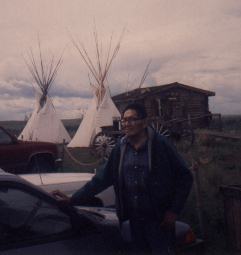 Hoovehe, Friend,
fly high today and forevermore.
Look down upon this soiled ball
you walked and talked upon.
Fly again over the hills in Korea
where you lost your buddies,
but it was not your time to leave.
Fly over Washtaeno, our Capital,
where you spoke so well
of your people's needs.
Fly over each one who speaks
the language that you loved;
tell us again those words
that tasted good
upon your Cheyenne tongue.
Fly through the halls
where you wheeled yourself
and still spoke
of your dreams which never died.
Fly higher, great orator,
than you ever climbed before;
we want to listen once again.
Fly, fly, my friend,
no longer languish in that bed,
no longer speak with tired tongue
that once could set the hills on fire.
High Hawk, Aenohe Oxhaa'eho'oesestse,
today you have been freed to fly, so
fly, fly, fly, fly, fly.
(Written April 5, 1995, and read at Ted's
funeral by the request of his widow.)
The Sandrocks Sigh
by Wayne Leman
The sandrocks must have sighed a name again:
an aged form is shuffling toward the hills,
hunched over from his heavy, sacred pack.
Tomorrow I will face the rising sun,
for blessing as I climb to bring him back.
I know what I will see among the rocks
for I have tracked these elders in the past.
I'll find him tired, resting on a ledge,
and staring centuries of wisdom, not
aware that I am standing by his side.
I'll ask him to rejoin us at the fire
and share again the stories in his bag.
But he'll refuse and say that he's been called
to sit there by the piles of weathered bones.
And then he'll slowly lower his pack and say
that I may take it back to the campfire
and set it in the place which had been his.
I'll shake his ancient hand and lift his pack,
and he'll reach out to touch it one last time.
He'll lean his head upon the sandstone wall
and watch me as I start back down the trail.
-----
w.l. 10/8/95
Ve'ho'e
by Wayne Leman
Ve'ho'e,
a word that stirs the feelings
of us who are Cheyenne,
as much as any word
in any language can.
Ve'ho'e,
trickster guy,
we've long told stories about.
From centuries long past,
this guy from tribal genesis
continues still today
as our social nemesis.
Long before we met
the ones who now have ve'ho'e name
the ve'ho'e of our stories
had greedy, sneaky fame.
Ehehpetse he was in stories
wanting more
than he deserved.
Then when the paleface came on the scene
he was also ehehpetse,
so for him the name's reserved.
When we use this ve'ho'e word
we can speak in different ways.
We can put a person down
to wreck that person's days.
We warn the one who breaks the mold
he'll become like ve'ho'e man:
neve'ho'eve
neve'ho'eva'o
eve'ho'evoestomo'he
eve'ho'evetano
are far from a compliment.
Yet we also reflect comparison
with our things lower than
what is owned or built
by this ve'ho'e man
when we say some other words
of things we like to have,
like ve'ho'evo'ha,
beautiful horse,
or ve'ho'e-mhayo'o,
modern house.
We call the non-Indian preacher man
ma'heone-ve'ho'e, holy-whiteman,
but also call ones of our own
who preach or believe that way
the same name, ma'heone-ve'ho'e,
an intended put-down.
Ve'ho'e,
just saying this one word
can mean so much among ourselves
whenever it is heard.
We still like to repeat
the funny stories of old,
about the ve'ho'e character,
we laugh when these stories are told.
We laugh especially,
as our ancestors did long ago,
when people of our kind
win out at a story's end
over the guy with ve'ho'e mind.
And we say today with glee
of the ve'ho'e of our tales,
"It's just like him.
That's the way he acts.
Ehehpetse, his personality never fails."
But a switch has been made,
a most humorous one,
that we've even forgotten about.
We no longer mean the ve'ho'e of old,
before the paleface came,
but the new ve'ho'e we know today
who seems to act the same.
--------
w.l. 4/12/93
Honoxeaseo'o / Meadowlarks
by Wayne Leman
Eohkemeohoo'hevao'o
matse'omeva.
They are heard early in the morning
in the spring.
But some of them sing any time
during the day.
"Vetanove-o'he'e," eohkehevoone.
"Tongue River," they say.
Naa "Mestaevoo'xenehe naa mato heva
Mestaevoo'xene'hehe," eohkehevoone.
And "Boogeyman Bignose or
Boogeyman Bignose Woman," they say
(to mock you).
One lady heard a meadowlark sing to her,
"Nevaahe tsevestoemotse?"
"Who is your husband?"
And some of them say cuss words,
if you have the right kind of ears
to hear them.
I wonder what they say to Cheyennes in Oklahoma?
And what do they say to the Crows?
Can white folks hear them say anything?
------
5/14/93
Hoovehe, Friend,
fly high today and forevermore.
Look down upon this soiled ball
you walked and talked upon.
Fly again over the hills in Korea
where you lost your buddies,
but it was not your time to leave.
Fly over Washtaeno, our Capital,
where you spoke so well
of your people's needs.
Fly over each one who speaks
the language that you loved;
tell us again those words
that tasted good
upon your Cheyenne tongue.
Fly through the halls
where you wheeled yourself
and still spoke
of your dreams which never died.
Fly higher, great orator,
than you ever climbed before;
we want to listen once again.
Fly, fly, my friend,
no longer languish in that bed,
no longer speak with tired tongue
that once could set the hills on fire.
High Hawk, Aenohe Oxhaa'eho'oesestse,
today you have been freed to fly, so
fly, fly, fly, fly, fly.
(Written April 5, 1995, and read at Ted's
funeral by the request of his widow.)
The Sandrocks Sigh
by Wayne Leman
The sandrocks must have sighed a name again:
an aged form is shuffling toward the hills,
hunched over from his heavy, sacred pack.
Tomorrow I will face the rising sun,
for blessing as I climb to bring him back.
I know what I will see among the rocks
for I have tracked these elders in the past.
I'll find him tired, resting on a ledge,
and staring centuries of wisdom, not
aware that I am standing by his side.
I'll ask him to rejoin us at the fire
and share again the stories in his bag.
But he'll refuse and say that he's been called
to sit there by the piles of weathered bones.
And then he'll slowly lower his pack and say
that I may take it back to the campfire
and set it in the place which had been his.
I'll shake his ancient hand and lift his pack,
and he'll reach out to touch it one last time.
He'll lean his head upon the sandstone wall
and watch me as I start back down the trail.
-----
w.l. 10/8/95
Ve'ho'e
by Wayne Leman
Ve'ho'e,
a word that stirs the feelings
of us who are Cheyenne,
as much as any word
in any language can.
Ve'ho'e,
trickster guy,
we've long told stories about.
From centuries long past,
this guy from tribal genesis
continues still today
as our social nemesis.
Long before we met
the ones who now have ve'ho'e name
the ve'ho'e of our stories
had greedy, sneaky fame.
Ehehpetse he was in stories
wanting more
than he deserved.
Then when the paleface came on the scene
he was also ehehpetse,
so for him the name's reserved.
When we use this ve'ho'e word
we can speak in different ways.
We can put a person down
to wreck that person's days.
We warn the one who breaks the mold
he'll become like ve'ho'e man:
neve'ho'eve
neve'ho'eva'o
eve'ho'evoestomo'he
eve'ho'evetano
are far from a compliment.
Yet we also reflect comparison
with our things lower than
what is owned or built
by this ve'ho'e man
when we say some other words
of things we like to have,
like ve'ho'evo'ha,
beautiful horse,
or ve'ho'e-mhayo'o,
modern house.
We call the non-Indian preacher man
ma'heone-ve'ho'e, holy-whiteman,
but also call ones of our own
who preach or believe that way
the same name, ma'heone-ve'ho'e,
an intended put-down.
Ve'ho'e,
just saying this one word
can mean so much among ourselves
whenever it is heard.
We still like to repeat
the funny stories of old,
about the ve'ho'e character,
we laugh when these stories are told.
We laugh especially,
as our ancestors did long ago,
when people of our kind
win out at a story's end
over the guy with ve'ho'e mind.
And we say today with glee
of the ve'ho'e of our tales,
"It's just like him.
That's the way he acts.
Ehehpetse, his personality never fails."
But a switch has been made,
a most humorous one,
that we've even forgotten about.
We no longer mean the ve'ho'e of old,
before the paleface came,
but the new ve'ho'e we know today
who seems to act the same.
--------
w.l. 4/12/93
Honoxeaseo'o / Meadowlarks
by Wayne Leman
Eohkemeohoo'hevao'o
matse'omeva.
They are heard early in the morning
in the spring.
But some of them sing any time
during the day.
"Vetanove-o'he'e," eohkehevoone.
"Tongue River," they say.
Naa "Mestaevoo'xenehe naa mato heva
Mestaevoo'xene'hehe," eohkehevoone.
And "Boogeyman Bignose or
Boogeyman Bignose Woman," they say
(to mock you).
One lady heard a meadowlark sing to her,
"Nevaahe tsevestoemotse?"
"Who is your husband?"
And some of them say cuss words,
if you have the right kind of ears
to hear them.
I wonder what they say to Cheyennes in Oklahoma?
And what do they say to the Crows?
Can white folks hear them say anything?
------
5/14/93
Other Cheyenne poetry:
Lance Henson Cheyenne poetry books