
There is much to savor in Italian cuisine and it is as varied as it is regional. Up north, near the Alps or in Tuscany, you won�t find a single garlic and tomato sauce-based dish�those hail from the southern part of the country, near Sicily. Tuscan cooks are more likely to use onions than garlic and butter instead of (or along with) olive oil. From the border with France to the Adriatic Sea and in Venice you won�t find pasta on any menu�that region specializes in rice dishes (risottos) and cornmeal preparations (polenta). But regardless of region, Italian food glories in fresh, native produce.
The trick to eating Italian while following the Atkins Nutritional Approach� is to bypass the pastas, bean dishes and risottos. Instead, look to grilled specialties. Many Italian restaurants have wood-burning ovens that are used for preparing more than just pizza. What you�re after is chicken, veal or scampi (shrimp prepared with garlic and butter), roasted or grilled to perfection.
Know Your Menu
Some of the dishes you�ll encounter on Italian menus are:
� Insalata Caprese: A salad of sliced tomatoes, mozzarella cheese and fresh basil, sometimes drizzled with olive oil
� Frittata: A slow-cooked, firm omelet that can include a variety of ingredients, usually assorted vegetables
� Gnocchi: Dumplings made with mashed potatoes or potato flour and served with tomato or green sauce
� Pesto: A robust sauce made from crushed fresh basil leaves, garlic, nuts and grated cheese
� Polenta: A dish made from cornmeal mush, usually blended with ground meat or sausage, mushrooms, garlic and cheese
� Prosciutto: Air-cured ham with a delicate, slightly salty flavor, usually sliced paper-thin and served with slices of melon or layered with veal scallops
Other words you should know are: calamari (squid), vongole (clams), cozze (mussels), frutti di mare (seafood), gamberi (shrimp), arrabbiata or fra diavolo (very hot sauces), carpaccio (paper-thin slices, usually of dried beef), verdure (vegetables) and fritti (anything fried).
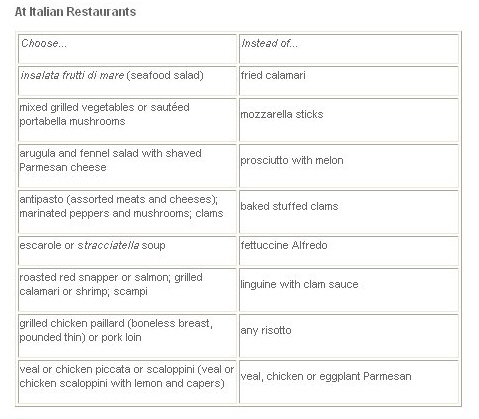
� Beware of the breadbasket. Most Italian restaurants will plant a basket of crusty bread and a shallow bowl of olive oil for dipping on your table the minute you are seated.
� Do as the Italians do: Start your meal with a bowl of soup (choose clear broth or stracciatella�a sort of Italian egg-drop soup), but make sure it does not contain pasta or beans.
� Keep in mind that veal dishes such as Francese or Parmesan are breaded before frying. It is better to order piccata (see chart) or saltimbocca (layered with prosciutto and spinach), which are not prepared in a batter.
� Use your judgment when ordering dishes with tomato sauce�carb counts can vary widely: Your best bet is a chopped fresh tomato sauce.