|
Alfred Nobel died on December 10, 1896, and willed his fortune to set up a foundation to recognise individuals who have contributed significantly to the advancement in Physics, Chemistry, Medicine, Literature and Peace. The Nobel Foundation was established in 1900 and the first Nobel Prize was awarded in 1901. The recipients are commonly referred to as the Nobel Laureates. On the occasion of its 300th anniversary in 1968, the Bank of Sweden (Sveriges Riksbank) made a large donation to the Nobel Foundation to establish a prize in Economic Sciences in memory of Alfred Nobel. The first Nobel Prize for Economics was awarded in 1969.
The Nobel Foundation
|
|
 CHEMISTRY
1901 |
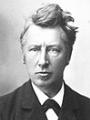
| Jacobus Henricus van 't Hoff
The Netherlands
Berlin University, Berlin, Germany, 1852 - 1911
The Nobel Prize in Chemistry 1901
"for the discovery of the laws of chemical dynamics and osmotic pressure in solutions."
|
|
CHEMISTRY
1902 |
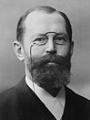
| Hermann Emil Fischer
Germany
Berlin University, Berlin, Germany, 1852 - 1919
The Nobel Prize in Chemistry 1902
"for his work on sugar and purine syntheses."
|
|
CHEMISTRY
1903 |
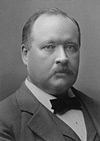
| Svante August Arrhenius
Sweden
Stockholm University, Stockholm, Sweden, 1859 - 1927
The Nobel Prize in Chemistry 1903
"for the advancement of chemistry by his electrolytic theory of dissociation."
|
|
CHEMISTRY
1904 |
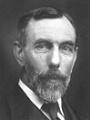
| Sir William Ramsay
Great Britain
London University, London, Great Britain, 1852 - 1916.
The Nobel Prize in Chemistry 1904
"for the discovery of the inert gaseous elements in air, and his determination of their place in the periodic system."
|
|
CHEMISTRY
1908 |
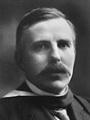
| Ernest Rutherford
Great Britain
Victoria University, Manchester, Great Britain, 1871 - 1937
The Nobel Prize in Chemistry 1908
"for the advancement on the understanding of the disintegration of the elements, and the chemistry of radioactive substances."
|
|
CHEMISTRY
1909 |
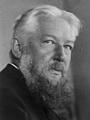
| Wilhelm Ostwald
Germany
Leipzig University, Leipzig, Germany, 1853 - 1932.
The Nobel Prize in Chemistry 1909
"for the advancement on the understanding of catalysis and the fundamental principles governing chemical equilibria and rates of reaction."
|
|
 PHYSICS
1910 |
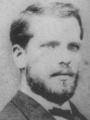
| Johannes Diderik van der Waals
The Netherlands
Amsterdam University, Amsterdam, the Netherlands, 1837 - 1923.
The Nobel Prize in Physics 1910
"for the advancement of the understanding of the equation of state for gases and liquids."
|
|
CHEMISTRY
1913 |
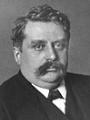
| Alfred Werner
Switzerland
Zurich University, Zurich, Switzerland, 1866 - 1919
The Nobel Prize in Chemistry 1913:
"for the advancement in the understanding on the linkage of atoms in molecules and opening up new fields of research in inorganic chemistry."
|
|
CHEMISTRY
1918 |
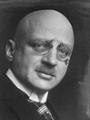
| Fritz Haber
Germany
Kaiser-Wilhelm-Institut (now Fritz-Haber-Institut) f�r physikalische Chemie und Electrochemie Berlin-Dahlem, Germany, 1868 - 1934.
The Nobel Prize in Chemistry 1918:
"for the synthesis of ammonia from its elements."
|
|
PHYSICS
1918 |
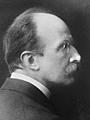
| Max Karl Ernst Ludwig Planck
Germany
Berlin University, Berlin, Germany, 1858 - 1947.
The Nobel Prize in Physics 1918
"for the discovery of energy quanta."
|
|
CHEMISTRY
1920 |
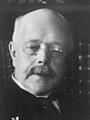
| Walther Hermann Nernst
Germany
Berlin University, Berlin, Germany, 1864 - 1941
The Nobel Prize in Chemistry 1920:
"for his work in thermochemistry."
|
|
PHYSICS
1921 |
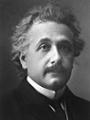
| Albert Einstein
Germany and Switzerland
Kaiser-Wilhelm-Institut (now Max-Planck-Institut) f�r Physik, Berlin-Dahlem, Germany, 1879 - 1955.
The Nobel Prize in Physics 1921
"for the advancement of Theoretical Physics, and especially for his discovery of the law of the photoelectric effect."
|
|
PHYSICS
1922 |
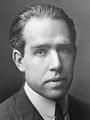
| Niels Henrik David Bohr
Denmark
Copenhagen University, Copenhagen, Denmark, 1885 - 1962.
The Nobel Prize in Physics 1922
"for the advancement of the understanding of the structure of atoms and of the radiation emanating from them."
|
|
PHYSICS
1925 |
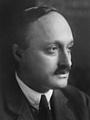
James Franck
Germany
Goettingen University
Goettingen, Germany,
1882 - 1964.
| 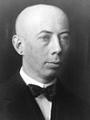
Gustav Ludwig Hertz
Germany
Halle University
Halle, Germany,
1887 - 1975. | |
The Nobel Prize in Physics 1925:
"for their discovery of the laws governing the impact of an electron upon an atom."
| |
PHYSICS
1932 |
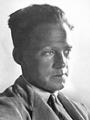
| Werner Karl Heisenberg
Germany
Leipzig University, Leipzig, Germany, 1901 - 1976.
The Nobel Prize in Physics 1932
"for the creation of quantum mechanics, the application of which has, inter alia, led to the discovery of the allotropic forms of hydrogen."
|
|
CHEMISTRY
1932 |
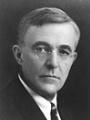
| Irving Langmuir
USA
General Electric Company, NY, USA, 1881 - 1957.
The Nobel Prize in Chemistry 1932:
"for his discoveries and investigations in surface chemistry."
|
|
PHYSICS
1933 |
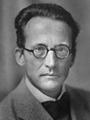
Erwin Schr�dingerr
Austria
Berlin University,
Berlin, Germany,
1887 - 1961.
| 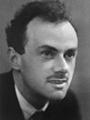
Paul Adrien Maurice Dirac
Great Britain
Cambridge University,
Cambridge, Great Britain,
1902 - 1984. | |
The Nobel Prize in Physics 1933:
"for the discovery of new productive forms of atomic theory."
| |
CHEMISTRY
1936 |
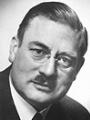
| Petrus Josephus Wilhelmus Debye
The Netherlands
Berlin University, Berlin, Germany and Kaiser-Wilhelm-Institut (now Max-Planck-Institut) f�r Physik, Berlin-Dahlem, Germany, 1884 - 1966.
The Nobel Prize in Chemistry 1936:
"for the advancement on the understanding of molecular structure through his investigations on dipole moments and on the diffraction of X-rays and electrons in gases."
|
|
PHYSICS
1945 |
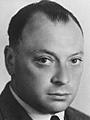
| Wolfgang Pauli
Austria
Princeton University
Princeton, NJ, USA, 1900 - 1958.
The Nobel Prize in Physics 1945
"for the discovery of the Exclusion Principle, also called the Pauli Principle."
|
|
CHEMISTRY
1950 |
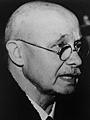
Otto Paul Hermann
Diels
Germany
Kiel University,
Federal Republic of
Germany, 1876 - 1954.
| 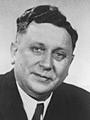
Kurt Alder
Germany
Cologne University
Federal Republic of
Germany, 1902 - 1958. | |
The Nobel Prize in Chemistry 1950:
"for their discovery and development of the diene synthesis"
|
|
CHEMISTRY
1953 |
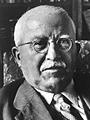
| Hermann Staudinger
Federal Republic of Germany
University of Freiburg; Staatliches Institut f�r makromolekulare Chemie (State Research Institute for Macromolecular Chemistry).
The Nobel Prize in Chemistry 1953:
"for his discoveries in the field of macromolecular chemistry."
|
|
CHEMISTRY
1954 |
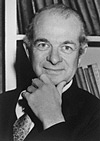
| Linus Carl Pauling
USA
California Institute of Technology, USA, 1901 - 1994.
The Nobel Prize in Chemistry 1954:
"for the advancement on the understanding of chemical bond and its application to the elucidation of the structure of complex substances."
|
|
CHEMISTRY
1963 |
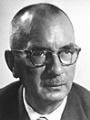
Karl Ziegler
Germany
Max-Planck-Institut f�r
Kohlenforschung,
M�lheim/Ruhr, Germany,
1898 - 1973.
| 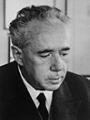
Giulio Natta
Italy
Institute of Technology
Milan, Italy, 1903 - 1979. | |
The Nobel Prize in Chemistry 1963:
"for their discoveries in the field of the chemistry and technology of high polymers."
|
|
CHEMISTRY
1974 |
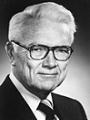
| Paul J. Flory
USA
Stanford University, Stanford, CA, USA, 1910 - 1985.
The Nobel Prize in Chemistry 1974:
"for his fundamental achievements, both theoretical and experimental, in the physical chemistry of the macromolecules."
|
|
|