Culture
Family Life
Family is the most important thing to Koreans. Most Koreans follow the Confucian traditions. In Korean families, the goodness of the entire family is more important than just the individual needs of it's members. Basically, it is the "one-for-all" concept.
Children are raised to believe that they will never be able to repay the debt they owe to their parents. Because of this, ancestral worship has become very popular within the culture. Several times a year, there are days put aside to worshiping one's three previous generations (parents, grandparents, and great-grandparents). On a holiday called Chusok, food is set out to celebrate the ancestors.
Social Harmony/Etiquette
In Korea it is important to maintain a calming atmosphere at all times. In order to keep the peace, "white lies" are acceptable.
When meeting someone, it is very important to make sure one does not offend the other. There is a strict protocol on how one should greet another -- first by bowing (person of lower status bowing to the person of higher status first) and then shaking hands with the most senior person initiating it. For more information on South Korean etiquette click here.
Religion
When people think of Asian religions the first thing to pop into their minds is usually Buddhism --when really only 26% of the population of Korea are Buddhists. That is the equivalent percentage of Christians in Korea. 46% of the Korean people actually do not have an affiliation and only 1% are Confucians.
Food
It is close to impossible to go to Korea without at least trying an incredibly popular dish called Kimchee. It is made of cabbage, vegetables, onions, ginger, red pepper, a lot of garlic, and topped with shellfish sauce. Koreans eat Kimchee with every meal, therefore it is almost impossible to not at least try it.

www.wordpress.com
Other popular dishes include:
Steamed or fried fish

Beef ribs with Songi Mushrooms

Clothing
Mostly, Western-style clothing is worn by Koreans. Although the Western style is the most popular, some Koreans stick to the traditional hanbok attire. Mostly, the hanbok is worn by the elderly but it is usually worn by the general population during holidays, special events, and 60th birthdays. The Korean Ministery of Culture and Tourism is campaigning to bring back the every day wearing of the hanbok by making it more practical.
Pictured below is the traditional hanbok.

www.ipa2008seoul.org
Pictured below is the more modern day styled hanbok.
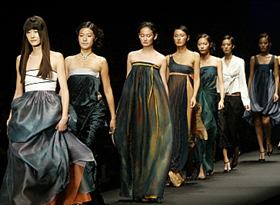
www.korea.net