GPS Facts
Basic Information
- GPS was designed for the United States military. Today, it is operated by the Defense Department.
- Four GPS satellites are used to calculate your position in three dimensions and the time offset in the receiver clock.
- The GPS Operational Constellation is made up of 24 satellites that orbit Earth in 12 hours, but there are often more as new ones are launched to replace old ones.
- The satellites orbit the Earth on the almost exact same ground track once a day.
- From any position on the planet, you have access to between five and eight satellites at all times.
Data Transfer
- The orbiting satellites receive a signal from a user's GPS device.
- Monitor stations receive the data from the satellite..
- The Master Control Facility is located at Schriever Air Force Base in Colorado.
- The data comes from the nearest control center and returns to the user's device.
Types
- There are two types of GPS.
- The US Government, military, and certain civilians authorized by the government, use the Precise Positioning System (PPS).
- Civilians around the world use the Standard Positioning Service (SPS) without charge or restrictions.
- The accuracy of the SPS is lower than the PPS, thanks to the Defense Department.
- The data that a civilian, using SPS, would be able to obtain from a GPS device would be within 100 meters of his actual location and within 340 nanoseconds of the actual time, according to the 1999 Federal Radionavigation Plan.
- The military uses PPS and is able to obtain data from a receiver that is within 22 meters of their precise location and within 200 nanoseconds of the actual time.
Errors
- Reflected signals from somewhere near a receiver can interfere with the path from the satellite, therefore corrupting the data.
- A mistake at a control segment, due to either human or computer error, could cause errors that range between one meter to hundreds of kilometers.
- A user mistake causes the data to be incorrect also, but not as drastic as control segment mistakes.
Receivers
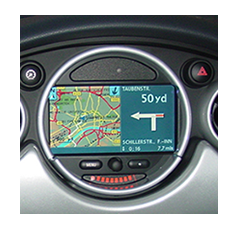
- Receivers are made for planes, ships, ground vehicles, and individuals (hand-held).
- Small personal receivers can be found for under $200.
- Receivers with base-station files that can store files for post-processing cost between $2000 to $5000.
- Carrier phase tracking receivers and receivers that compute and provide correction data can cost an astonishing $5000 to $40,000!
- Receivers that the military uses (PPS receivers) may cost more than $40,000 and can be extremely difficult to acquire.
Cool Fact
- GPS has revolutionized the land-surveying field. A line of sight along the ground in no longer needed in order to acquire precise positioning. In fact, a surveyor can be up to 30 km away from the site and still do his job. However, this requires a special carrier-tracking receiver.
I got my information from the following websites:
- The U.S. Coast Guard Navigation Center
- Global Positioning System Overview
For additional information about GPS, you can visit Trimble, where you can take a tutorial.
Back to my home page
Created by: Laura Sale, March 2006
Last updated: March 1, 2006