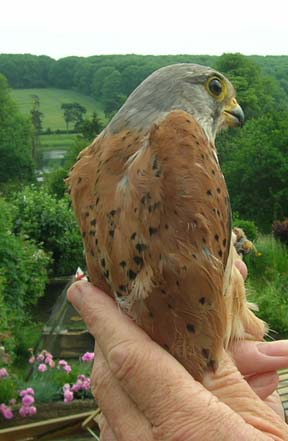
News from Thornton, Andy Smith has just caught and ringed this superb male Kestrel (right).
Last evening Nigel and Andy were out ringing Barn Owl chicks. One brood of 5 and another of 3 were ringed bringing the year total to 12. Early this morning found the group out at Wanlip South reedbed where a number of juvenile Reed and Sedge Warblers were ringed. The remarkable thing about Barn Owl conservation is that providing nest boxes in suitable habitat is often all that is required for those areas to be colonized. The methodology is to put boxes in locations adjacent to known breeding areas.This encourages colonisation through dispersal. As many old, derelict or open farm buildings have been lost it is important to provide artificial alternatives. This is one of 'the' success stories in British conservation and Leicestershire is doing its bit.
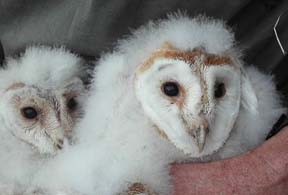
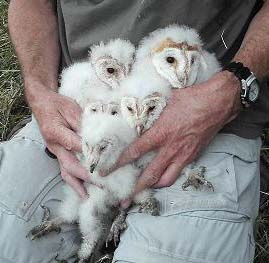
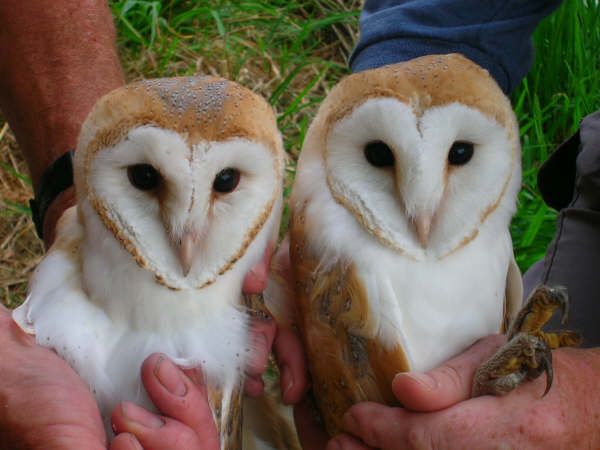
More Barn Owl monitoring done by Nigel and Andy.
The pair of downy chicks in one nest box pictured above left at the end of June were found to be almost fully grown (left). The BTO project requires ringed chicks to be re-weighed and measured (hence why the boxes are revisited). What an encouraging before and after! Note the fine dark flank streaks on the left hand bird indicates a female and the unstreaked bird on the right a male.
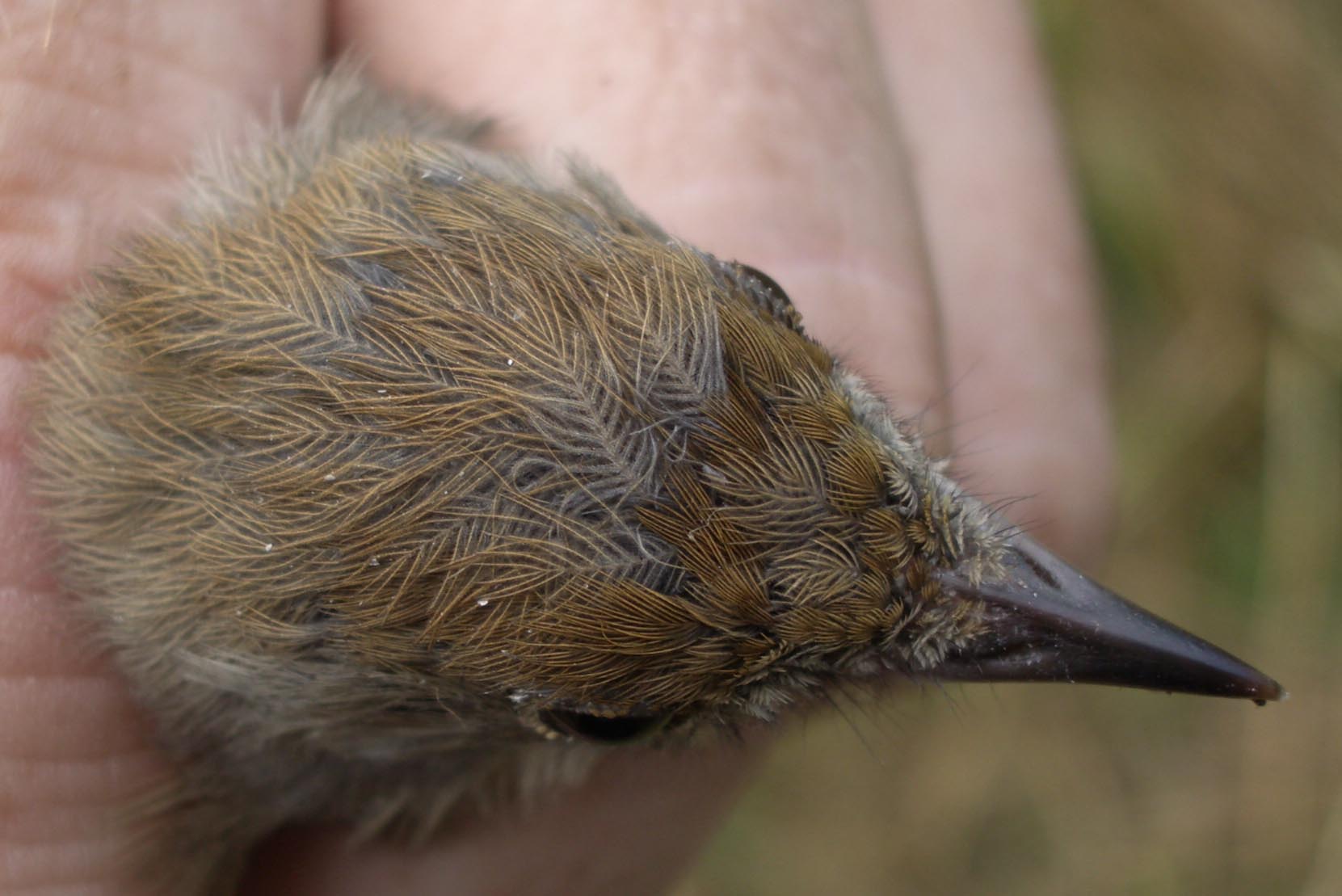
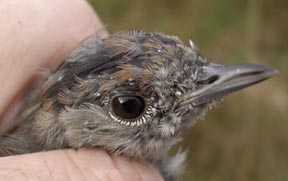
Early migration and re-location movements are already taking place, prompting an early morning ringing session at Wigston Sewage works. The two images below show in detail the transformation which is taking place amongst many young birds as they undergo post juvenile moult and attain adult like characteristics. Both birds are Blackcaps and until this point it is impossible to differentiate males from females as all juveniles have rust coloured crowns. As can be seen easily on the left hand bird this is replaced by black crown feathers characteristic of males (hence 'Black'cap) whereas females develop brown caps, right. The brown in post juvenile birds is darker (near bill) than the rusty juvenile feathers and this difference shows well in this image.
First of all a huge apology and explanation for the break in updates since August. Work, holidays and a PC back to base failure all conspired together and drew a halt to normal service, so it's good to be back.
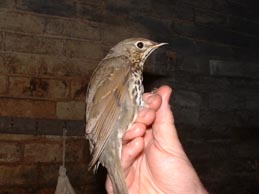
Roost ringing at Charnwood Lodge resumed last weekend. The highlight was our largest ever catch of Song Thrush (14) in a single session. About this time of year we catch and ring both the resident race (Turdus philomelos clarkei) and the greyer continental immigrants of the race (T.p.philomelos) [right]. The catch reassuringly supports the general impression that Song Thrushes are making a welcome return. More autumn news to follow.