| The Gallipoli Campaign 25 April 1915 - 9 January 1916 |
|||||||||||||||||||||||||||||||||||||||||||||||||||||||||||||||||||||||||||||||||||||||||||||||||||||||||||||||||||||||||||||||||||||||||||||||||||||||||||||||
| By the end of 1914, with the war against Germany on the Western Front hopelessly deadlocked and immobile, the British government
is attracted to the idea of a campaign in the East. They hope to restart the war of movement by attacking and bringing to terms Germany's less formidable ally, Turkey. The initial plan is for a group of older warships to force a passage through the
heavily-mined and fortified Dardanelles Straits. Given safe passage through the Dardanelles, the Royal Navy would have free access to the Turkish capital, Constantinople, and Turkey might be forced out of the war. The British plan recognises that if
the Dardanelles cannot be forced by sea power alone, a supporting infantry force might have to be dispatched to the Gallipoli Peninsula on the northern shore of the Straits. On 18 March 1915, a joint British-French fleet makes its attempt to break through the Dardanelles. The attempt comes close to success, managing to silence the main Turkish land batteries defending the straits. But as it pushes on into the Dardanelles, the Allied force is crippled when seven of its ships strike mines, and the naval attack has to be adandoned. |
|||||||||||||||||||||||||||||||||||||||||||||||||||||||||||||||||||||||||||||||||||||||||||||||||||||||||||||||||||||||||||||||||||||||||||||||||||||||||||||||
![]() |
|||||||||||||||||||||||||||||||||||||||||||||||||||||||||||||||||||||||||||||||||||||||||||||||||||||||||||||||||||||||||||||||||||||||||||||||||||||||||||||||
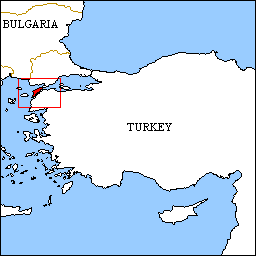
| Above - Gallipoli in context. The Turkish Empire, with the Gallipoli Peninsula shown in red. |
|||||||||||||||||||||||||||||||||||||||||||||||||||||||||||||||||||||||||||||||||||||||||||||||||||||||||||||||||||||||||||||||||||||||||||||||||||||||||||||||
| Recognising that the Dardanelles will not be taken by naval power alone, the British War Council assembles in Egypt a
Mediterranean Expeditionary Force of 78,000 men, in preparation for an amphibious landing at Gallipoli. Unfortunately, the MEF is delayed for one month in Alexandria, while transportation problems are resolved. By the time it is despatched in late
April 1915, the Turkish defences overlooking Gallipoli's beaches are well-prepared. The Gallipoli landings finally take place on 25 April 1915, with the British 29th Division landing at five beaches on the southern part of the Gallipoli Peninsula (around Cape Helles), and the Australia and New Zealand (ANZAC) Division intending to go ashore further north at Gaba Tepe. (The Wood's tenth son, Harry, goes ashore with the Anson Bn of the Royal Naval Division, on the first day of landings at Cape Helles. His older brother, Joe, lands at Gallipoli three days later, when the RND's Nelson Bn joins in the defence of the ANZACs' beachhead). Three of the landing beaches at Cape Helles are heavily defended, and British beachheads are established there only at the cost of extremely heavy casualties. At the two northernmost of the five beaches, the 29th Division's landings are virtually unopposed but, confused about what is expected of them, the British troops there neither intervene to support the troops landing under fire at beaches S, V and W, nor push on into the lightly-defended hinterland of the peninsula. Further north, the ANZAC landings at Beach Z also begin in confusion, when the Australians and New Zealanders come ashore at Anzac Cove, more than two miles from their intending landing site at Gaba Tepe. Their landing is also largely unopposed, but they too fail to push on into the heights dominating the central peninsula, which are quickly occupied by the Turkish Nineteenth Division, led by the charismatic Mustafa Kemal (who will later become, as Kemal Ataturk, the first President of the post-war Republic of Turkey). Instead of advancing inland, the ANZACs dig in to defend their cramped beachhead against the expected Turkish counter-attack. Over the following days and weeks, the Allied forces at both Anzac Cove and Cape Helles come under heavy and constant counter-attacks, which are repulsed only with heavy losses. The action on the Gallipoli front then settles into a war of attrition familiar from the western front, with costly but indecisive attacks on entrenched enemy positions, and little territorial gain by either side. |
|||||||||||||||||||||||||||||||||||||||||||||||||||||||||||||||||||||||||||||||||||||||||||||||||||||||||||||||||||||||||||||||||||||||||||||||||||||||||||||||
| The Gallipoli Campaign, April 1915 - January 1916 | |||||||||||||||||||||||||||||||||||||||||||||||||||||||||||||||||||||||||||||||||||||||||||||||||||||||||||||||||||||||||||||||||||||||||||||||||||||||||||||||
![]() |
|||||||||||||||||||||||||||||||||||||||||||||||||||||||||||||||||||||||||||||||||||||||||||||||||||||||||||||||||||||||||||||||||||||||||||||||||||||||||||||||
| In August 1915, the British commander (General Sir Ian Hamilton), seeks to regain the lost momentum of the Gallipoli campaign by launching a renewed offensive against the Sari Bair heights overlooking Anzac Cove. In conjunction with this assault, an additional British Army Corps (IX Corps) will make an amphibious landing at Suvla Bay, on the ANZACs' left flank. | |||||||||||||||||||||||||||||||||||||||||||||||||||||||||||||||||||||||||||||||||||||||||||||||||||||||||||||||||||||||||||||||||||||||||||||||||||||||||||||||
| The attack on Sari Bair begins on the night of 6 August 1915, with a diversionary attack (and fierce hand-to-hand fighting) by
the Australians at Lone Pine. British and New Zealand forces succeed in reaching the summit of Chunuk Bair, in the centre of the heights, but suffer up to 90% casualties from Kemal's repeated counter-attacks. By 10 August, the Turkish defenders and
their reinforcements have pushed the Allies back to their starting positions around Anzac Cove. The landings at Suvla Bay are also made on the 6 August, but are marked by the same confusion which dogged the April landings. Although the Suvla landings are virtually unopposed, the troops who go ashore there arrive with neither maps nor clear instructions. Instead of pressing on inland to the lightly-defended heights of the Anafarta Ridge, |
![]() |
||||||||||||||||||||||||||||||||||||||||||||||||||||||||||||||||||||||||||||||||||||||||||||||||||||||||||||||||||||||||||||||||||||||||||||||||||||||||||||||
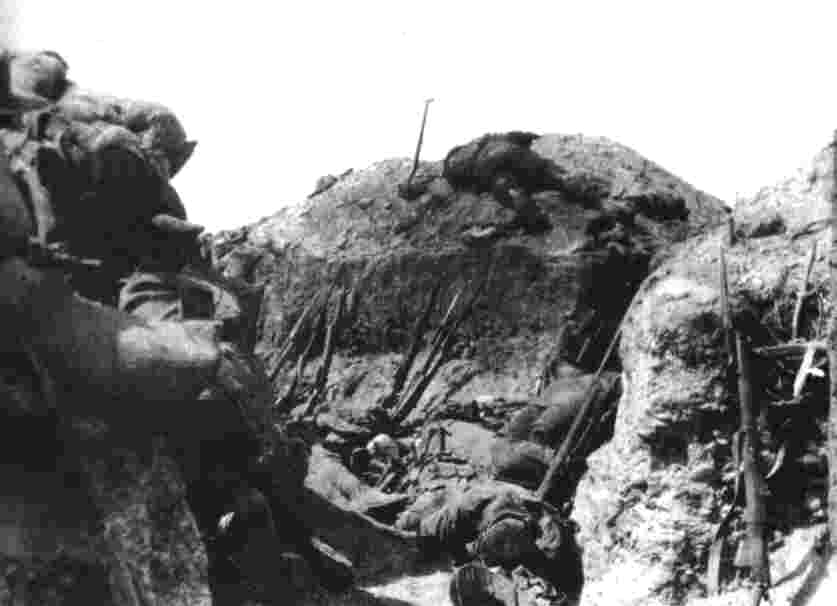
| The August 1915 attack on Sari Bair: Australian dead at Lone Pine. | |||||||||||||||||||||||||||||||||||||||||||||||||||||||||||||||||||||||||||||||||||||||||||||||||||||||||||||||||||||||||||||||||||||||||||||||||||||||||||||||
| they prepare for battle as they have learned it on the Western Front, by digging in on the Suvla Plain and waiting for the
enemy's response. Turkish reinforcements arrive at Suvla on 7 August, and drive the IX Corps back to their beachheads. So the action at Suvla, as at Anzac and Helles, results in deadlock. The landings at Suvla Bay mark the Allies' last attempt to go on the offensive directly against Turkey. On 15 October, Hamilton is replaced as commander of Allied forces at Gallipoli. His successor, General Sir Charles Monro, surveys the situation on the Peninsula and recommends that Allied foces be withdrawn immediately. Between 10 and 20 December 1915, the 83,000 Allied troops at Suvla and Anzac Cove are withdrawn, followed by the 35,000 men on the Helles Front on 8 - 9 January 1916. The evacuation from Gallipoli is carried out without the loss of a single life: making it, ironically, the most successful operation of a disastrous campaign in which over 50,000 Allied troops (and over 66,000 Turks) have been killed, for no obvious gain. |

|||||||||||||||||||||||||||||||||||||||||||||||||||||||||||||||||||||||||||||||||||||||||||||||||||||||||||||||||||||||||||||||||||||||||||||||||||||||||||||||
| or return to The Great War home page | |||||||||||||||||||||||||||||||||||||||||||||||||||||||||||||||||||||||||||||||||||||||||||||||||||||||||||||||||||||||||||||||||||||||||||||||||||||||||||||||