
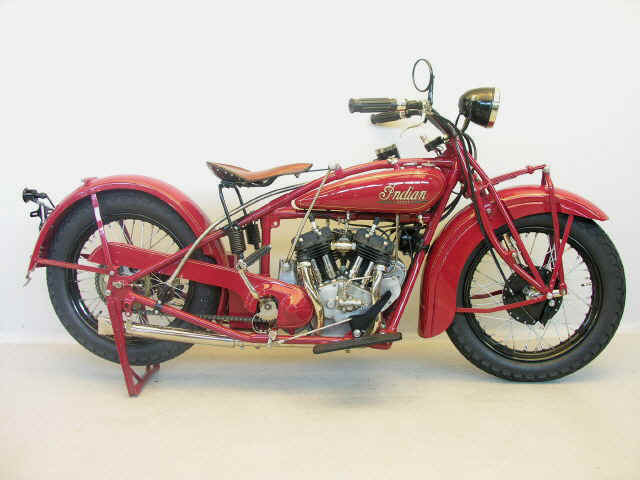
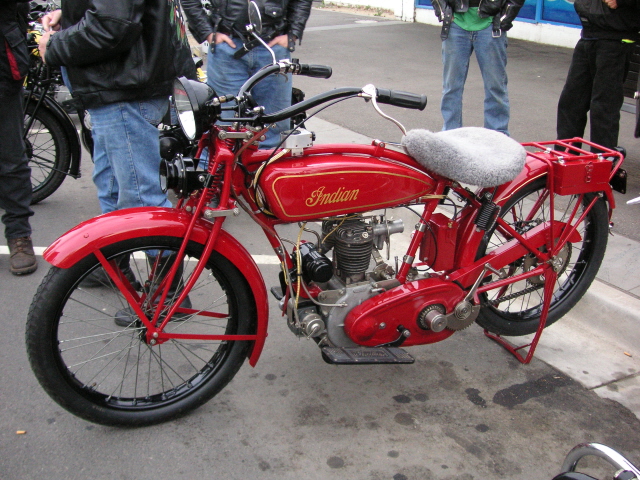
Franklin designed various competition type engines in both sidevalve and OHV versions in 45 and 61 c.i. capacities. He also created single-cylinder models in side and OHV versions. The Prince model of 1925 was produced in varying forms until 1928, with Franklin importing various British middleweight makes to study. The static domestic motorcycle industry was helped by Indian's export program and it probably helped it to survive.


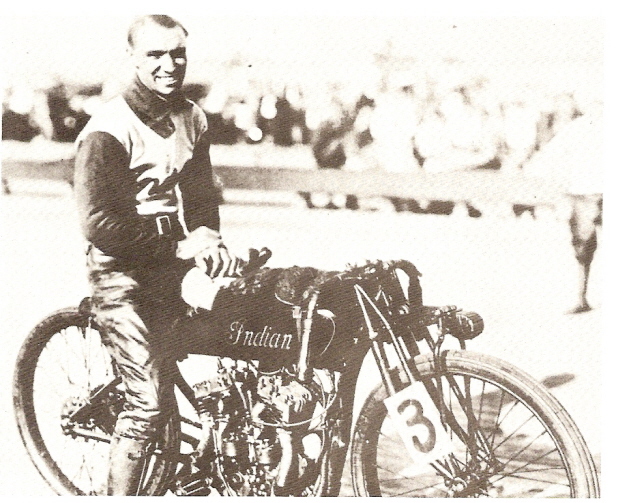
During the 1920s, Franklin suffered recurring respiratory problems, a condition we call emphysema today. He frequently worked at home during these periods in his private drafting facility. One of these projects was the twin carburetor Altoona-type 61 c.i. V-twins which held the all-time record for board tracks, 120 mph. His last designs featured preliminary work on the updated Sport Scout, which saw the light of day in the 1930s.
After several bouts with pneumonia Franklin died Oct. 19, 1932 at the age of 52. Mourned by the motorcycling community, he probably would have conceived many advanced designs had he lived longer they said.
His highly functional machines were not only economical to produce but had symmetry and form that commanded universal admiration.
The author is indebted to Thomas Callahan Butler, Leslie D. Richards, and Theodore A. Hogdon, contemporary members with Franklin on Indian's staff, as well as Dennis Shaughnessy ( I 891-1962) once connected with W.H. Well's London operation, and Harry Haviland, a one-time Dublin resident, for background information. As a final tribute, it is noted that Franklin' s design sequences are to be seen in the very last Indian machines ever produced.
Indian Motorcycle Illustrated, Autumn 1994
[Back to Contents]