
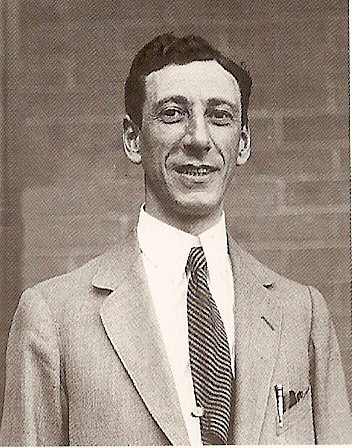
To judge the worth of a company's products, it's instructive to examine the reactions of competing firms. From the dawn of motoring to the 1920's, the London factory of John Alfred Prestwich made "JAP" single and v-twin engines for a variety of British motorcycle marques including the famous Brough Superior. Throughout this period in Britain and its Dominions, the JAP v-twin was thus a direct competitor to the rugged, rapid and relatively reliable American big twins exported there by Indian and Harley-Davidson. So much so, that the very name that J.A. Prestwich gave to the Tottenham street in which the JAP factory stood was "Tariff Road".
British historian Jeff Clew documents the progress of JAP engines in his book "JAP The Vintage Years" (Haynes). In particular, he introduces the character of Bert Le Vack, who made his name in British racing during 1920-21 on an Indian Powerplus racer and on an ex- Charles Franklin 1911 eight-valve which Le Vack dubbed "The Camel". Clew relates how, after winning the famous 500-Mile Race at Brooklands on an Indian in 1921, Le Vack was overcome by a sudden burst of patriotism - he then conspired with JAP to develop their British vee-twin into a "Yank-buster".
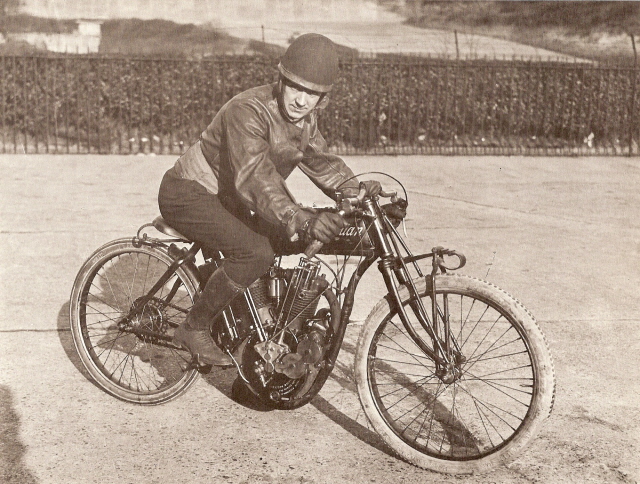


The fact that the time chosen to succeed in this aim coincided with the time that Indian dropped out of international competition, withdrew from FIM, and rested on their Scout and Chief laurels for the remainder of the decade while their engineering efforts focused on small singles and their ill-advised Four, in no way diminishes Le Vack's genius and the scale of his achievements. After all, what was H-D's excuse?
Ladies and gentlemen, I give you another unsung hero ... Herbert Le Vack!
[Page 2]