
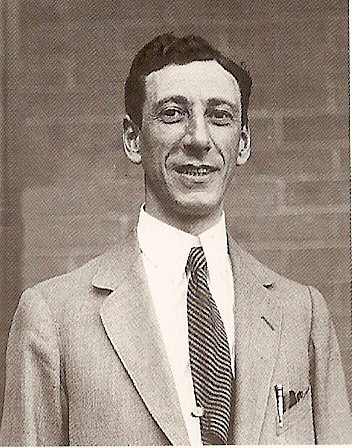
In his book "Indian Scout" (MBI Publishing) motorcycle historian Jerry Hatfield conducts what Einstein would have termed a "thought experiment", to get inside the mind of Charles Franklin and unravel the mental processes that may have inspired his creation of Indian's ground-breaking Scout and its bigger brother the Indian Chief.
Turn on your imagination. Turn the calendar back to early 1919, and place yourself in Springfield, Massachusetts, a commercial centre of the six northeastern states collectively termed "New England". Put yourself in the Indian factory, the famous "Wigwam" of timber frame, brick walls, and external elevator towers, a giant castle-like complex that is the world's largest motorcycle factory. While you're tuning up your imagination, get more specific. It's not enough to be an anonymous worker; make yourself none other than Charles B Franklin, Indian's leading motorcycle designer.
How does American motorcycling look to you, Charlie Franklin - you who came over from your native Ireland three years ago? You who have raced at the Isle of Man, you who is itching to design a trendy new motorcycle better than all the British and continental designs you know so well? How do you see the American motorcycle scene, Charlie Franklin?
First of all, you see your Indian company squirming around, in trouble. It is early 1919 and the Great War has recently ended. For almost two years, your Hendee Manufacturing Company has committed virtually all of Indian motorcycle production to satisfying the needs of American and allied forces. Indian has been patriotic; that's your collective claim. The reality is that patriotism equals profits. Your company has enjoyed its second and third most prosperous years during the war. Quick bucks. Easy bucks. Only one customer; only one price. At the Wigwam, your problem has been simple: to build and build and build. But now your Indian factory returns to a much more complex postwar world. It is a world without guaranteed sales and profits. It is a world with something that Indian hasn't faced before - a rival of equal strength.
The nerve of Harley-Davidson! Sixteen years ago, in 1903, the Milwaukee outfit had been a two-man hobby shop operating in a backyard shed.
Never mind that Bill Harley and the Davidson brothers have survived the bloodletting of the infant industry, during which 95 percent of the motorbike builders had gone under. So what? You and your Indian co-workers have always known that some rivals were going to hang around. Now, in 1919, what troubles the front office and you, Charlie Franklin, isn't Harley's survival or even Harley's rapid early growth. And that growth had been rapid. In 1913, Harley-Davidson's 10th year in business, the Milwaukee brand had built about 13,000 machines. In that same year, your Indian Wigwam had rolled out almost triple that number of motorcycles, putting some 32,000 of the iron redskins on the road.
For you, Indian and Charlie Franklin, the problem era is the past two years so recently completed: 1917 and 1918. Your Hendee Manufacturing Company at last realizes it must recapture its lost market lead for Indian motorcycles. Indian, no. 2? Yes. Whammo! In the past two years, while your Wigwam has been building about 42,500 motorcycles for one customer, the Harley-Davidson factory has been building about 45,000 motorcycles for about 30,001 customers-the Army and 30,000 civilians. Equally bad is the dealer situation. There are more Harley dealers in 1919 than in 1916; there are fewer of your Indian dealers in 1919 than in 1916. This has happened because for about two years your Hendee company had almost no new Indians available for its dealers.
[page 2]