
Franklin's ultimate side-valve featured dual Zenith carburettors bolted to special intake ports, and were dubbed Altoona models because of their successes on the board track of that name in Pennsylvania. With such an Altoona side-valve, Curly Fredericks achieved the fastest lap ever turned on a board track, at 120.3mph on the Rockingham 1 � -mile bowl.
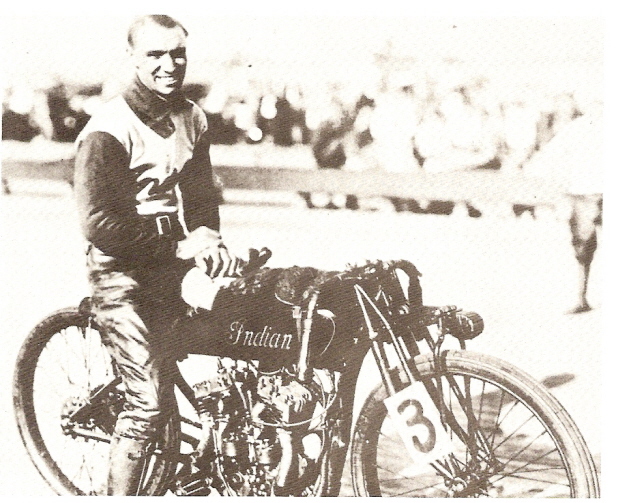
The best tribute to Franklin actually came from the rival Harley-Davidson factory. Harley had followed classic textbook theory and raced with all their valves upstairs, yet their overheads had failed to show the staying power of their inlet-over-exhaust jobs. Worse still, Franklin's Indians, with all the valves downstairs, had shown superior speed to the overhead Harleys on the one-mile board tracks. There was many a motorcyclist who looked at the nosiy and oily inlet-over-exhaust Harleys, compared them with the quiet and clean side-valve Indians, examined the racing results, and voted Indian.
Finally, between 1929 and 1930, Harley flattered Franklin by converting their entire stock line to side-valve configuration. It was all so illogical, in view of what was happening across the Atlantic. Probably, Franklin didn't understand why he had worked such magic; he only knew that he had.
Unfortunately, Franklin's poor health forced him to leave the Indian company in 1930, while at the pinnacle of his prestige. Two years later, he died at the age of 46.
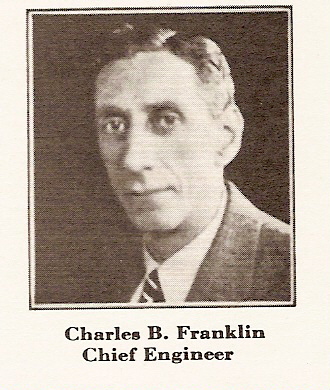
Even had he remained healthy and active, the American economy would not have permitted the full scope of his engineering genius to be reflected in a series of new Indian road models. Still, he had left his mark. Franklin's Scout of the twenties evolved into the Sport Scout of the thirties, a 750cc side-valve which frequently embarrassed 1000cc Harley-Davidson overheads. When Harley-Davidson set a new American Classic A 1000cc record in 1937, they bested by less than two mph Paul Anderson's French run of a dozen years before, aboard a 750cc Franklin overhead twin. I suspect that an able Franklin and a prosperous Indian company would have continued to hold American records into the forties. As it was, Franklin's side-valve derivatives last held American stock class records in 1938.
Outlasting the Scout genre, Franklin's 1200cc side-valve Chief remained a good seller through the late forties, when new Indian management curtailed production. The Indian Chief struggled on until 1953, and despite minimal engineering changes since its creation in 1921, in its final days the bike was rivalled only by big Harleys and BMWs for long, hard riding in the United States.
It is interesting to note that for some strange reason, after Franklin's departure neither the Indian nor the Harley-Davidson factories followed his Altoona twin- carburettor concept of 1926, until Harley's last KRTTs were so equipped in the late sixties. In the interim, privateers Max Bubeck and Frank Chase had co-developed, and then Bubeck rode, a twin-carburettor Indian Chief to more than 135mph in 1948. While the run was one way only, and there was a tail wind, this machine entered motorcycling folklore as the all-time fastest unstreamlined Indian. As for the twin-carb Harley KRTTs, they were destined to lap the Daytona oval at over 150mph. Charles Bayly Franklin would have been pleased to see his Indian and Harley-Davidson imitators be so successful twenty and forty years later.
The author wishes to thank Henry Havelin of Dublin for information on Franklin's pre-USA years.
[Back to Contents]