
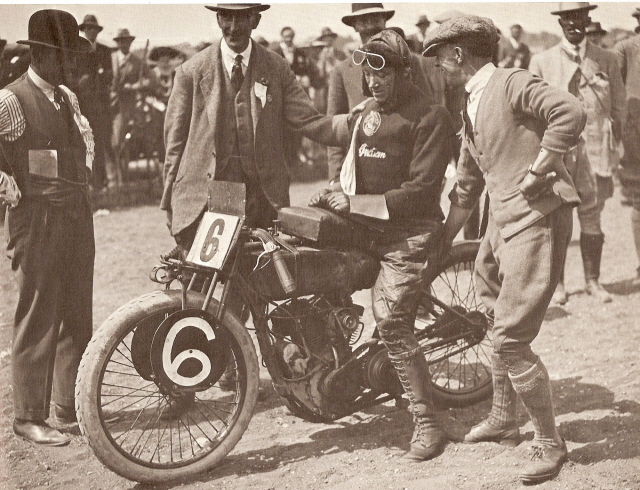
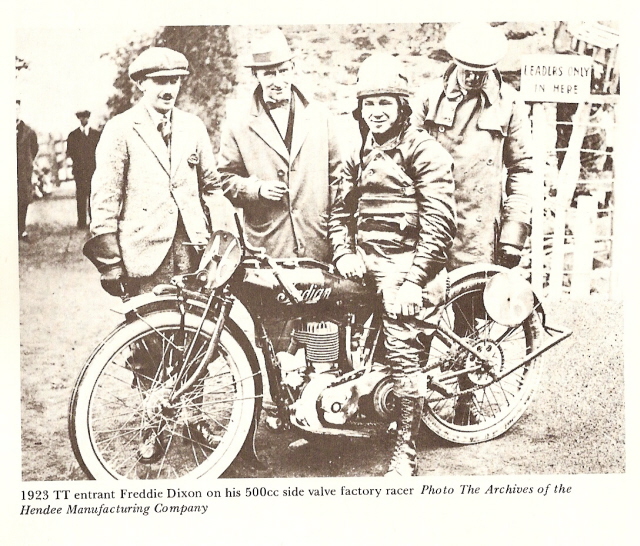
Unfortunately, this was among the last of occasions when Indian figured prominently in European race results. One other such occasion was Freddie Dixon�s participation in the 1921 Isle of Man Senior TT on an Indian side-valve 500cc single (half of a Powerplus), where he was beaten into 2nd place by Howard Davies on a 350cc OHV AJS. Another shot fired by OHV as the Way of the Future!
Before the Great War the Indian marque was a dominant force at Brooklands, so much so that the chapter of Peter Hartley�s book dealing with 1911 is entitled �An Indian Summer�. This was owing to the excellence of Indian�s products during its first golden age, and to the skill of the Billy Wells supported British riders like Charlie Franklin, Oliver Godfrey, Reuben Harveyson, W.O. Bentley (of car fame), Arthur Moorhouse (the first motorcyclist to be killed at Brooklands), Guy Lee Evans and Charlie Bennett.
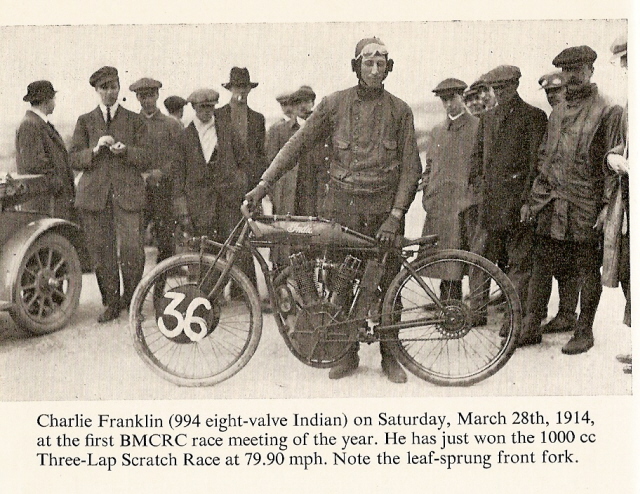
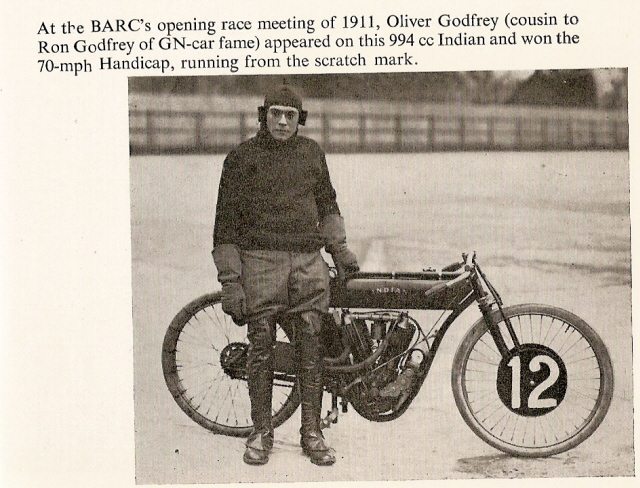
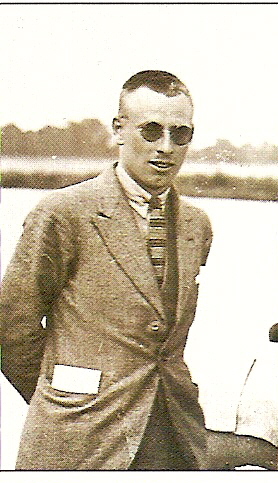
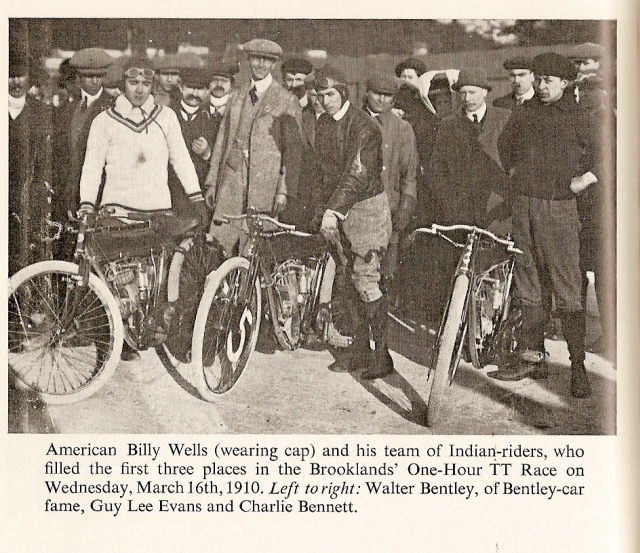
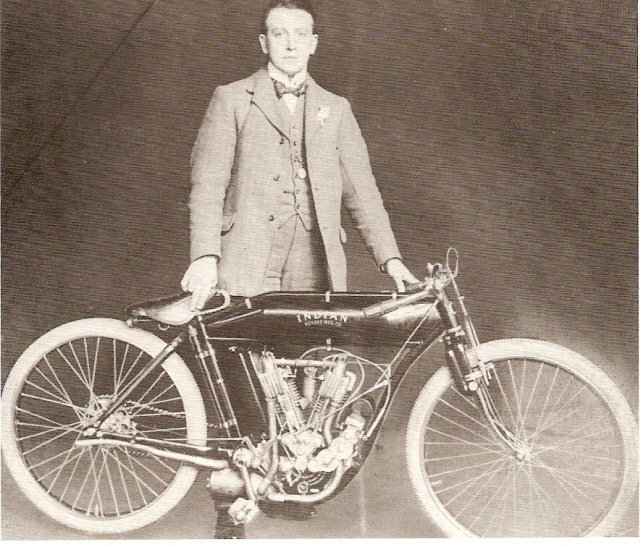
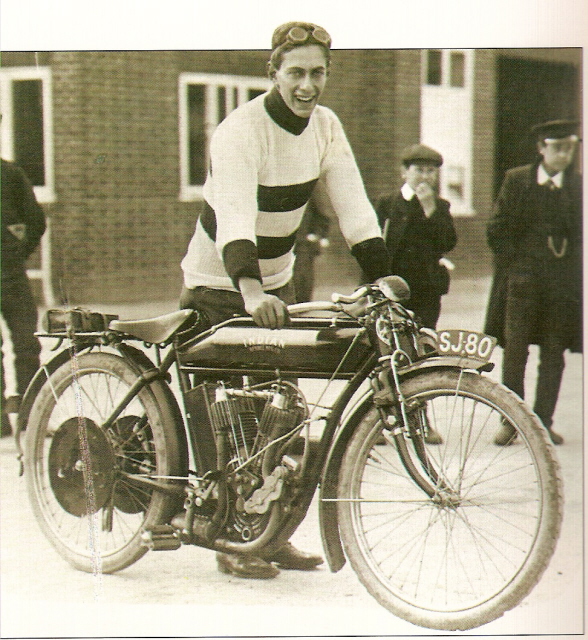
In the hands of Harveyson and Le Vack, Indian remained a force to be reckoned with when the Brooklands track re-opened after the war and up until the end of 1921. Note, however, that Hartley�s chapter dealing with 1922 in Brooklands Bikes in the Twenties is entitled �Resurgence of the British big-twin�. In subsequent chapters, the Indian name is scarcely heard of again in connection with Brooklands.
Why did Indian drop off the pace so suddenly, when it was making products that could have continued to have the European competition world at its feet?
Firstly, Bert Le Vack sought a job at JAP with the express aim of taking that factory�s big v-twin upon the OHV route to international racing and record-breaking success. Le Vack on a Zenith-JAP became the first BRITISH machine to officially exceed 100mph. In the only ever published interview with Le Vack (in the first issue of The Motor Cycle for 1923, and quoted in Clew�s JAP: the Vintage Years) he revealed that it was sometime during his long bumpy ride to victory in the Great 500 Mile Race that it occurred to him JAP�s v-twin could, with his input, become the British answer to the Class-E dominance of the American big-twins in British racing and record-breaking. After the race he wrote to Alfred Prestwich to offer his services, which were accepted. The next four years from 1922 up to the closing of JAP�s racing department saw this ambition realized, with Clew�s book documenting Le Vack and JAP�s obliteration of the words �Indian� and �Harley Davidson� from the FIM World�s record books during this period. Again, it shows that the photo of Le Vack at the finish of the 500 Mile Race is highly significant to motorcycling. It captures the moment when, victorious on an Indian, Le Vack had just then decided to throw in his lot with JAP to create a British �Indian-buster�.


[page 7]