
Towards the end of 1920 he moved on to the Hendee Manufacturing Co, who made Indian motorcycles in Springfield, Massachusetts. He joined their London Depot, and to use his own words, he helped 'to lick the eight valve Indian into shape'. It was the struggle between Harley-Davidson and Indian to have the first machine to attain 100mph in England that caused him his greatest disappointment. When the struggle reached its climax during the spring of 1921, he had already made an unofficial run over the kilometre at 103mph, and looked like being able to repeat it whilst officially timed, after Harley-Davidson had failed at their first attempt. But a miscalculation about the expansion rate of vital engine components caused a cam follower to break and smash the timing case during his timed run, shedding a pushrod in the process. Although he worked all night to get the engine repaired in time for another run the following day, there was a misunderstanding as to when the time-keepers would be available. The next he heard was that the 100mph record had been taken by his rivals.
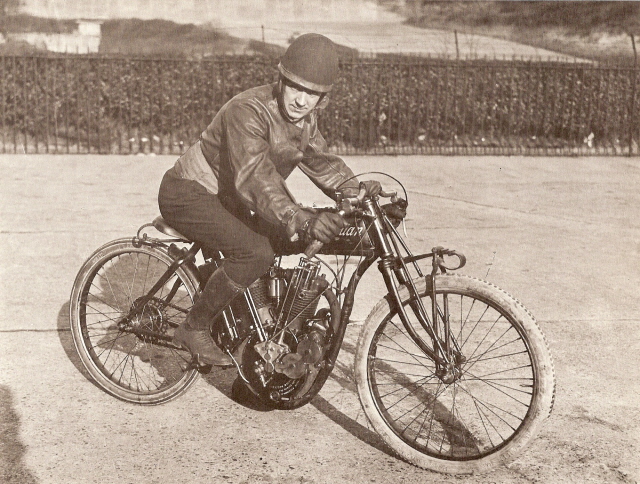
The news so upset him that he decided to quit motorcycle racing altogether and concentrate on experimental engineering. But the following morning he was told by his boss, Billy Wells, that the timekeepers would be ready if he would like to attempt the kilometre record. This he did, raising the one-way runs record to 106.65mph, and later to 107.55mph. Yet the machine he used was an old track racer, made in 1912.
It was during the 500 Mile Race at Brooklands held during July 1921 that he realised the British-made big twin had a terrific potential, and that he could help place it at the top, where it deserved to be. In consequence he wrote to John Prestwich offering his services, which the latter gladly accepted. Le Vack claimed it was from a suggestion made by John himself that the dohc engine he used in the TT during 1922 was evolved. It was a last minute decision to run the engine in the TT, such that it was not possible to give New Imperial any indication of what power output could be expected. He went to the Isle of Man with an untried engine and no discredit was due to New Imperial for the unforeseen problem that put him out of the race when he was doing so well.
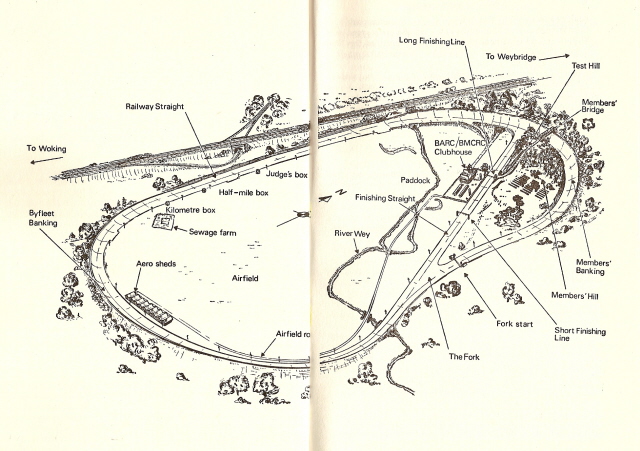
Le Vack was very much in favour of using alcohol-based fuels in racing and made no secret of the source from which he obtained his supplies, a London distillery. He also stressed the value of racing, with reference to the benefits that eventually passed to the ordinary motorcyclist. He considered Brooklands to be an ideal testing ground.
Finally, it was his wish to acknowledge all the help he had received from his friends, especially his mechanic, Sid Moram, and A.V. Ebblewhite, the never-failing timekeeper.
[page 7]