
An except from the book �Brooklands bikes in the twenties� by Peter Hartley (Argus Books Limited), which describes one of two lesser-known episodes in the famous half-century-long rivalry between the Harley-Davidson and Indian marques. These both took place at Brooklands track in 1921. The �more important� of the two, the 500-mile race, was won by Indian. The by-implication �less important� episode, becoming the first motorcycle in Britain to officially exceed 100mph, was won by Harley-Davidson, but only just.
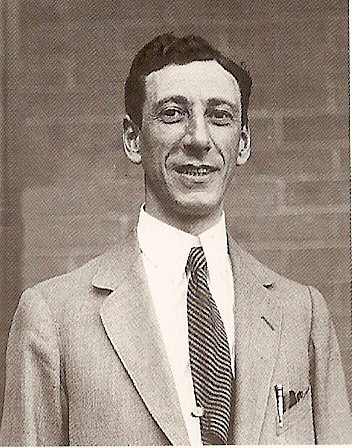
The link with Charles Franklin, by this time in his 7th year as Designer for the Indian factory, is of course that these feats by Le Vack were done on "his" (Franklin's) bikes - firstly "The Camel" which Franklin personally rode back in 1912-14, and secondly a racer based on the Powerplus model which Franklin helped to design.
Chapter 2
1921 - 500 miles of speed
TWO EVENTS OF GREAT SIGNIFICANCE took place at Brooklands in 1921. Firstly, a motor cycle exceeded 100mph officially for the first time on British soil and secondly, and probably more important, a motor cycle won a race over a distance of 500 miles at an average speed of over 70mph and demonstrated beyond all doubt the reliability of the motorised two-wheeler to the general public in Britain.
Davidson achieves first official 100mph
Back in November 1920 Duncan Watson, the British concessionaire for Harley-Davidson motor cycles, had shipped over from the Milwaukee factory two of the latest racing machines. The target in view was the 'Godfrey' Cup for the first rider to achieve 100mph officially on British soil.
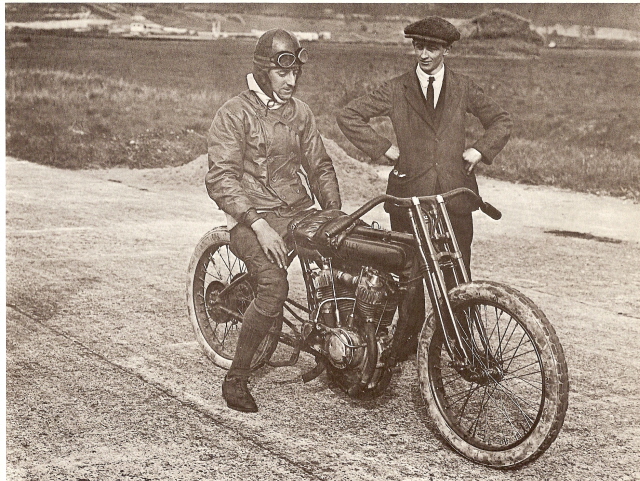
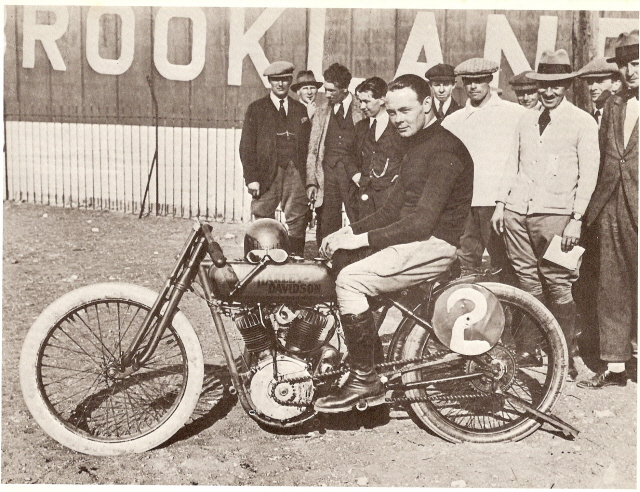
Numbered CA13 and CA14, these machines were of the short-wheelbase type popular on American board tracks. They had the usual Harley frame loop omitted, it being replaced by engine plates continuing under the engine to the rear frame tube. Their 989cc ioe V-twin engines had single Schebler racing carburetters, aluminium-alloy pistons each with two rings, and transmission by chain via a countershaft. Sydney Garrett who was to have ridden one of these machines had injured his back, so Douglas H. Davidson and Claude F. Temple were nominated to ride in the record attempts. Temple, winning a toss of a coin, decided to use machine CA14.
[Page 2]