
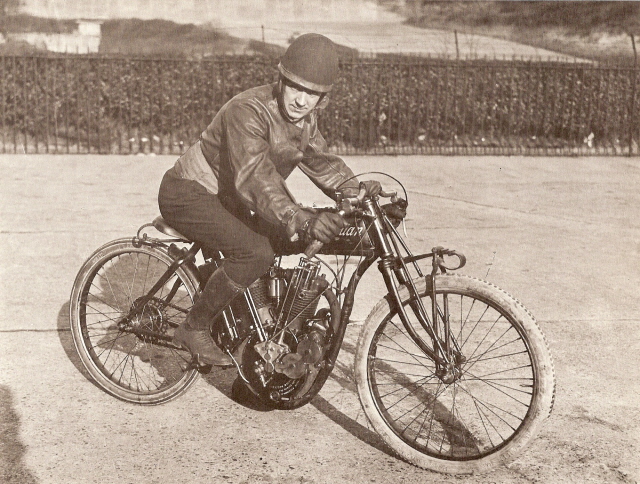
By the time Indian celebrated its tenth birthday, Hendee and Hedstrom were miles ahead of the field. In 1911 they produced eight different models which were sold through 1200 dealers to around 20,000 customers. In case we didn't get the message with their ISDT success, they came to the Isle of Man and trounced us all over again, taking first, second and third places in the inaugural TouristTrophy. You can just imagine how delighted Pa Norton and Co must have been ...
Indian's expansion was relentless in the years leading up the Great War. In 1913 the marque was the largest in the world. It commanded over 40% of the US market share and built nearly 32,000 motorcycles, some 8000 of which were exported worldwide. Indian employed 3000-odd people in the world's largest motorcycle factory at Springfield, a plant of over one million square feet with a seven mile long production line.
The basis of this success - solidly built motorcycles with a reputation for excellence - was enhanced by Hedstrom's continual desire to upgrade this, improve that; to make his motorcycles more comfortable and easier to use. It's almost as if the long, slow curve of development which took place in the British bike industry over several decades later in the century, happened first and fast in the States. A frenzy of automotive development was compressed into a few years, until the twin torments of war and recession dragged the industry into decline.
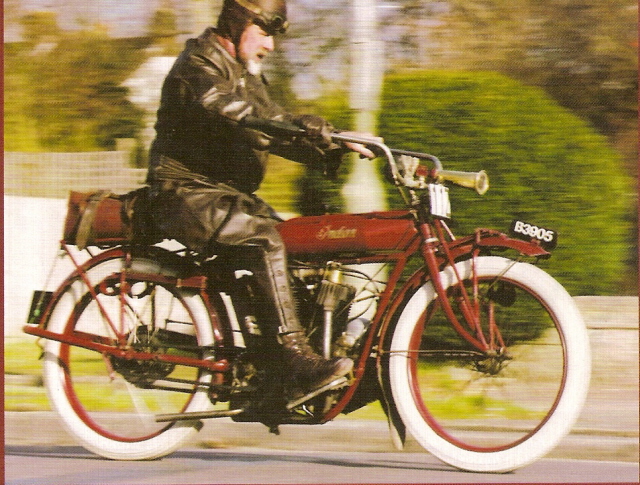
Yet while the sun shone, Hedstrom made hay. He made the first mass-produced American motorcycle with front AND rear suspension. The braking was improved by fitting a larger and wider drum which accommodated a bigger brake band. Hedstrom redesigned his carb with a new jet chamber intended to help the engine idle smoothly. He incorporated new valve and cam operation, and a mechanical oil pump. His racebikes wowed the public with four valves per cylinder - and they proved unbeatable in action. After the 1911 season, Indian held every single American speed or distance record, all121 of them! As a result, the V-twins sold in their tens of thousands; clocking up the 100,000th sale in 1913 just six years after the first V-Twin went on sale. For 1914 Hendee and Hedstrom went even further, building the Hendee Special which boasted a proper electrical lighting system, electric signals and - get this - a 12-volt electric starter motor. OK, so the electric hoof didn't work too reliably. No shame there: Norton and Triumph were still faffing unsuccessfully with their electric starters some 60 years later ...
Then, at the peak of their achievement, Hendee and Hedstrom bowed out of the Indian business. We'd probably call it 'taking profits' these days; H&H retired to the country to spend more time with their families. In great comfort.
The Indian business motored onward with new and notable designers and new and not-so-astute management, but the pioneering era was all but over. The economic climate turned stormy, competitors turned up the wick and, as Vincent and Veloce later discovered, converting engineering innovation into crisp cash became increasingly difficult in a mass-production market.
Indian went on to build iconic motorcycles like the Scout and the Chief, but Henry Ford had them in his sights. He unsportingly paid his workers enough to buy the product they were building and by the mid-1920s you could own a Model T for $850 when a Big Chief would cost $435 (and Harley's 1200cc V-Twin cost $100 less than that). If Britain's motorcycle industry was undone in the 1960s by the arrival of the cheap motorcar, then likewise the automobile stole the limelight of America's pioneering motorcycle industry.
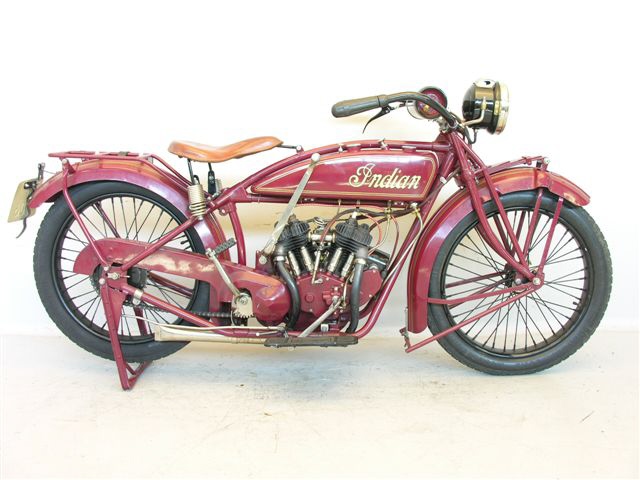
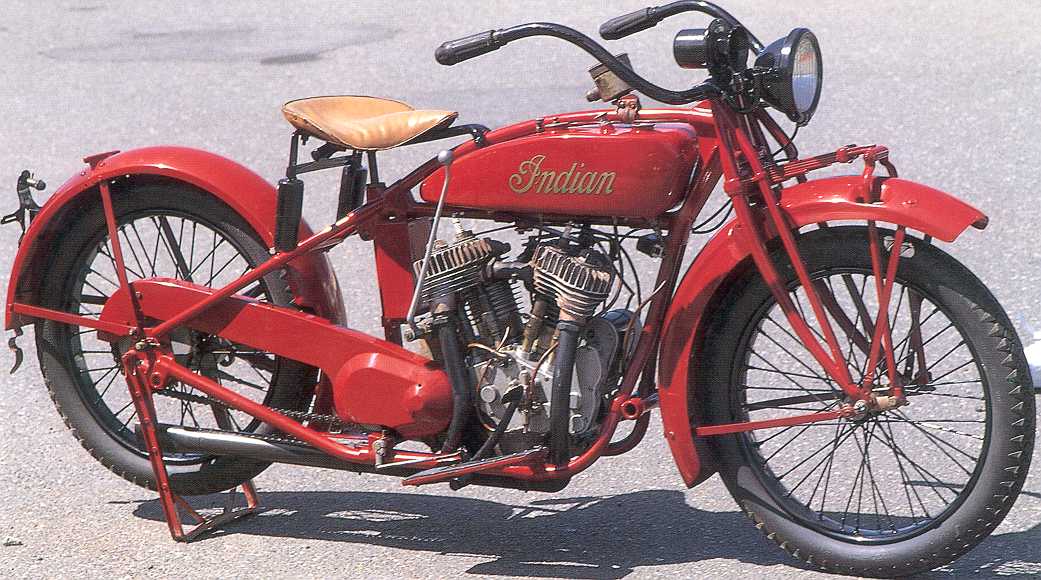
'Hedstrom's engines set the standards for others to match and the cradle spring frame proved his talents in designing a motorcycle with power and handling in dynamic balance'
[page 4]