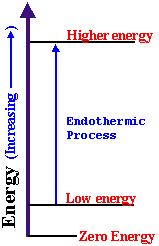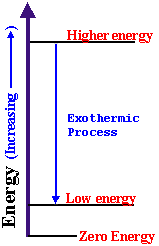
� An exothermic reaction is one in which energy is released and an endothermic
reaction is one in which energy is absorbed
� Thermochemistry- the study of heat changes that accompany chemical reactions
and phase changes
� In thermochemistry, the system is the specific part of the universe that contains
the reaction or process you wish to study
� Surroundings- everything in the universe other than the system
� Universe- the system plus the surroundings
universe = system + surroundings
-Example of exothermic: when using a heat pack, heat flows from the heat pack
(system) to your hands (part of the surroundings)
-Example of endothermic: the flow of heat is reversed; heat would flow from the
surroundings to the system
Enthalpy and Enthalpy Changes
� Since the total amount of energy a substance contains depends on many
factors, it is impossible to know the total heat content of a substance
� In many reactions, the amount of energy lost or gained can be measured in a
calorimeter at a constant pressure
� The constant pressure of a calorimeter is convenient in replicating reactions
because mot reactions occur at a constant atmospheric temperature
� Enthalpy (H)- the heat content of a system at a constant pressure
� Although you can�t measure the actual energy or enthalpy of a substance,
you can measure the change in enthalpy, which is the heat absorbed or
released in a chemical reaction
� Enthalpy (heat) of reaction (change in Hrxn)- the change in enthalpy for a reaction
� Change in Hrxn is the difference between the enthalpy of the substances the
exist at the end of the reaction and the enthalpy of the substances present at the
start
Change in Hrxn = Hfinal � Hinitial
� Because the reactants are present at the beginning of the reaction and the
products are present at the end, change in Hrxn is also defined with this equation
Change in Hrxn = Hproducts � Hreactants