CHANG NOI
|
The
new political map of Thailand
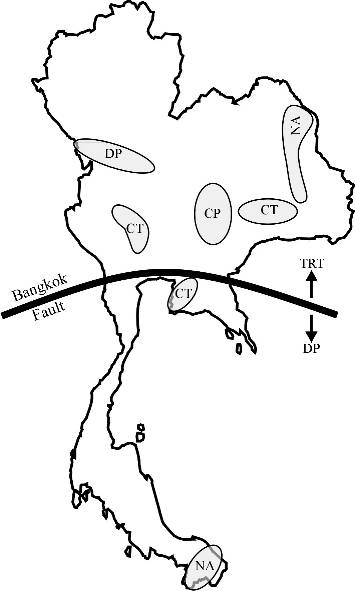
22 January 2001 Since the poll, all the comment has concentrated on Thaksin. But the election has another story. The political map of Thailand has been redrawn. The final shape is not clear because of disqualifications and re-polls. So all the figures below are rough. But the pattern is so stark that these adjustments will be minor. The old baronial families were massacred. Asavahame in Samut Prakarn, Angkinan in Phetburi, Moolasartsathorn in Surin, Manasikarn in Phitsanulok, Iasakul in Nong Khai, Harnsawat in Pathumthani, Lik in Kampheng Phet, Yubamrung in Thonburi, Lertnuwat in Chiang Rai, Khamprakorb in Nakhon Sawan, Wongwan in Lamphun and many others. The new electoral rules contributed to this massacre in three ways. First, many voters knew the new counting system meant their choice was truly secret. Second, ballot-stuffing was more difficult. At the last election, the Asavahame gang were convicted of stuffing 20,000 votes, but escaped punishment on a legal technicality. This time their Samut Prakarn constituency was under intense scrutiny. Wattana Asavahame’s two sons, brother, and daughter-in-law all lost, while Wattana and his old cronies failed on the party list. In a truly touching post-election scene, the Asavahame clan petitioned the Election Commission about their opponents’ electoral malpractice. Third, splitting the constituencies from multi to single member also split up old gangs. In many provinces, two sitting MPs fought over the main town seat. One had to lose, while new faces were elected in the outer constituencies. But some of the barons survived. The south remained loyal to the Democrats, whether good guys or bad. Further north, the best strategy for baronial survival was to join the Thai Rak Thai party. The only family sweep of a province was the Thienthong in Sa Kaew. But the TRT flag was not always enough. Yingphan Manasikarn crashed out in Phitsanulok, even while his wife won the neighbouring seat by a mile. The newness of TRT could not always help those irredeemably part of the old politics. But a few baronial families did well without the TRT flag and against this trend. The Silpa-archa clan and allies were rock solid in Suphanburi and the surrounding area. Kamnan Bo sulked about losing one Chonburi seat, but his progeny and allies swept the rest. The Chidchob family was more wobbly. Newin crashed on the party list, while his brother and four allies were beaten. Yet the gang still kept ten seats in Buriram and the surrounding area. What made these few baronies different from the others? Probably they have delivered budget funds into their backyards in big amounts over a long time. Banharn’s transformation of Suphanburi is legendary. Chai Chidchob hardly uttered a word in parliament, but always got himself on the house budget committee. His son Newin boasted how he used the deputy finance ministership to get Buriram more than its fair share. Kamnan Bo opened this election campaign by making a similar boast to the citizens of Chonburi. The massacre of the barons has also meant a massacre of baronial parties. Solidarity and Muanchon retired before the contest. Prachakorn Thai, Rassadorn and Social Action have been wiped away. Seritham is hanging by a thread. Even Chat Thai, one of the oldest parties, is badly battered. The second touching post-election scene was Banharn sobbing on live TV when his party list seemed fated for oblivion. All this has left Thailand with a new political map which can be described in three parts. First, there is an extended Greater Bangkok, consisting of the city and five surrounding provinces. For the first time ever, this centre voted the same way as the provinces. The division of seats between TRT, Democrats and others roughly copies the national pattern.
Next, there are seven “islands”. Most of these are the surviving baronies. Significantly four are in border areas, which is probably important for baronial economics. One on the north-western border belongs to the Democrats, and is the political legacy of Sanan Kachornprasat. The other six are the final fortresses of the surviving baronial parties. New Aspiration Party has two—in Greater Nakhon Phanom (16 seats) and in the Muslim far south (6). These are the fading footnotes to General Chavalit’s military career. Chat Thai has three—in Greater Chonburi (7), Greater Suphanburi (20), and Greater Buriram (10). These are the family fiefs of Khunpleum, Silpa-archa and Chidchob. Chat Pattana is reduced to the party founder’s base in Greater Korat (12).Outside these fiefdoms, these three parties together won only about 16 seats. They are no longer national parties, but small chains of isolated family-owned islands. The remainder of the country is divided starkly at the Bangkok Fault. This is an arc drawn through Bangkok and sloping away to east and west. South of this line, the Democrat party won around 57 and lost only 5; to the north, TRT won around 165 and lost around 40 (excluding the islands). The Democrats have had a southern base for twenty-five years, and other parties in the past have been regionally biassed. But never has the electoral map been sliced quite so starkly. Moreover, the Bangkok Fault divides the old from the new. At this election, the Democrat party fielded rather few new candidates. Only about a third of their MPs are new blood, and their average age is around 50. The Democrats are now the old guard of Thai politics. By contrast, north of the Bangkok Fault (and excluding the islands), over half of MPs are new. Thai Rak Thai is really two parties of almost equal size. The first is a bunch of new faces with an average age around 38. The second is the defectors’ club, including Snoh Thienthong’s faction. Their average age is about 55. The first grew up in the cold war, the second in the globalising boom. Watching how these two get on should be fun. |