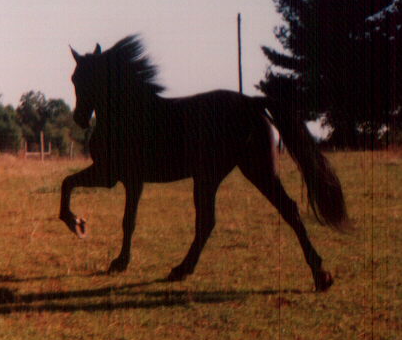
The Tennessee Walking Horse stands on average about 15 or 16 hands high with a long head with a straight or slightly Roman profile. He has sturdy legs and feet. His broad neck, which is set high on his shoulders, tops off his majestic appearance. The Tennessee Walking Horse is neither limited in the activities he can do nor are they limited in color.
The most distinctive feature of the Tennessee Walking Horse is his gaits. The show ring usually calls for all three gaits. The first is the flat-footed walk, second is the running walk, and third is canter. His flat-footed walk is like most horses walk; only his is more forward and energetic. His running walk is a steady four-beat pattern of footfalls, with an overstride of up to 14 inches over the front hoof print. His head slightly nods in time with the beat. His canter is often called the �rocking chair� canter. His front end is rolling and exhibiting lots of upward motion. Although the running walk is his most well known feature, most are capable of other fancy footwork. Some have a tendency to trot, others pace, some foxtrot, and others rack.
Even though his natural running walk is astoundingly animated, some want to give it even more animation. They use heavy shoes and pads to make them pick their feet up higher. With these pads on their feet their front end is elevated 4-6 inches. They must be kept in a stall and can�t be turned out to get exercise on their own. To animate their gait even more they will �sore� their feet, making it painful when they hit the ground. They will then snatch their feet up quickly. This chemical method is illegal. The Tennessee Walking Horse has a calm and gentle nature and he wants to please his rider. He will endure �soring� and pressure shoeing (which applies painful pressure usually with hidden screws or nails, with the same result as soring), without bowing up or attempting to fight back.
Of the 300,000+ registered Tennessee Walking Horse�s only 10% ever see the inside of the show ring and only half of those are required to have pads. The other half are divided up in to two divisions. Flat shod and plantation classes. Plantation horses usually wear a slightly heavier shoe with no pads or action devices. The other 90% are mainly ridden for pleasure. They are great for beginners, young children, handicap people, police forces, and the list goes on and on. May the LORD be praised for His wonderful creation, the Tennessee Walking Horse!