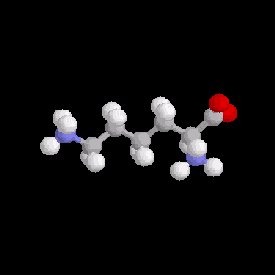
Lysine
An Essential Amino Acid
Amy Bigus, Deanna Massengill, and Christy Walker
Dietary Sources
Plants and Protein-rich Foods
yogurt
fish
cheese
brewer’s yeast
baked beans
Beneficial Effects
Inhibition of the growth of the Herpes Simplex Virus
Essential for the proper cross-linking of the protein part of collagen (the major component of most connective tissue) ð responsible for the strength of tendons, ligaments, blood vessel walls, skin & other tissues
Reduces adhesiveness of lipoprotein (a)
High serum levels of Lp(a) are associated with increased risk of heart disease.
The attachment of Lp(a) to damaged arterial walls may depend on lysine binding sites.
Lysine supplements may block those sites.
Precursor to L-carnitine: Aids in carnitine synthesis with methionine (another essential amino acid), Vitamins C, B6 & Niacin, and Iron
Improves calcium assimilation
Principle Uses
Herpes simplex virus infection (HSV)
L-Lysine is chemically similar to arginine which HSV uses as its main building block. Supplementation with lysine causes HSV to use lysine instead of arginine, which halts replication and reduces infection symptoms.
Reduces the frequency of attacks of oral herpes (HSV-1) in some people and may help acute episodes
Prevention & reversal of atherosclerosis
May help release fats that are deposited in arterial walls
¯ C/V disease, improves angina (exercise tolerance & heart function) & recovery from MI (heart rate, BP, rhythm disturbances, etc)
Carnitine allows heart muscle to use its oxygen supply more efficiently
May be helpful with Bell’s palsy
Deficiency Signs & Symptoms
Growth depression
Can lead to carnitine deficiency (whole body or myopathic)
Causes of Deficiency
High stress
Contraindications to Use
Kidney or liver disease
The breakdown of amino acids results in an increased nitrogen load in the body. The kidneys, and to some extent, the liver, must eliminate this nitrogen. Persons with liver or kidney disease should avoid supplementing any amino acids without approval of their physician. Amino acid supplements should not be used long-term by anyone.
Pregnancy or breast-feeding due to lack of clinical study
Toxicity and Side Effects
Large doses increase kidney toxicity of aminoglycoside antibiotics and may cause arginine deficiency
Clinical Trials
DiGiovanna, J. & Blank, H.
In a double-blind, placebo-controlled trial of oral lysine hydrochloride therapy given as 400 mg three times a day, 21 patients with a history of frequently recurring infection were observed. Lysine has been claimed to be effective in treatment and prevention of recurrences of herpes simplex infections. This study looked at episode frequency, duration, and severity in these patients receiving lysine therapy. There was no significant benefit of lysine therapy on recurrences seen in these 21 patients. There was no benefit of lysine therapy observed when it was used as a treatment of recurrences or when it was used prophylactically to prevent recurrences. The authors of this trial concluded that lysine is unlikely to improve frequently recurring infections in the majority of patients with herpes simplex virus.
Griffith R., Walsh D., Myrmel K., Thompson R., and Behforooz A.
A double-blind, placebo-controlled, multi-center trial of oral L-lysine mono-hydrochloride for the prevention and treatment of recurrent herpes simplex infection was conducted. The treatment group was given L-lysine monohydrochloride tablets (1,000 mg L-lysine per dose) TID for 6 months. A total of 27 subjects (6 male and 21 female) were on L-lysine and 25 (6 male and 19 female) were on placebo and completed the trial. The L-lysine treatment group had an average of 2.4 less HSV infections, symptoms were significantly diminished in severity and healing time was significantly reduced. Based on the results of this study, L-lysine appears to be an effective agent for reduction of reoccurrence, severity and healing time for recurrent HSV infection.
Milman, N., Scheibel, J., and Jessen, O.
A double-blind, placebo-controlled, crossover study examined the effects of L-lysine monohydrochloride on recurrent herpes simplex infections in 65 patients given 1000 mg of the nutritional supplement daily. Patients were treated for a 12 week period with 1000 mg daily of L-lysine monohydrochloride and then were switched over to placebo with no interruption in therapy for another 12 week period. The trial served to evaluate the prophylactic effect of L-lysine on recurrent herpes simplex infections. The authors found that lysine prophylaxis had no effect on the recurrence rate of the infections. However, significantly more patients were recurrence-free during the lysine treatment than during the placebo treatment period. This suggests that lysine may be beneficial for some patients to use prophylactically. Also, the study found that lysine had no apparent effect on the rate of healing of the lesions or the appearance of the lesions when they were at their worst.
McCume M., Perry H., Muller S., and O’Fallon W.
A prospective, randomized, double-blind, placebo-controlled, cross-over study of forty-one patients showed that oral ingestion of 1,248 mg a day of L-lysine monohydrochloride shows evidence of decreasing the recurrence rate of herpes simplex attacks in non-immunocompromised hosts. Four different patient groups were used in this study. Group 1 was exposed to high-dose L-lysine (1,248 mg; four 312 mg tablets) for 24 weeks and then given an identical appearing placebo tablet for another 24 weeks. Group 2 was exposed to high-dose placebo and same treatment as Group 1 but the sequence of administration was reversed. Group 3 got low- dose lysine (624 mg lysine; two 312 mg tablets) and followed the same regimen as group 1. Group 4 (low-dose placebo) received the same treatment as group 3, but the sequence of lysine and placebo was reversed. It was found that 8 recurrences happened in group 1 during the first 24 weeks of therapy while 14 recurrences were seen during the placebo therapy of the same group. Group 2 reported 17 recurrences while taking lysine and 26 recurrences during the placebo regimen. Patients in groups 3 and 4 had a combined total of 56 recurrences during lysine treatment and 58 recurrences while receiving placebo. Although this study showed decreased recurrence of herpes simplex, it did not show any evidence of shortening the healing time compared to placebo.
Dosage
Oral Herpes (more effective if consumption of seeds, nuts, peas & chocolate is minimized)
Prevention:
500-1000 mg QD on an empty stomach
Outbreak:
2000-4000 mg QD
Prevention:
1500 mg QD on an empty stomach
Doses have been noted up to 6000 mg QD
References