EDTA: Chelation Therapy
Andrea Jones and Arlen Rash
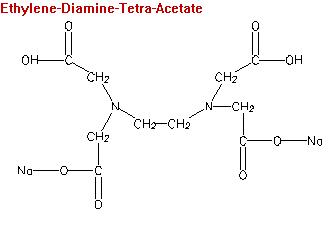
Description
-
Ethylenediaminetetra-acetic acid
-
Synthetic amino acid
-
Weak acid
-
Chelation therapy
-
chelation comes from the Greek word chele (to claw or to bind)
EDTA: History
-
1934-1935 F. Munz first synthesized EDTA in an effort to create a substitute
for citric acid
-
1930s F. Bernsworth developed a process for synthesizing EDTA and patented
process in 1941
-
Introduced in the United States in 1948
-
1950-1990 Benefits of chelation therapy were recognized by the medical community
as a treatment for:
-
heavy metal and radiation toxicity
-
snake venom poisoning
-
digitalis intoxication
-
cardiac arrthymia
Sources
Found in many foods as an additive
-
unwanted metals get into foods from the soil and machinery during harvesting
and processing
-
unwanted metals degrade foods by catalyzing the oxidation of fats in foods
-
EDTA reacts with these elements by forming tightly bound complexes to prevent
decomposition
Beneficial Effects
-
Removes undesirable metals from the body
-
Reverses the process of arthersclerosis
-
Improves cerebrovascular arterial occlusion
-
Improves memory, concentration, and vision
-
Reversal of gangrene
-
Prevents and reverses problems of degenerative diseases
Principle Uses
-
Heavy metal toxicity
-
Reversal of arthersclerosis
-
Restoration of memory
-
Degenerative diseases
-
arthritis, scleroderma, and lupus
Available Forms and Dosage Ranges
IV
-
available as an injection (150mg/ml)
-
dosage ranges:
-
Children* 40-70mg/kg
-
Adults* 50mg/kg
-
*Max dose: 3g/24hour
PO
-
one - two months of therapy is equivalent to a single session of IV therapy
-
administered daily
-
poor absorption
Chelation Therapy
IV Administration
-
IV infusion of 500-1000ml of a solution containing 50mg EDTA/kg, heparin,
magnesium, chloride, several B vitamins, and 4-20g of vitamin C
-
use a local anesthetic to prevent pain at the site of infusion
-
IV infusion administered over 3.5-4 hours
-
1-3 times weekly
-
Symptomatic disease patients need an minimum of 20 treatments
-
full benefit occurs about 3 months after a series is completed
-
Patient also need to exercise regularly, take vitamin and mineral supplements,
and make dietary changes
Costs
IV infusion of EDTA typically costs $75-150 each
-
20 treatments cost about $3000
-
Angioplasty or surgery costs about $50,000 and is far less invasive
PO therapy
-
180 tablets- $36.95 - 86.40
Safety Issues
-
Should not be used during pregnancy or if have severe kidney failure or
hypothyroidism
-
Protocol established by the American College of Advancement in Medicine (ACAM)
-
Doctor needs to have several years experience and has completed ACAM training
Adverse Effects of Chelation Therapy
Side effects appear to be controlled by adjusting the duration, frequency
of treatment, and diminish after the first few treatments. Many patients
do not experience side effects
-
Severe kidney damage (renal tubular necrosis)
-
bone marrow suppression
-
shock
-
hypertension
-
cardiac arrhythmias
-
allergic reactions
-
headache
-
fatigue
-
mild transient fever
-
convulsions
-
nausea/vomiting
Interactions
Insulin
-
increased effect of insulin and may decrease insulin requirement
Clinical Trials
Clinical Trial I: EDTA Chelation Therapy, Efficacy
in Arteriosclerotic Heart Disease. H. Richard Casdorph
Overview
-
Patients: 18 with well documented arteriosclerotic heart disease
-
Type of study??
-
Left ventricular ejection fraction was measured before and after the
administration of EDTA
Method:
-
patient cardiac function was measured before and after chelation therapy
-
each patient given 20 infusions
-
infusion: 3g of di-sodium EDTA in 250ml of Ringers lactate solution, 200mg
of lidocaine
-
technetium 99m was used to measure their left ventricular ejection fraction
Results
Conclusions
-
EDTA is thought to remove calcium particles deposited in the arterial wall
and in plaques on the arterial surface
Clinical Trial II EDTA Chelation Therapy in
Chronic Degenerative Disease. Efrain Olszewer and James Carter
Overview
-
Retrospective analysis of treatment results from 2870 patients, with various
chronic and age associated diseases
-
Treated patients with di-sodium magnesium EDTA
-
Patients were treated at a private clinic in Sao Paulo, Brazil between May
1983 and September 1985
The Patients
-
2870 enrolled, lost contact with 120 patients
-
patients were classified according to vascular and degenerative disease:
-
cardiac disease 29.4% (844)
-
peripheral vascular disease 39.4% (1130)
-
cerebrovascular/degenerative CNS disease 17.7% (504)
-
scleroderma 0.1% (4)
-
other geriatric vascular disease 13.4% (384)
Methods:
-
Regimen: 50mg of EDTA/kg with vitamin C, B complex, and magnesium
-
Infused over 3-31/2 hours
-
Total number of treatments 20-40 given 2-3 times weekly
-
Patients were encouraged to change their diet and increase their physical
activity
-
Trace element supplementation
Results
References:
Burroughs H and M Kastner. Alternative Healing. La Mesa,
CA: Halcyon Publishing, 1993, pp 52-53.
Burton Goldberg Group. Alternative Medicine: The Definitive
Guide. Washington: Future Medicine Publishing, Inc., 1994,
pp 126-133.
Casdorph HR. "EDTA Chelation Therapy, Efficacy in Arteriosclerotic
Heart Disease." Journal of Holistic Medicine. 3(1):
53-59, 1981 Spring/Summer.
Olszwer E and J Carter. "EDTA Chelation Therapy in Chronic Degenerative
Disease." Medical Hypotheses. 27: 41-49, 1988.
White K. "Chelation Therapy: The Pros and Cons."
Alternative and Complementary Therapies. 96-102, 1995
January/February.
Internet Addresses:
http://www.chem.ox.ac.uk/mom/edta/edta.html
http://www.mcdonaghmed.com/page3.htm
http://www.chelation.com/
http://www.den.davis.ca.us/go/btcarrol/skeptic/chelate.html
http://www.healthy.net/library/books/Chaitow/chelther/admin/protocol.htm
http://www.healthy.net/library/articles/acam/pospaper.htm
http://www.life-enhancement.com/n35/n35edta.html