The Modern
Brassiere
Bulletin Page
Established 8th March, 2000
|
The Veil
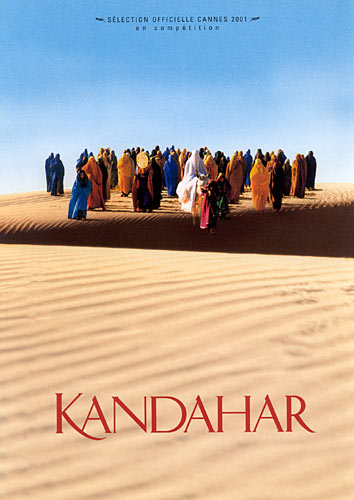
The veil has done a comeback over the whole world. Women is observed in public places, schools, universities and parliaments with veils that cover the head (hijab), head and face (chador and burqua), or the whole body.
What is the reason for this come-back? Although the veil is traditional, the come-back of the veil can be an answer to the social and political unstability of to-day. In Afghanistan an other places in Asia the collapse of communism made a progress for religious orthodoxy. The fall of the shah of Persia was the reason for the growth of religious orthodoxy.
In Egypt, Saudi-Arabia and the Middle East the come-back of the veil has many roots. The come-back may have started with the Arabic defeat in the war with Israel in 1967, or it may have started with the collapse of the dream of Arabic unity.
This political connection presumes that the practice of the veil is a social and religious construction. The veil admits a creation of an momentous identity that is powerful when the veil is sanctioned by the authorities. The reason for this sanction can be the new interpretations of Islamic principles made by governments or popular norms and social pressure within a population.
If the veil is sanctioned by the families and the small communities, the governments will retaliate. The Turkish government has prohibited veils that cover the face in schools and universities. The prohibition has expelled many young women from classes, and they have been refused to get their leaving certificates if the have worn this types of veil. The veil is also prohibited in the Turkish parliament.
The Turkish Supreme Court explains these strict measures against the veils by referring to the secularism in the Constitution, that Kemal Atatürk introduced when he was forming the modern Turkey of the ruins of the Ottoman Empire. Paradoxically, to fundamental human rights in reference to the rights of free speech and gathering, the Turkish restrictions represent a possible danger to the great ambition of modern Turkey, to become a member of the European Union.
Similar prohibitions exist in the whole region, and many of them have the same political reasons to avoid Islamic governments. In Egypt, Tunisia and Uzbechistan there are laws that prohibit full coverage by veils. In France the veils have been prohibited since the late 1980's. This French prohibitions exist although the European Union says that the Turkish restrictions can be in conflict with the human rights.
The veil was first prohibited in France by an administrative law.The prohibition was maintained by the Constitutional Court. It maintained that the allowance of such religious expressions will be in conflict with the neutrality of the public sphere and cause diversity.
But a such diversity existed already. The popular attitudes opposed against the veils because of xenofobia, negative attitudes towards immigration and opposition againt multi-culturalism. They revealed a fear for a potential erosion of the french national identity. Because of this social pressure the veil has become a symbol in France.
While the new regimes of the veil, pro et contra, can fight for a consolidation in a changing time, they destroy the right to free speech and free gathering. But what can be done? If the new laws force the women to wear veils, the laws can be inhuman, and it is not certain if laws against the veil give women more freedom.
It may seem as if the power over the women return to the family when the laws for veils are abolished. When the minister of education prohibited veils in the public school in Egypt in 1994, it was followed by a reduction of the women's rights. The Moslem women in France say that they have more freedom when the state prohibits veils, because the law allowed them to ignore the laws of their religious communities.
Other arguments for a state prohibitition against the veils cause a loss of freedom for the women because the veil have made historically a possibility to have freedom to move around in the community. Further on, the women have a better access to secular institutions. Generally, the veil gives the women a greater freedom in male-dominated societies.
If the veil is allowed or hated, the problems of the veil mark a global battle for a political and cultural identity. The veil and the conflicts of the veil is a cultural war to control the female body. In a long tradition where the women is the testimony of public morality, it is not surprising that the battles are harder where the political authority is questioned. Anyhow, the naked power want to hide behind a veil.
.
| Main Page |